What began as a carefully planned induction for twins turned into one of the most remarkable birth experiences imaginable. After successfully delivering her first baby vaginally, one Florida mother faced an unexpected emergency that required an immediate cesarean section to safely deliver her second son. Despite every twist in the delivery room, both boys arrived healthy—marking the end of a pregnancy that tested patience, resilience, and remarkable teamwork. 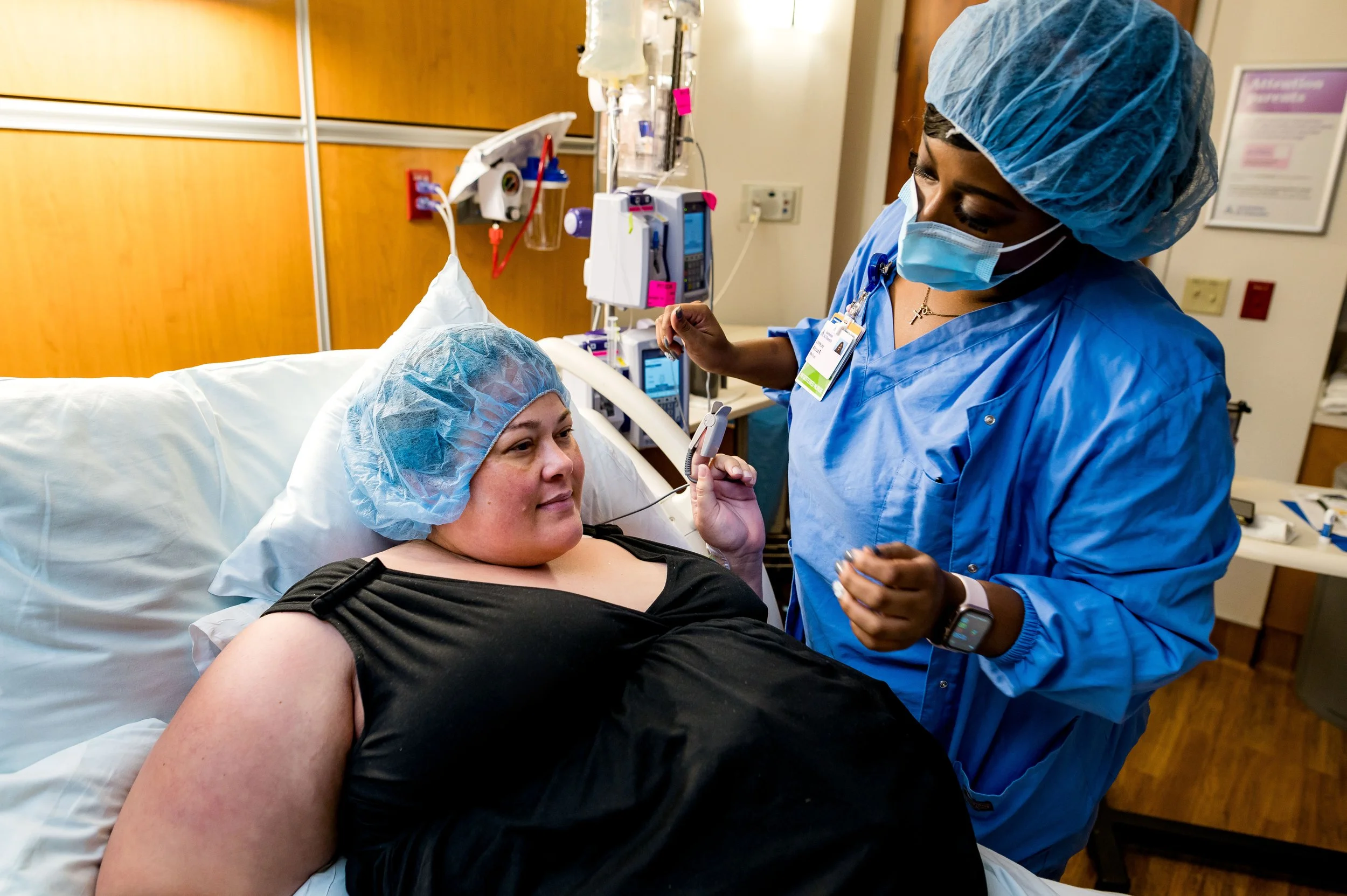
Victoria and her husband, Chaz, had known for months that welcoming identical due dates would not mean a predictable delivery. After undergoing embryo transfer treatment, the couple was thrilled to discover they weren’t expecting one baby—but two. Fortunately, the pregnancy progressed exceptionally well, allowing Victoria to carry both boys all the way to 39 weeks, a significant milestone for a twin pregnancy.
By the time induction day finally arrived, she was more than ready.
Originally scheduled for one day earlier, the induction had been postponed because the hospital had no available rooms. After another night of waiting, the family arrived determined that this time they weren’t leaving without meeting their sons.
The good news was that labor already had a head start.
At her final prenatal appointment two days earlier, Victoria was already four centimeters dilated. Because her body had begun preparing naturally, doctors skipped cervical ripening medications and started a low-dose Pitocin infusion to gently stimulate labor.
Progress came slowly at first.
Despite receiving Pitocin, contractions remained surprisingly manageable for several hours. Having experienced preeclampsia during her previous pregnancy, Victoria carefully monitored her blood pressure throughout labor. Although the contractions themselves caused very little discomfort, her blood pressure gradually began climbing. Together with her medical team, she made the decision to receive an epidural—not primarily for pain relief, but in hopes that reducing physical stress might stabilize her blood pressure.
The strategy worked almost immediately.
Her blood pressure returned to normal levels and remained stable for the rest of labor, allowing everyone to continue focusing on a safe vaginal delivery.
Twin pregnancies, however, come with unique challenges.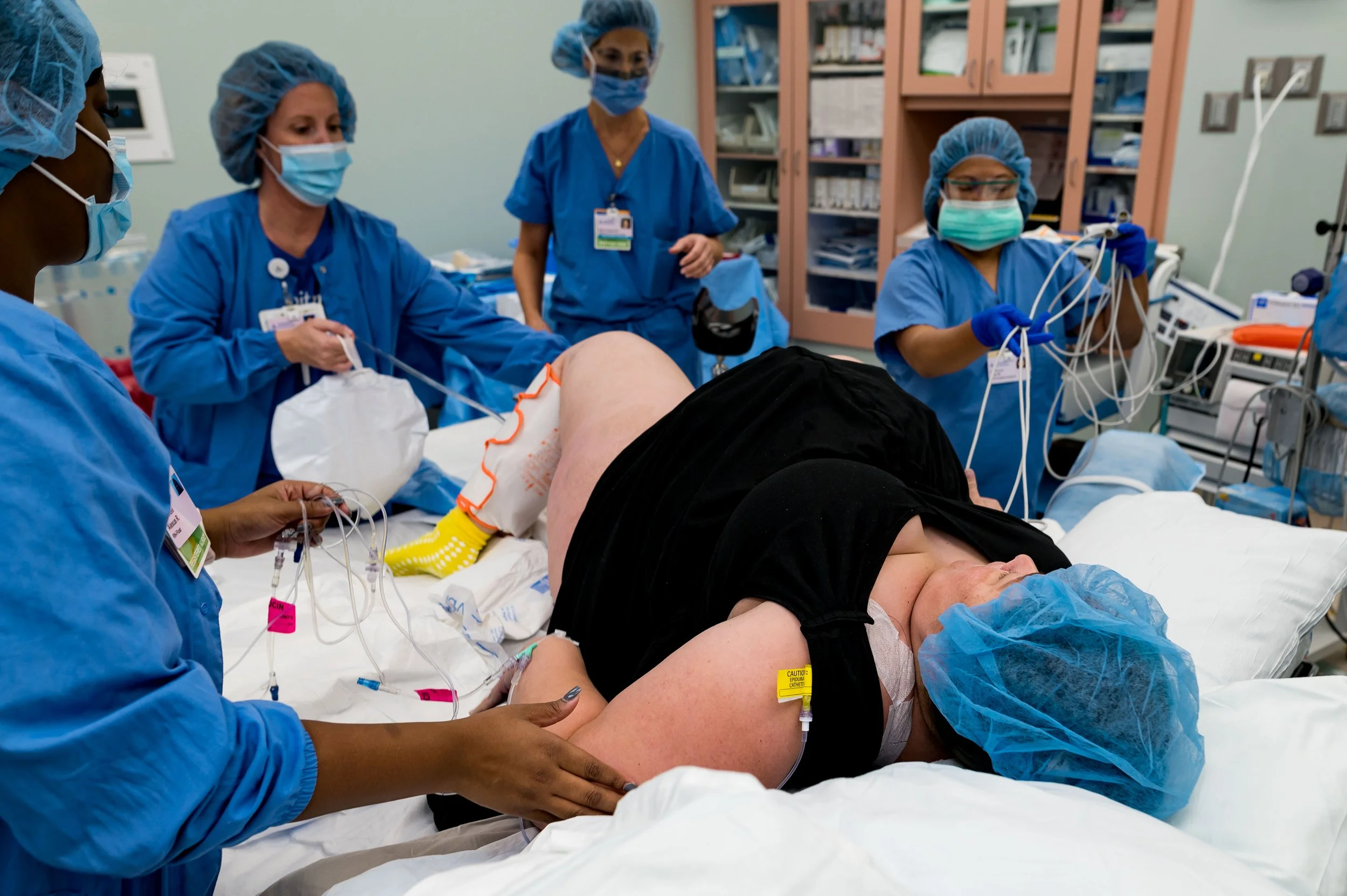
Unlike most laboring mothers, Victoria had to remain on continuous fetal monitoring for both babies. Simply turning onto her side often caused the monitors to lose contact, forcing nurses to repeatedly reposition them. The constant monitoring meant she spent nearly all of labor confined to bed rather than walking, showering, or changing positions as she had originally hoped.
Knowing there was little he could do during the early stages, Chaz wisely chose to rest whenever possible.
The decision would later prove invaluable.
Over the next four hours, while sleeping comfortably with the support of a peanut ball between her legs, Victoria progressed from four centimeters to nearly complete dilation.
Then, almost without warning, everything accelerated.
Shortly after reaching 9.5 centimeters, labor suddenly intensified and the medical team announced it was time to prepare for delivery.
Because hospital policy requires all twin deliveries to take place inside an operating room, what followed resembled a carefully coordinated parade. Nurses, physicians, monitors, IV equipment, and family members all moved together from the labor suite into the operating theater.
Although the environment looked intimidating, everyone already understood the plan.
During prenatal visits, Victoria had prepared extensively for every possible scenario, including the possibility that even a vaginal twin delivery would occur inside the operating room.
Once transferred onto the narrow surgical table, the pushing phase finally began.
The operating room was crowded with specialists, equipment, and bright lights. An old radio quietly played classic songs in the corner, occasionally lifting everyone’s spirits as doctors, nurses, anesthesiologists, and support staff settled into their assigned roles.
Baby A, who had remained head-down throughout pregnancy, proved determined to stay exactly where he was.
It took nearly four hours of pushing before he finally emerged.
Between contractions, however, the epidural allowed Victoria to rest peacefully, conserving energy for the long effort ahead. Different pushing techniques—including knees-in, feet-out positioning and a tug-of-war exercise using a towel—helped gradually lower the baby through the birth canal.
Finally, after hours of determined effort, Baby A entered the world healthy.
The couple had intentionally avoided assigning names before birth, wanting to meet both boys first. The moment Chaz saw his firstborn, the decision became immediate.
“This is Rodney Phillip,” he said.
After cutting the umbilical cord, he carried Rodney to the warmer for his first examination while Victoria prepared for the second stage of labor.
That was when the biggest challenge emerged.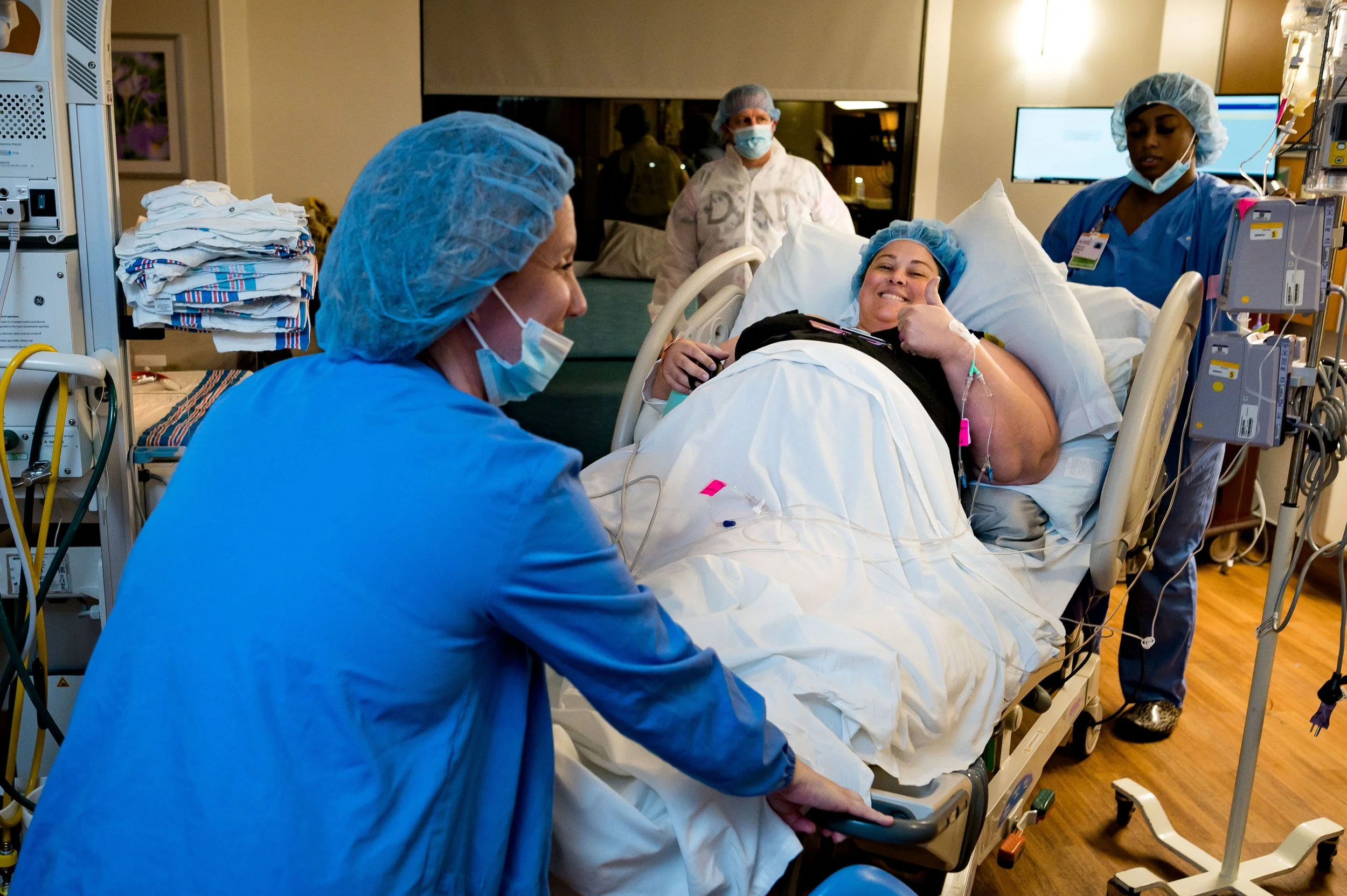
Unlike his brother, Baby B had remained breech for most of the pregnancy.
Doctors performed an ultrasound confirming he was still positioned feet-first. Rather than proceeding with a breech vaginal delivery, the medical team attempted an external cephalic version (ECV)—a procedure in which physicians manually rotate the baby through the mother’s abdomen into a head-down position.
Thanks to the epidural, Victoria tolerated the procedure despite the significant pressure involved.
When a second ultrasound revealed Baby B had successfully turned head-down, the entire operating room celebrated.
With the difficult procedure behind them, everyone believed a second vaginal birth was now within reach.
But Baby B had other plans.
Despite several practice pushes, he remained high inside the uterus. Exhausted after four hours of pushing, Victoria finally rested while contractions gradually encouraged the second baby to descend naturally.
During the next two hours, Chaz enjoyed precious first moments with newborn Rodney while Victoria caught a much-needed nap right there in the operating room.
When pushing resumed, Victoria once again gave everything she had.
For another two hours she pushed with remarkable determination.

Doctors attempted vacuum-assisted delivery three separate times, hoping to shorten the final stage safely.
Each attempt failed.
After the third unsuccessful attempt, Baby B’s heart rate slowed significantly.
Within moments, the atmosphere in the operating room changed completely.
The vaginal birth was immediately abandoned as physicians prepared for an emergency cesarean section.
Victoria later described the transition as happening almost instantaneously.
Her birth plan had always centered on one simple goal: everyone leaves alive.
Now, that philosophy guided every decision.
Doctors carefully returned Baby B higher into the uterus before beginning surgery. Soon afterward, the second twin entered the world safely by cesarean delivery.
The family quickly discovered another surprise.

Baby B—later named Carson—weighed nearly two pounds more than his older brother.
Laughing through the exhaustion, Chaz texted relatives with a simple explanation:
“He stole all the food.”
Thankfully, both boys required no NICU care and remained healthy throughout recovery.
While Chaz stayed beside the twins, Victoria underwent a lengthy surgical repair after experiencing multiple areas requiring stitches. Recovery proved far more difficult than she had anticipated. For several days, postoperative pain made it nearly impossible to comfortably hold either of her newborn sons.
Looking back, Victoria openly admits the birth wasn’t the one she had envisioned.
She had hoped to welcome both boys vaginally.
Instead, she experienced nearly every type of delivery imaginable in a single night—induction, epidural, vaginal birth, external cephalic version, vacuum attempts, emergency cesarean section, and postoperative recovery.
Rather than dwelling on what changed, however, she chooses to focus on what mattered most.
Her entire family went home together.
Both boys were healthy.
And despite the unexpected turns, every difficult decision had been made with one goal in mind: bringing two babies safely into the world.
For Victoria and Chaz, that outcome made every hour of labor, every setback, and every unexpected twist worthwhile. Their extraordinary twin birth became a powerful reminder that birth rarely follows a perfect script—but with preparation, flexibility, and a trusted medical team, even the most unpredictable journey can end with two healthy little boys safely in their parents’ arms.