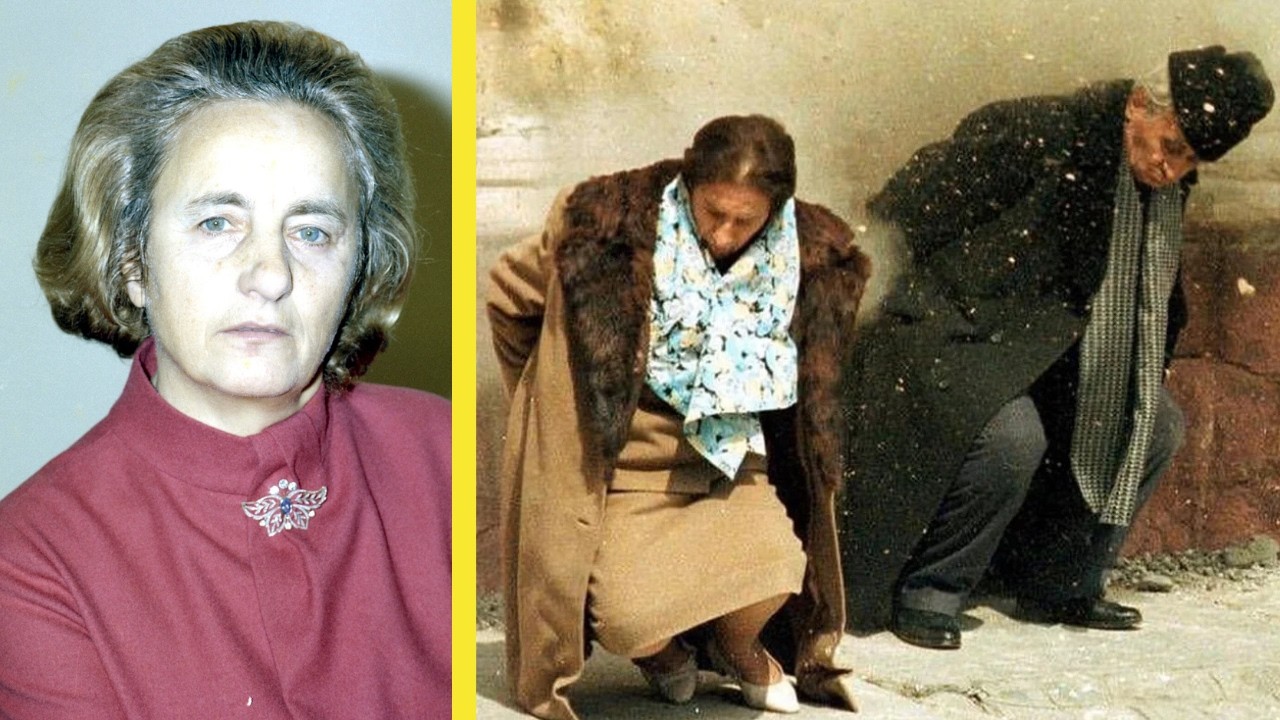
In July 2010, the grave of Elena Ceaușescu, Romania’s infamous former first lady, was exhumed to settle lingering doubts and conspiracy theories about her death after more than two decades. This unprecedented move sought to definitively prove her burial site and close a dark chapter of Romania’s volatile communist past once and for all.
Elena Ceaușescu’s burial had been shrouded in secrecy following her swift execution alongside her husband, Nicolae Ceaușescu, on Christmas Day 1989. Rumors persisted that the bodies might have been switched, moved, or that the couple had even escaped justice. The exhumation was a 𝓈𝒽𝓸𝒸𝓀𝒾𝓃𝑔 reopening of history’s buried wounds.
Despite being portrayed by state propaganda as a brilliant scientist and devoted revolutionary wife, Elena Ceaușescu was widely feared and despised by Romanians. The Ceaușescu regime had led the nation under a brutal and paranoid dictatorship, marked by repression, surveillance, and severe economic hardship.
The 1989 Romanian Revolution toppled their regime amid violent protests and rising public fury. After their capture, a rushed and controversial military trial sentenced the Ceaușescus to death. They were executed publicly and buried quickly, fueling suspicion about the authenticity of their graves.
For years, mistrust in official narratives and government secrecy bred fertile ground for conspiracy theories. The 1990s saw speculation that the couple had used doubles or had been spirited away by foreign powers. The unclear nature of their burial sites only deepened mystery and public obsession.
Led by Mircea Oprean, Elena’s son-in-law, demands for clarity and family closure intensified. After official approval, forensic teams unearthed the graves at Ghencea Cemetery, subjecting the remains to DNA testing under intense media scrutiny. The exhumation became a national spectacle, reopening old debates.
Experts carefully analyzed decayed skeletal remains and burial fragments. The forensic evidence confirmed the bodies were indeed those of Elena and Nicolae Ceaușescu, effectively debunking conspiracy theories that had lingered for decades and providing a new foundation for historical reckoning.
The exhumation not only resolved questions of identity but reignited discourse on the nature of justice in 1989 Romania. Critics argue the swift trial violated legal norms, while others insist the urgency was necessary to avoid civil war amid nationwide chaos and uncertainty.
Elena Ceaușescu remains a polarizing figure—reviled as a symbol of tyranny by many, yet nostalgically remembered by a minority longing for the relative order of the communist era. Her life, execution, and now her exhumation embody Romania’s ongoing struggle to grapple with its traumatic past.
This dramatic reopening of Elena Ceaușescu’s grave underscores how the shadows of dictatorship continue to haunt modern Romania. The country confronts unanswered questions decades later, reflecting the scars left by a regime marked by cruelty, propaganda, and fear that still shape public memory.
With the mystery of Elena Ceaușescu’s final resting place resolved, Romania faces a reckoning beyond mere forensic fact. The exhumation serves as a stark reminder of the painful cost of authoritarian rule and the difficult path toward historical understanding and national healing that lies ahead.