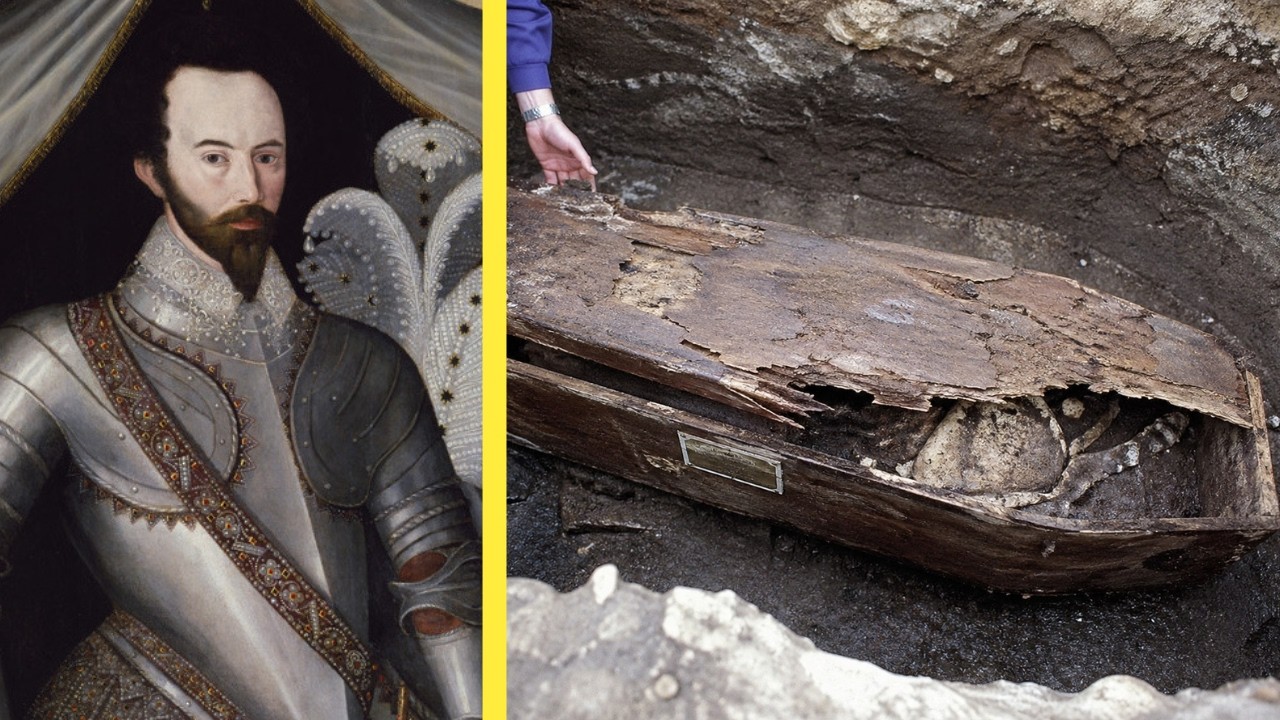
In a startling revelation, the extraordinary story of Sir Walter Raleigh’s posthumous journey has resurfaced, exposing the decades-long separation of his body and head after his 1618 execution. This gripping chapter reveals how grief, politics, and loyalty intertwined in an unprecedented Elizabethan saga of remembrance and defiance.
Sir Walter Raleigh, once a towering figure in Elizabethan England, faced execution for treason under King James I. Despite his fall from grace, the manner in which his remains were treated defied convention, sparking centuries of intrigue.
Following his beheading at the Palace of Westminster, Raleigh’s body was buried promptly at St. Margaret’s Church. However, his head was astonishingly removed and kept by his wife, Elizabeth Throckmorton, who preserved it for nearly three decades in an embalmed state.
This extraordinary act by Elizabeth was not mere mourning but a profound statement of loyalty and resistance. In an era when executions often equated to erasure, preserving Raleigh’s head symbolized refusal to accept his disgrace and sought to protect his honor.
Elizabeth’s preservation of Raleigh’s head in a leather case—sometimes described as a red bag—captivated contemporaries and historians alike. It stood as a tangible relic of love and a political gesture amidst shifting power dynamics in early 17th-century England.
The decades-long separation between Raleigh’s body and head underscores the tumultuous period following Elizabeth I’s death. Raleigh’s previous stature as an explorer, soldier, and intellectual clashed violently with King James I’s regime, reflecting broader tensions within the realm.
In 1616, Raleigh’s ill-fated expedition to South America reignited political flames. His men’s attack on a Spanish settlement triggered diplomatic unrest, leading James I to reinstate Raleigh’s death sentence and finally enforce his execution, a harsh end to his complex legacy.
Remarkably, Raleigh faced the executioner with calm dignity, reportedly joking and engaging with the executioner before his death. These accounts cement his image as a courageous figure who maintained composure even in his final moments.
Elizabeth Throckmorton’s decision to keep Raleigh’s head was shrouded in emotional and political symbolism. It was both a deeply personal act of grief and a larger, defiant gesture preserving her husband’s legacy against political erasure.
For nearly 30 years, the head remained within the family’s care, a quiet yet powerful testament to enduring loyalty. This unusual practice, while rare, was not unheard of in early modern England, illustrating burial customs intertwined with expressions of mourning.
Upon Elizabeth’s death in 1647, the long-separated remains of Sir Walter Raleigh were finally reunited in a solemn burial at St. Margaret’s Church. The final interment signified a restoration of dignity long denied by political intrigue.
Historians regard this saga as emblematic of how death, remembrance, and politics collided in Renaissance England. The story challenges modern notions of burial finality, revealing a past where bodies could be fragmented and embalmed as acts of memory.
While absolute verification remains elusive—owing to period constraints and lack of grave examinations—the historical consensus accepts the preservation of Raleigh’s head as a probable truth, rooted in credible contemporary accounts.
This unfolding revelation revives interest in Sir Walter Raleigh’s life and death, illustrating how personal loyalty and political turmoil shaped one of history’s most unusual post-mortem stories.
The journey of Raleigh’s remains—from execution to extraordinary preservation and eventual burial—casts light on early modern attitudes about honor, memory, and mourning, transcending centuries to fascinate and provoke.
As the story captivates modern audiences, it underscores that grief in the Elizabethan age was complex, tangible, and could profoundly influence historical legacies in defiance of political power.
Ultimately, Sir Walter Raleigh’s burial was not a singular event but a protracted saga of sorrow, resistance, and reclamation, reminding us that even in the harshest times, humanity’s emotional depths sculpt history’s contours.