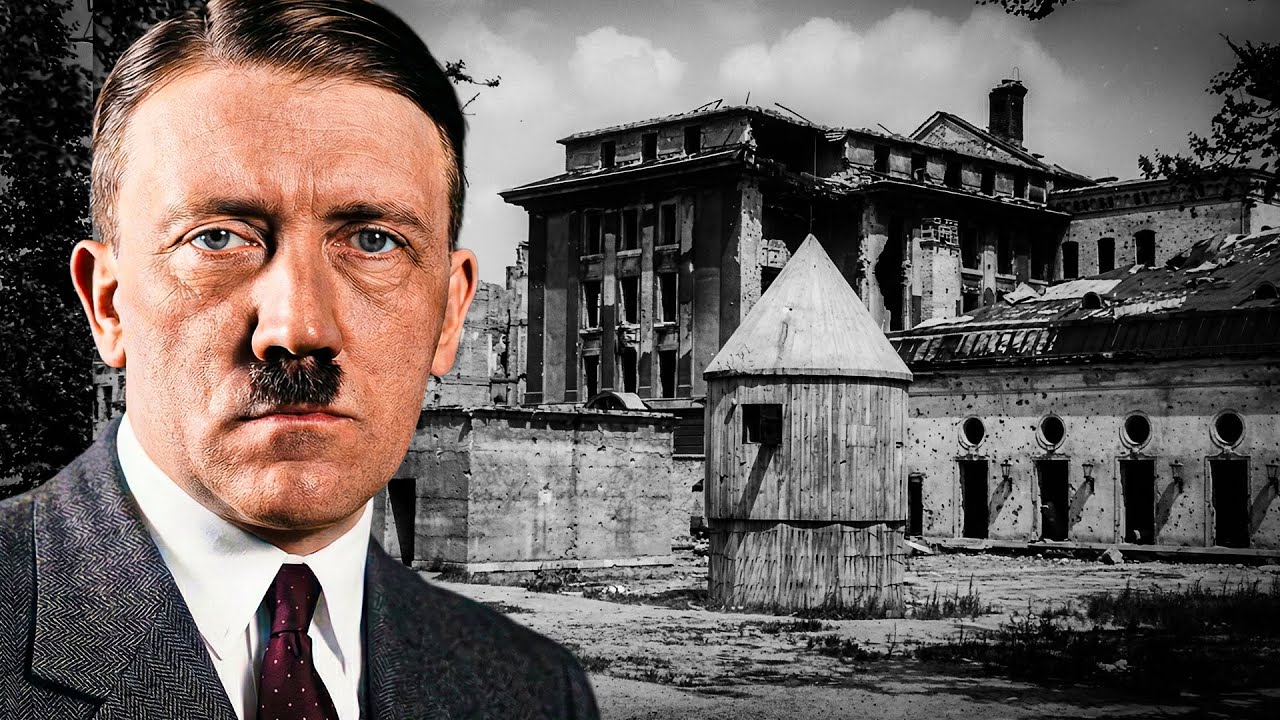
Adolf Hitler’s final hours in the Führerbunker have been laid bare, revealing a harrowing portrait of collapse, betrayal, and desperate last acts beneath the ruined capital. Within 48 hours, the dictator’s reign ended in a sealed underground tomb, marked by a rushed wedding, a dictated testament, and a flawed cremation.
By late April 1945, Hitler’s once vast empire was reduced to a crumbling illusion. Soviet artillery thundered above as Berlin fell to relentless Soviet forces, while Hitler was confined to his command center, a cramped concrete bunker buried 50 feet underground.
The Führerbunker, initially built in 1936 and expanded in 1944, became Hitler’s refuge from January 16 until the end. Despite luxurious carpets and portraits of Frederick the Great, the stifling air and dwindling water supply foreshadowed inevitable doom. This was no command post—it was a tomb waiting to close.
Comprised of an upper Vorbunker and a lower Führerbunker, the labyrinth housed Hitler’s private quarters and a map room. Thick concrete ceilings shielded them, but outside, Berlin turned to ash and rubble, the city’s defenses collapsing inch by inch.
By April 28, Soviet forces encircled the capital, mere meters from Hitler’s refuge. Reports flooded the bunker: the railway station was lost, enemy troops held the Tiergarten, while Martin Bormann’s terse telegram summarized the devastation succinctly: “Reich Chancellery, a heap of rubble.”
Inside, German generals scrambled for reinforcements with dwindling resources. Hans Krebs’ desperate call for relief was met with silence as both German armies faltered. Hitler faced the crushing truth—his empire was crumbling beyond any hope of salvation.
On April 28, betrayal struck deep. Heinrich Himmler, once a trusted SS chief, sought secret surrender talks with the Western Allies. Hitler’s fury was volcanic. Himmler was branded a traitor, and his envoy Hermann Fegelein was swiftly tried and executed within the bunker’s grim confines.
Amid this chaos, Hitler made a startling decision. Shortly after midnight on April 29, Walter Wagner, a city official, arrived to officiate a secret marriage between Hitler and Eva Braun, his companion for 14 years. Their union—brief and solemn—would last less than two days.
Within the dim map room, Wagner verified Aryan lineage, and the couple exchanged ill-fitting rings, reportedly taken from prisoners. Braun’s habitual signature gave way to “Eva Hitler,” a poignant final acknowledgement of their shared fate. A somber reception followed, champagne poured, but mood heavy with despair.
Hitler spoke of better times yet confessed the truth his staff already knew: defeat was inevitable. This marriage was not a joyful beginning but a farewell shrouded in gloom. Eva Braun’s name was sealed with their final vow as the bunker suffocated under mounting Soviet fire.
Late that night, Hitler summoned Traudl Junge, his secretary, to dictate a final political testament. Anticipation failed to meet expectation. His speech lacked reflection or remorse, instead repeating familiar accusations. Junge’s disappointment ran deep as the dictator’s rhetoric hardened, resigning to propaganda until the end.
The dictation, likely crafted with Joseph Goebbels’ help, bristled with familiar tone but absent authentic confession. Hand trembling, Hitler read from notes. Three copies were entrusted to couriers dispatched to preserve his last words beyond Berlin’s imminent fall.
As morning dawned April 30, news arrived of Mussolini’s brutal execution. Hitler’s reaction was muted but resolute—the end was near. Artillery blasts shook the bunker as general Helmuth Weidling’s briefing confirmed that ammunition would run out by evening, erasing any hope of sustained resistance.
Early that day, Hitler tested cyanide on his dog Blondie, verifying the poison’s effectiveness amidst fears of counterfeit capsules. Following this grim proof, capsules were distributed to loyal secretaries, who accepted the dictator’s somber farewell and bleak assessment of his military leadership.
At 2 p.m., Hitler convened one last meal with aides—quiet, unremarkable—the calm before history’s darkest moment. Rising, he declared, “The time has come. It’s all over.” Final farewells echoed in the bunker’s narrow corridors as the end closed in fast and absolute.
Eva Braun and Hitler bade farewell to remaining loyalists. Joseph Goebbels urged Hitler to flee, but defiance sealed their fate. At 3:30 p.m., accompanied by SS officers, the couple entered Hitler’s private study to meet their destiny away from prying eyes, alone in the shadow of destruction.
No witness survived their final moments, but later accounts confirm Hitler shot himself while Braun ingested cyanide. The powerful stench of gunpowder and burnt almonds lingered as their bodies were discovered, a grim testament to history’s closing act, witnessed only from outside the door.
Hitler’s pallid form slumped with a fatal gun wound beside Braun’s stillness. His Walther PPK pistol lay discarded, marking the dictator’s definitive exit. SS officers quickly wrapped the bodies, transporting them through the emergency exit into the ruined Reich Chancellery garden for their final rites.
The hasty cremation began with fire and petrol under the relentless barrage of Soviet shells. Despite repeated efforts, the remains refused complete destruction. Charred bones and fragments endured several hours before burial in a shell crater, a stark reminder of the brutal, unfinished nature of Hitler’s end.
Days later, Soviet troops uncovered the bodies, exhumed them, and secreted them away to the USSR. In a covert operation decades later, most remains were destroyed, with only fragments preserved for forensic study, now displayed in Moscow’s archives, confirming the dictator’s death beyond doubt.
Official news of Hitler’s demise broke on German radio May 1, 1945. Grand Admiral Karl Dönitz claimed succession, attempting to command the Reich’s shreds amidst utter collapse. Yet, confirmation of Hitler’s death sparked confusion and conspiracy, fueled by initial Soviet misinformation and the cloak of wartime secrets.
British intelligence assigned Hugh Trevor-Roper to untangle truth from rumor. His investigation, interviews, and document analysis culminated in his 1947 publication, The Last Days of Hitler, decisively affirming suicide in the bunker, ending decades of speculation and embedding this moment in historical record.
Hitler’s closest aides vanished with time—Traudl Junge, who typed his final testament, lived until 2002, grappling publicly with her memories. The bunker itself was razed; no trace remains of the physical space that witnessed the Reich’s collapse, only words and documents recount this unprecedented conclusion.
The Führerbunker’s final hours expose not just a leader’s demise but the collapse of a totalitarian nightmare. From secret weddings to political manifestos to desperate suicides, this underground tomb chronicles the end of tyranny with chilling clarity and demands remembrance of history’s darkest hours.


