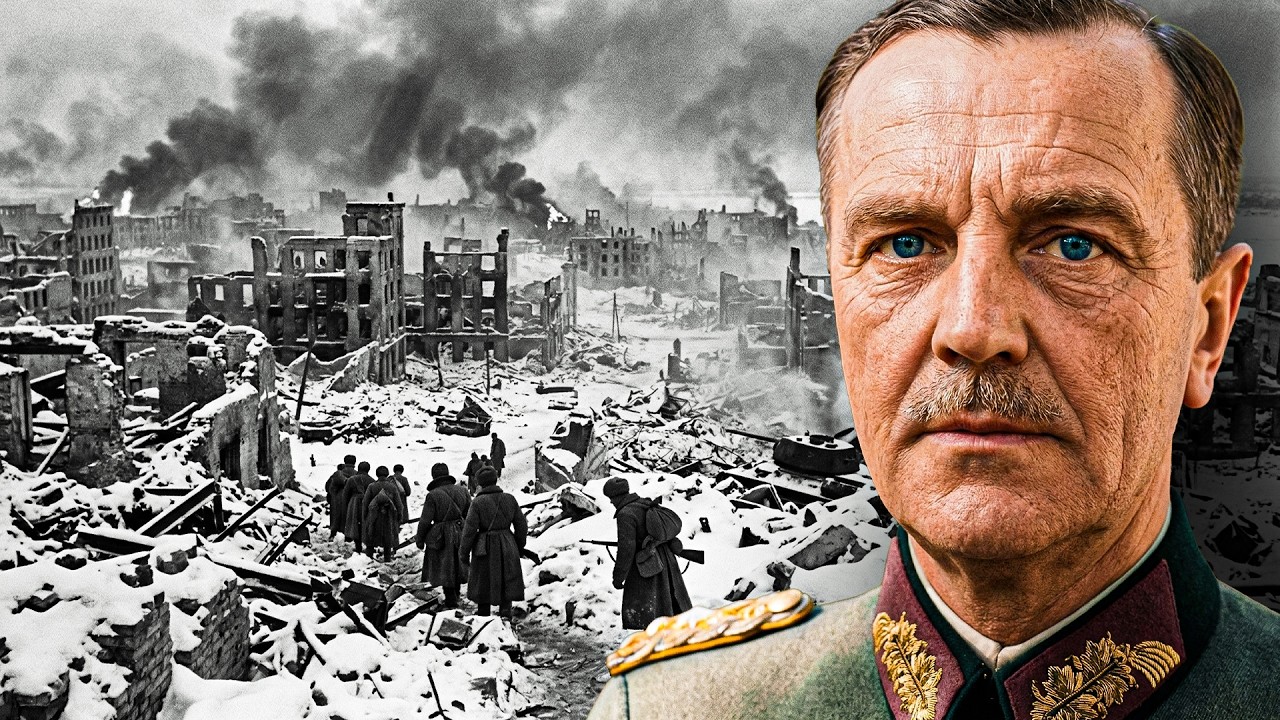
In a harrowing end to the Battle of Stalingrad, 24 German generals, including Field Marshal Friedrich Paulus, were captured by Soviet forces, marking an unprecedented capitulation that shook Nazi Germany to its core. These high-ranking officers faced brutal captivity and complicated fates, intertwined with Cold War politics and the war’s devastating aftermath.
As the German 6th Army teetered on the brink of collapse by late January 1943, encircled and starving in Stalingrad, their desperate holds finally broke. Field Marshal Friedrich Paulus, who had been recently promoted—a grim signal from Hitler to commit suicide rather than surrender—chose survival instead. Found gaunt and disheveled in the basement of a department store, he surrendered alongside 22 other generals.
The surrender of these towering military figures shattered the Nazi myth of invincibility. Over 200,000 German soldiers were trapped by Soviet Operation Uranus since November 1942, enduring relentless cold, starvation, and bombardment as their relief efforts stalled in fruitless desperation. The anticipated Luftwaffe airlift failed disastrously, sealing the 6th Army’s fate.
Two days after Paulus’s surrender on January 31, 1943, General Karl Strecker capitulated with the last holdout near the Barrikady factory, officially ending the brutal battle. Soviet troops then sifted through thousands of prisoners, isolating generals and senior officers for harsh interrogation and political manipulation.
The generals were separated from the rank and file and sent to a special facility known as Camp No. 48 in Voykovo, near Ivanovo, Russia. Nicknamed “the castle” for its relative comfort, this former sanatorium quickly became a gilded cage watched by the NKVD, with Soviet agents masquerading as staff to monitor every word and action.
In a chilling display of psychological warfare, the Soviets formed the National Committee for a Free Germany (NKFD) in July 1943, staffed by German communist exiles and carefully chosen POWs to foment dissent within Nazi ranks. This propaganda tool aimed to undermine German morale through broadcasts, leaflets, and covert appeals.
The establishment of the League of German Officers (BDO) in September 1943 deepened the Soviets’ campaign. Headed by General Walther von Seydlitz-Kurzbach, who controversially allowed independent surrenders during the battle’s chaos, the BDO pushed for mass desertion and even proposed an armed German force fighting alongside the Red Army—a prospect terrifying Nazi leadership.
Hitler’s regime reacted ruthlessly to these perceived betrayals. Seydlitz was sentenced to death in absentia and had his family detained under the brutal Sippenhaft policy, reflecting the regime’s paranoia and zero tolerance for dissent, highlighting the stark divisions within German military ranks even amidst captivity.
Paulus himself initially resisted Soviet overtures, maintaining loyalty to Germany despite mounting pressure. The turning point came after the failed July 20, 1944 assassination attempt on Hitler, which saw the execution of many officers close to Paulus. On August 8, 1944, he publicly renounced Hitler, delivering a scathing radio address urging German forces to abandon their leader.
This defiant stance came at a personal cost. The Nazi government imprisoned Paulus’s wife and daughter, marking the grim reality for families 𝒄𝒂𝓊𝓰𝒉𝓉 in the crossfire of loyalty and survival. Paulus became a symbol of shattered allegiances, forced to navigate captivity while confronting the regime he once served unflinchingly.
In a stunning moment at the Nuremberg Trials on February 11, 1946, Paulus appeared as a key witness against high-ranking Nazi officials. Smuggled in under heavy Soviet protection, his testimony detailed Nazi planning of the invasion of the Soviet Union and implicated senior leaders, significantly influencing the convictions and subsequent executions of his former commanders.
Post-trial, Paulus remained in Soviet custody but was afforded improved conditions, a stark contrast to the fate of most German prisoners. Living under guarded freedom in a Moscow villa, he spent his final years in East Germany as a military historian, never fully escaping the shadows cast by war and surrender.
Meanwhile, other generals met vastly different ends. Arthur Schmidt, Paulus’s steadfast chief of staff, refused all cooperation with Soviets, enduring twelve grueling years in captivity before release. General Ernst Walter Heitz, committed to fighting to the last, died in Soviet prisons, a grim testament to the brutal aftermath of defeat.
Several generals chose collaboration, becoming tools of Soviet propaganda and later shaping East Germany’s military and political landscape. Otto Korfes and Arno von Lenski exemplified this shift, transitioning into roles within the nascent East German military establishment, their wartime actions forever entwined with Cold War allegiances.
For those returning to West Germany, acceptance was fraught with tension. Many face accusations of treachery for broadcasting Soviet-directed appeals or cooperating with their captors. The Cold War divide turned former comrades into adversaries, fracturing families and loyalties even years after the guns fell silent.
Paulus’s release in 1953 to East Germany saw him assume a quiet civilian role far from public acclaim. His personal losses were profound: his wife died isolated in the West, their son was killed in action, and the family they once shared was effectively erased by war and politics.
Seydlitz’s journey was even more fraught despite cooperation. Tried and sentenced by a Soviet military tribunal for war crimes, his death sentence was quickly commuted. Released in 1955 amid political negotiations spearheaded by Chancellor Konrad Adenauer, Seydlitz returned to a country that branded him a traitor, denying him honors and acceptance.
The mass repatriation of German POWs in 1955, known as the Heimkehr der Zehntausend, was a watershed moment, ending Soviet captivity for thousands including Seydlitz. Yet, the return did not guarantee peace of mind—stigmas persisted, underscoring the enduring scars of warfare and ideological battles that defined the era.
Karl Rodenburg, commander of the 76th Infantry Division, outlived all fellow generals from Stalingrad, passing away in 1992 at 98. His long life marked the end of an extraordinary chapter defined by survival, surrender, and the bitter costs of one of history’s most brutal sieges.
Only around 6,000 of the approximately 91,000 men who surrendered at Stalingrad ever returned home. The 24 generals, despite facing brutal captivity and political manipulation, survived the war, their fates emblematic of the complex interplay of ideology, power, and human endurance during and after World War II.
The Battle of Stalingrad’s echo persisted long beyond the frozen ruins—captivity extended past victory and defeat, shaping post-war Europe through its deeply personal and political reckonings. The generals’ stories reveal a raw, urgent saga of war’s human toll, fraught decisions, and the relentless shadows cast by history.