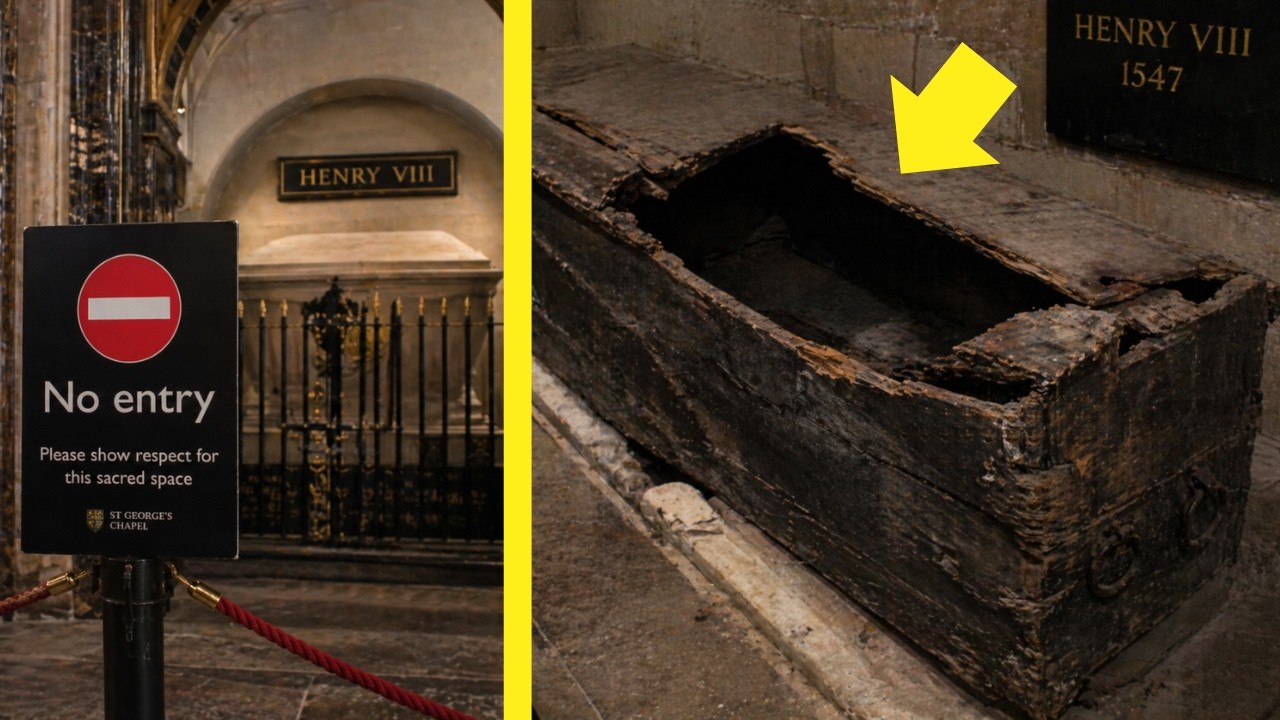
The royal vault of Henry VIII at St. George’s Chapel remains sealed, strictly off-limits to the public due to deep respect, fragile preservation, and critical security concerns. This hidden tomb, housing monarchs including Henry VIII and Charles I, stands as a solemn, untouchable relic of British history and royal dignity.
Few places in Britain carry the mystery and gravity of Henry VIII’s burial vault beneath St. George’s Chapel at Windsor Castle. Despite millions visiting annually, the sealed vault remains forbidden territory, carefully guarded from public eyes. This is not mere tradition, but a conscious decision grounded in respect, preservation, and profound national symbolism.
Henry VIII’s death in 1547 marked the end of an unparalleled reign that reshaped England’s political and religious landscape. Though he envisioned an extravagant monument rivaling Europe’s greatest tombs, the king was instead laid to rest in a modest vault beside his third wife, Jane Seymour. His grand tomb was never realized.
The vault’s closure is foremost a tribute to respect. It houses not only Henry VIII but Jane Seymour and later Charles I, whose secret burial after execution adds layers of historical weight. To disturb or commercialize this resting place would violate centuries-old British traditions honoring royal dignity in death.
Preservation is another vital concern. The Tudor and Stuart vaults were never built for tourism. Changes in humidity, temperature, or exposure to light and air could irreparably damage precious coffins, woodwork, and stone carvings. Past openings revealed Henry’s coffin’s fragile state, reinforcing the necessity to keep the vault sealed.
Safety risks compound the reasons for the ban. Ancient burial chambers feature uneven floors, cramped spaces, and weak structural integrity. Allowing visitors inside without compromising the site or endangering individuals is presently impossible due to these inherent hazards and modern safety standards.
Security issues also dictate restrictions. Royal vaults symbolize the British state and monarchy, making them potential targets for vandalism or theft. Unrestricted access risks damage from sheer numbers of visitors driven by curiosity. Controlled closure safeguards these priceless relics from harm and preserves national heritage.
The mystery of the hidden vault fuels public fascination. Its inaccessibility intertwines modern Britain with Tudor history, preserving a solemn, sacred atmosphere within St. George’s Chapel. The chapel remains an active place of worship, where royal ceremonies continue—transforming the vault from a tourist spectacle into a hallowed, reverent site.
Ethical considerations have evolved. While the past allowed tomb openings for curiosity or study, today’s standards emphasize dignity. Monarchs like Henry VIII deserve undisturbed rest unless urgent conservation demands otherwise. This ethical stance strengthens the resolve to keep the vault closed against spectacle or casual intrusion.
Ironically, Henry VIII himself reveled in grandeur during life, yet his resting place reflects humility and secrecy. The unfinished tomb contrasts sharply with his flamboyant reign. This dichotomy deepens public intrigue but reinforces why the vault must remain protected, locked away beneath plain stone floors.
The royal vault beneath Windsor Castle is not a museum for public exploration but a sacred tomb enveloped in history and national memory. For those who walk St. George’s Chapel, the kings and queens lie unseen, their stories preserved by silence and shadow, secured against time and trespass.
By respecting the vault’s closure, Britain upholds centuries-old traditions of royal dignity while safeguarding fragile artifacts from decay and disaster. It balances public interest with solemn remembrance, ensuring these royal legacies endure for future generations without compromise.
The secrecy surrounding Henry VIII’s resting place safeguards more than stone coffins—it protects the essence of British monarchy’s heritage. Visitors must accept that some chapters of history remain locked away, their powerful significance preserved behind walls that never open to curious crowds.
For now and the foreseeable future, Henry VIII’s royal vault at St. George’s Chapel remains a forbidden sanctum—a silent monument to a monarch whose life transformed a nation yet whose death commands unbroken respect and restraint from the living.
This undisclosed burial chamber stands as one of Britain’s most private and protected historical sites. Its inaccessibility ensures that the echoes of Tudor power and royal sacrifice linger undisturbed beneath Windsor’s ancient stones, continuing a solemn legacy far beyond the reach of public gaze.