New evidence has emerged revealing that, in the final days of World War II, Nazi officials orchestrated a desperate plan to flee to Greenland using specially equipped aircraft. This chilling revelation, backed by testimonies and wartime documents, reshapes our understanding of the Nazi regime’s collapse and their last-ditch attempts to evade justice.
As the Third Reich teetered on the brink of defeat in early 1945, Albert Speer, Hitler’s armaments minister, conceived a bold escape plan. Facing inevitable capture and death, Speer allegedly organized an operation to transport himself, family, and top Nazi staff to Greenland, intending to hide out through the harsh Arctic summer. His goal? To survive and return once the Allied powers supposedly lost interest.
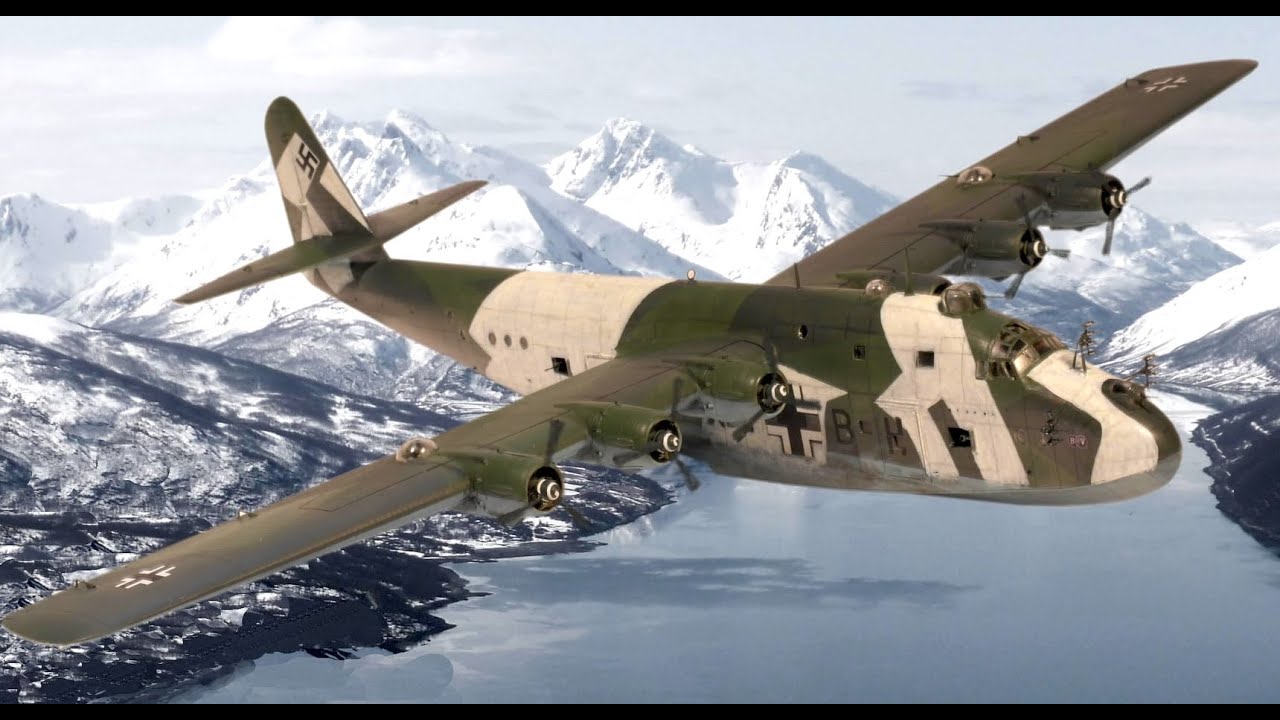
This plan was not mere fantasy. Speer had the necessary power, resources, and connections to set such a scheme into motion. He coordinated closely with Colonel Siegfried Kaemmerer, a Luftwaffe technical development chief, and utilized the secretive KG200 squadron, famed for flying covert missions with advanced aircraft, including the massive Blohm & Voss BV 222 flying boat.
The BV 222, a colossal six-engine aircraft capable of landing on water, was ideally suited for the Greenland mission. With a 6,100 km ferry range and seating for 92 troops, it could reach remote Arctic destinations without requiring airstrips in enemy-controlled territories. By April 1945, several of these aircraft were stationed at northern Germany’s Travemünde base, stocked with supplies for the operation.
Captain Ernst Kernik, a former Luftwaffe navigator, confirmed in 2003 that preparations progressed far beyond mere talk. His firsthand account detailed the accumulation of tents, skis, food, sledges, rifles, and fishing gear, all aimed at sustaining a sizeable group for six months without outside help. His testimony provides critical confirmation of the Greenland escape plan’s seriousness.
Despite the detailed readiness, fate intervened. Allied air raids on April 24, 1945, destroyed or heavily damaged two BV 222 aircraft, crippling the escape mission. This attack occurred near Plön, where Grand Admiral Karl Dönitz was establishing command as Hitler’s regime crumbled. The mission faced further delays and never launched.
Speer had peered into a grim future, predicting total defeat and the collapse of Germany’s war machine under relentless Allied bombing and resource shortages. Though he conducted his official duties amid chaos, his secret Greenland escape plan revealed his intent to flee punishment and secure his survival away from the reach of history’s judges.
The Nazi presence in Greenland was no coincidence. During the war, Germany operated weather stations along Greenland’s eastern coast to gather critical meteorological data, aiding their military planning. The frozen island was strategically familiar to the Nazis, making it a plausible destination for a desperate retreat.
Speer reportedly envisioned spending half a year isolated in Greenland, using the time to write memoirs and bide his time until the global focus shifted away from Nazi Germany. His confidence in the plan’s success highlights both his hubris and the desperation of Nazi leadership as the war drew to a catastrophic close.
High-level testimonies reveal that Hitler himself rejected escape plans, resolutely choosing to die in Berlin, while Speer and others considered alternate futures. Speer’s interactions in Hitler’s bunker suggest a man torn between loyalty and self-preservation as he sought to steer a collapsing regime toward his own salvation.
Further complicating the narrative, Speer met with Himmler and Dönitz, aligning with shifting power structures in the war’s final days. These actions underscore the internal chaos of Nazi leadership, each maneuvering to survive as the Reich fell apart beneath relentless Allied pressure.
Historical documents discovered in German wartime archives corroborate references to the Greenland operation, lending credence to testimonies and revealing meticulously planned but aborted escape logistics. Orders sent to base commanders and preparatory actions confirm the plan’s formality and high priority within the Nazi hierarchy.
Following Germany’s surrender in May 1945, the Greenland plan definitively collapsed. Allied forces arrested Speer and other Nazi officials involved, marking the end of this dramatic chapter. The destruction or concealment of BV 222 aircraft eliminated any chance for execution, confining Speer’s aspirations to desperate contingency planning.
This newly illuminated episode uncovers a rare glimpse into the frantic last moments of Nazi leaders facing obliteration. It reveals not only a strategic desperation but a profound, chilling willingness to abandon their devastated homeland for a frozen refuge, a haven shrouded in cold secrecy.
The implications are profound. They rewrite aspects of Nazi endgame history, shifting some focus from Hitler’s downfall to the survival strategies clandestinely pursued by his inner circle. The Greenland escape plan adds depth to our understanding of how the grotesque regime sought to endure beyond its demise.
Researchers continue to analyze surviving files, personal accounts, and military orders to piece together the full extent of this operation. The corroborating testimonies from veterans like Kernik and archival evidence suggest this was no myth but a nearly realized plot, halted only by Allied intervention.
This revelation also invites reflection on the broader Nazi escape networks, inspiring comparisons to infamous routes used by war criminals fleeing Europe. Greenland’s strategic use could have offered a chilling new dimension to the Nazi flight, blending military ingenuity with survival desperation.
The story’s emergence coincides with renewed geopolitical tensions over Greenland’s status, pumping fresh urgency into historical debates about territory, legacy, and unresolved wartime secrets. It underscores the persistent shadows cast by World War II and the layers still emerging from its murky aftermath.
In challenging long-held dismissals of escape theories, this evidence demands historians revisit and reassess some Cold War-era narratives that brushed aside such plans as fantasy or conspiracy. The Greenland operation proves those narratives may have underestimated Nazi determination and sophistication.
Although Speer and his cohort never achieved their polar refuge, the sheer scale and seriousness of their preparation signal a final, desperate gambit. This was a regime not just collapsing but fiercely plotting survival in the planet’s most inhospitable reaches.
As new information surfaces, it compels us to reconsider the lengths to which Nazi officials were willing to go. From ingenious aircraft use to covert logistical efforts, the Greenland plot exemplifies both technological prowess and moral bankruptcy wrapped in a desperate last stand.
The tale of Nazi Greenland escape plans offers a sobering reminder of wartime desperation and post-war reckoning. It opens a haunting window onto a fraught moment when evil sought refuge not in surrender but in icy isolation, hoping to outwait history’s judgment.
Further investigation promises to shed light on unanswered questions: how close did the plan come to execution? Were other sites considered? Could the escape have succeeded? The quest to unlock these secrets continues to fascinate experts and capture the public imagination.
This astonishing chapter in World War II history challenges us to confront uncomfortable realities about power, defeat, and the lengths humans will go to preserve themselves amid cataclysmic collapse. The Greenland escape plan stands as a stark testament to desperation and dark resolve.


