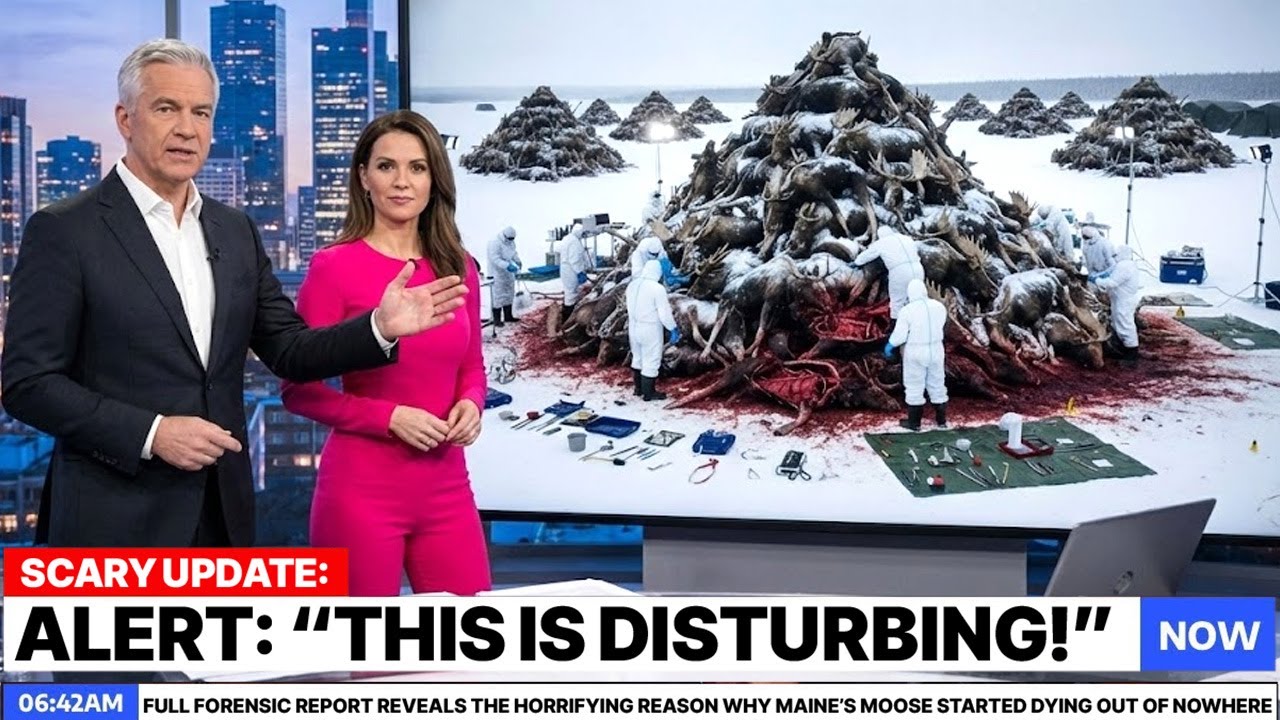
A devastating forensic report reveals an unprecedented 90% mortality rate among Maine’s moose calves, decimating populations across 2,000 square miles. The silent killer: tens of thousands of blood-draining winter ticks thriving in warmer falls, turning once-thriving forests into grim graveyards and pushing moose to the brink of extinction.
Maine’s iconic moose are facing an unprecedented crisis. The forensic investigation uncovered a staggering mortality rate—90% of tracked moose calves died in a single season. This mass die-off spans a vast region northwest of Moosehead Lake, leaving behind a haunting landscape filled with carcasses. The situation is nothing short of a biological massacre.
Investigators initially expected typical causes: predation or disease. Instead, they discovered something far more sinister. Moose were found emaciated, their skin rippling with tens of thousands of live parasites. The culprit—a native winter tick—does not simply bite and drop off but latches on, feeding relentlessly for months, causing severe blood loss and anemia.
The horrifying scale is unimaginable. One moose carcass harbored over 90,000 ticks, each draining milliliters of blood over the long winter. This blood loss equates to a human donating blood daily for weeks without recovery. Autopsies revealed severe malnutrition, fetal deaths, and debilitating anemia—symptoms directly linked to these parasitic infestations.
This scourge leads to a triple threat: starvation from halted feeding, exsanguination due to massive blood loss, and hypothermia after moose lose their insulating fur coat by scratching ticks away. The “ghost moose,” pale and fur-less, are symptomatic of deep suffering and declining survival odds in northern Maine’s frigid environs.
Winter ticks employ a unique life strategy, known as one-host parasitism. Larvae hatch in the fall and cluster on foliage, then transfer en masse to the first passing moose, remaining attached for 5 to 6 months. This prolonged feeding cycle allows tick populations to explosively flourish when winters are mild and snow is delayed.
Climate change is the core driver of this crisis. Warmer autumns extend the tick questing period, allowing larvae months more to find hosts. Historic frost and early snow once kept tick populations in check by killing off larvae before they could latch. Rising temperatures—an increase of 3°F since 1895—have dismantled that natural barrier.
Compounding the problem is Maine’s commercial logging boom. The resulting regrowth of shrubs and saplings has turned swaths of forest into ideal tick habitats and moose feeding grounds. This has caused moose densities in some areas to soar to 40 per 10 square miles—prime conditions for tick transmission and unprecedented infestations.
The combination of climate and ecological changes has created a perfect storm. Increased moose density means more hosts for ticks. Warmer, longer falls ensure more surviving tick larvae. The outcome is a devastating biological weapon—ticks exploiting their victim’s evolutionary naivety, as moose lack effective defenses against these parasites after only a recent arrival to North America.
Faced with this emergency, Maine’s wildlife officials propose a controversial but urgent solution: increased hunting to deliberately reduce moose population density. The hypothesis is straightforward—fewer moose reduce tick hosts, starving tick populations and allowing survivors a better chance at health and reproduction, potentially averting species collapse.
In 2022, an experimental moose hunt was implemented in District 4, splitting it into control and intensified hunting zones. Early results show promise—areas with hunting saw reduced tick loads on moose and higher calf survival rates. This marks a pivotal moment in wildlife management, accepting population reduction to preserve the species’ long-term future.
Other interventions, like fungal biopesticides and permethrin-coated collars, showed tick reduction potential but proved impractical for wild moose management at scale. The hard reality remains: to save Maine’s moose from extinction, tough population control measures must be embraced, trading sheer numbers for healthier, sustainable herds.
The forensic report underscores a brutal lesson from nature’s shifting balance. A few degrees of warming can unleash lethal new predator-prey dynamics. The winter tick has been weaponized by climate change, transforming into a predator of one of North America’s largest mammals, whose survival instincts and physical attributes can no longer protect it.
Neighboring states reflect the spreading crisis. New Hampshire experiences 70% tick-induced mortality, and Vermont’s moose population has plummeted by 60% since 2000. Maine, once seen as a stronghold, is now the frontline. The fate of the North Woods moose hangs in the balance, demanding immediate, informed action to halt the decline.
The “ghost moose” sightings haunting forests symbolize a silent apocalypse. These skeletal, fur-less creatures are not mythical but signs of excruciating torment and impending death. Wildlife professionals warn that unless steps are taken, the once-vibrant moose may become nothing more than spectral reminders in the snow-covered wilds.
This crisis compels society to confront difficult ethical questions. Should we support mass hunts to save a species pushed to the edge, or should nature’s brutal course be allowed? The answers will define the future of Maine’s forests and the iconic moose that once ruled them with unmatched majesty.
The forensic investigation stands as a stark warning: climate change affects more than landscapes; it rewires ecosystems, turning familiar species into vulnerable prey. The winter tick’s devastating outbreak in Maine is a clear signal—urgent, decisive steps are essential for conservation in a rapidly changing world.
Immediate action, based on robust scientific data, offers a chance to reverse the decline. But acceptance of these harsh measures is critical. The survival of Maine’s moose depends on balancing wildlife density, habitat conditions, and climate realities to outsmart this microscopic killer before the silence in the forest becomes irreversible.


