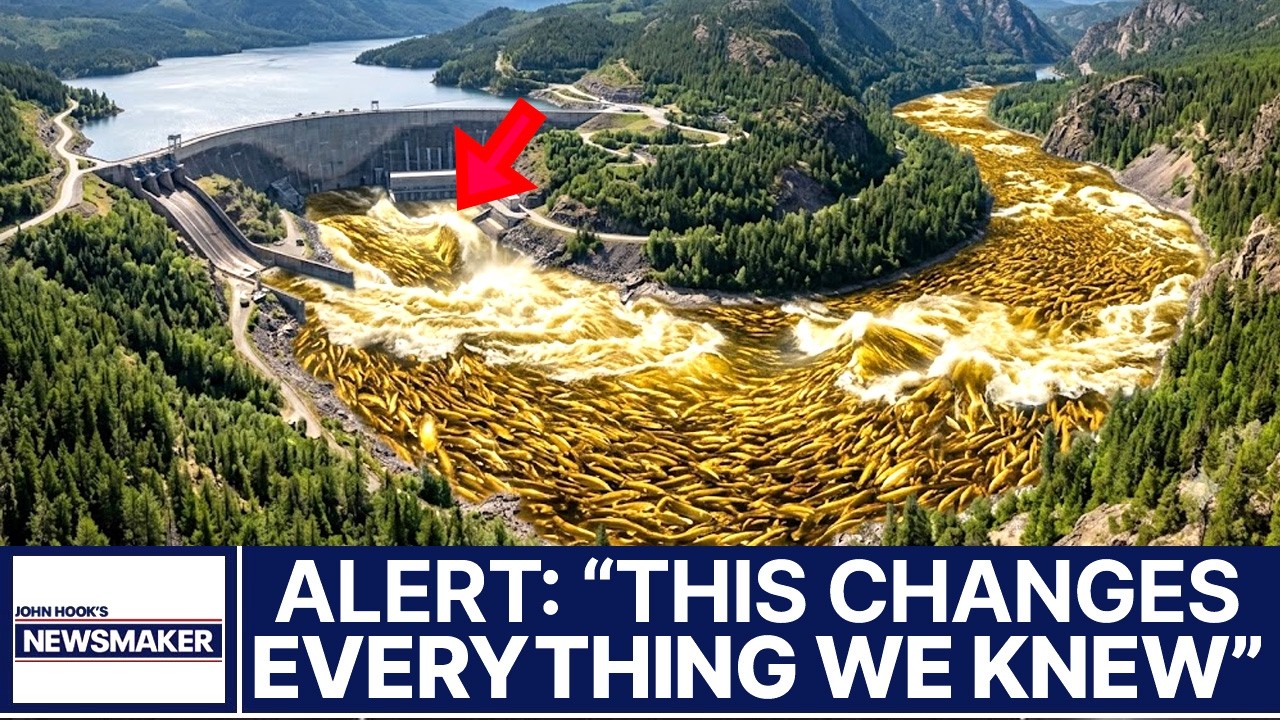
A Massachusetts river once devastated by centuries of dams and pollution, blamed for the near extinction of its legendary 2 million-strong herring run, has surged back to life, defying official death certificates. Historic dam removals opened the brook, unleashing a silver tide that promises to restore a foundational ecosystem and revive ancient traditions.
Town Brook, the site where Plymouth Colony’s survival intertwined with thriving herring runs, had its abundant spring migration strangled by more than 300 years of industrial dam building. Once teeming with millions of river herring, the fish count plummeted to mere thousands, silencing the pulse of a system vital to the coastal food web.
These unassuming alewives and bluebacks fuel entire ecosystems by transforming plankton into protein, then feeding predators from osprey to striped bass. Their diadromous life cycle deposits ocean nutrients deep inland, keeping forests and freshwater systems alive. Without them, entire chains of life unravel and collapse, silently starving from the bottom up.
The first dam, built in 1636 to power a gristmill on Town Brook, was the opening act in three centuries of irreversible habitat destruction. Thousands of dams followed across New England, blocking migratory routes and fragmenting once-glorious runs. The worst consequence: herring tirelessly pushing against impenetrable concrete walls, oblivious that their ancestral paths had been sealed shut.
Massachusetts’ 1921 survey officially declared rivers like the Mill River too damaged to restore. Similar declines echoed up and down the Atlantic coast, with runs dropping over 95%. By the early 2000s, few believed these fish could ever rebound, especially on the iconic brook that seeded America’s first Thanksgiving.
Desperation fueled volunteer “bucket brigades,” who manually lifted thousands of fish above dams to sustain fractured populations. However, this piecemeal effort was a fragile stopgap rather than a solution, highlighting the urgent need for structural change to restore free-flowing river corridors.
The tide turned in 2002 when crews removed the Billington Street Dam on Town Brook, Massachusetts’ first intentional dam removal. Heavy machinery tore away centuries-old concrete, restoring the river’s natural flow and revealing long-buried streambeds. To biologists’ astonishment, herring streamed through the reopened passage within months, proving instinct overrode generations of barriers.
Subsequent removals revived additional spawning habitats, culminating in the dramatic dismantling of the monumental Holmes Dam in 2019. This keystone barrier’s removal unchained the river, allowing herring unimpeded access upstream for the first time in 400 years—no human buckets required, just an open river reclaiming its birthright.
Fish counters documented a startling disparity: 94% of herring navigated open stretches, while only 6% forced past remaining dams. This cold, conclusive data galvanized further dam removals across Massachusetts, propelling restoration efforts from a local experiment to a statewide movement reshaping hundreds of miles of waterways.
Parallel projects resurrected the Mill River and even the heavily urbanized Mystic River, where runs swelled to records of over 800,000 herring by 2024. The return of these once-forgotten fish in concrete jungles spotlighted nature’s resilience and the profound ecological impact achieved by removing mere walls of concrete.
In 2025, the United States shattered records by removing 100 dams in a single year, reopening nearly 5,000 miles of river habitat. Massachusetts led with 11 demolitions alone, reinvigorating fisheries and reconnecting communities to ancestral waters. Each project embodies a public investment in living rivers over lifeless relics.
The comeback extends beyond fish. Ospreys, eagles, turtles, and countless species follow the silver tide upstream. Nutrients carried from the ocean fertilize freshwater ecosystems inland, reviving habitats diminished for generations. This cascade underscores that herring recovery stabilizes entire landscapes, restoring centuries-old ecological balances.
For the Indigenous Wampanoag people, the herring’s return revives a 12,000-year-old cultural rhythm tied to seasonal fish migrations. Renewed herring day gatherings pass knowledge across generations, healing not just rivers but ancestral connections severed by environmental decline.
Yet, the restoration journey is unfinished. On Town Brook, a carefully crafted nature-like bypass around the historic 1636 mill preserves history while granting fish passage, illustrating the delicate balance between remembrance and ecological renewal. Compromise paves the way forward in real-world river restoration.
The once-muted brooks of Massachusetts now roar with life. The silver fish surge back, breathing vitality into rivers once written off as dead, dismantling centuries of ecological despair. Their return embodies the possibility that no barrier is permanent, and even the longest environmental tragedies can be rewritten.
This dramatic revival signals a turning point in freshwater conservation. It challenges policymakers, communities, and conservationists to envision rivers not as relics but as dynamic, resilient systems worthy of liberation and care. The herring’s comeback is a clarion call to dismantle barriers—literal and figurative—that choke nature’s pulse.
From Plymouth’s historic waters to urban hubs shadowed by concrete, America’s river herring runs shine again. The silver surge is a living testament to collective will, scientific rigor, and the power of ecological restoration rooted in truth and patience. What was once lost is now fiercely reclaiming its place in the world.
As the silver fish reclaim their streams, the question turns to us all: which walls will be torn down next? Which rivers, written off and forgotten, are poised for revival? The Town Brook story proves the impossible comeback is real—and the clock is now ticking forward on restoration everywhere.