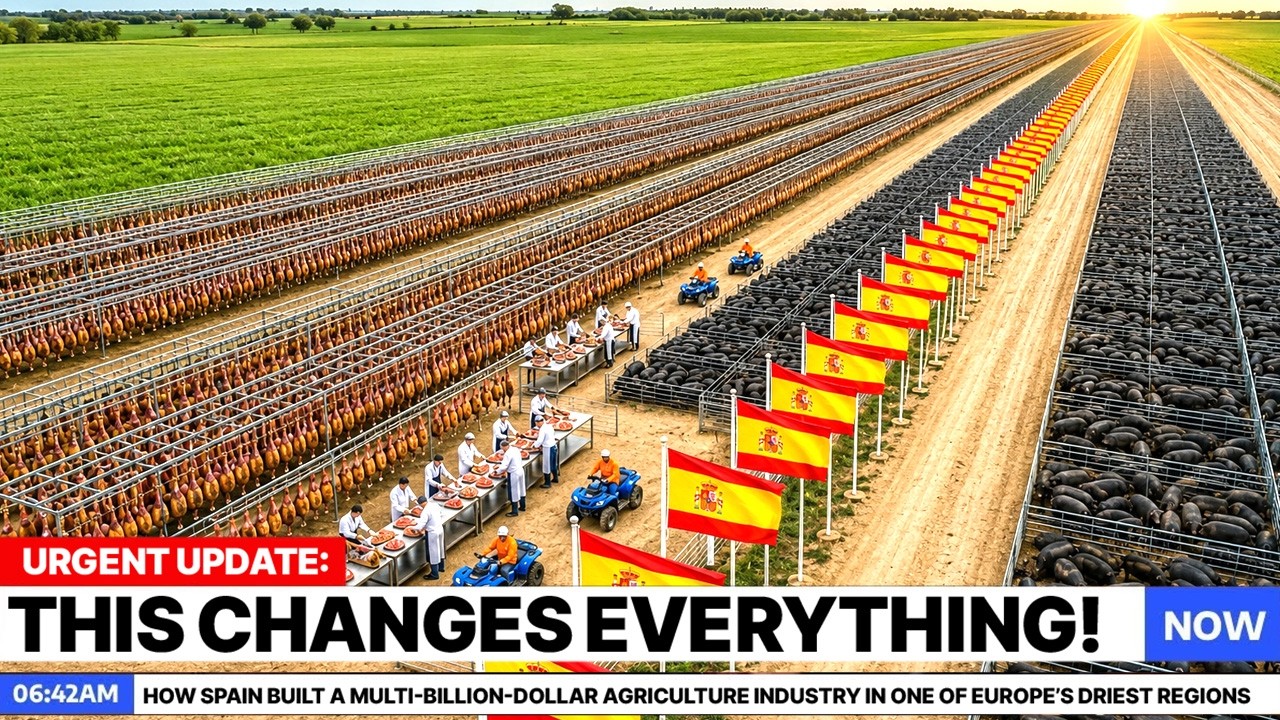
In southern Spain’s arid lands, a multi-billion dollar agricultural empire has arisen against all odds, transforming one of Europe’s driest regions into a powerhouse of food production. From plastic-covered greenhouses to vast olive groves and floating mussel farms, Spain defies drought with ingenious engineering, feeding millions across continents.
Beneath the scorching sun and relentless drought, Spain’s agricultural miracle unfolds in Almería, where over 80,000 acres of plastic greenhouses stretch like a shining white ocean visible from space. This extreme ingenuity turns desert soil into a fertile ground for year-round cultivation of tomatoes, peppers, and cucumbers, supplying supermarkets across Europe with fresh produce.
The region’s drastic water scarcity—demanding over 80% of Spain’s freshwater—forces farmers to battle on two fronts: producing crops while conserving every precious drop. A sophisticated drip irrigation system delivers water directly to roots, reducing waste by up to 80%, and plastic coverings create a controlled environment that shields crops from harsh heat and disease.
Once one of Spain’s poorest areas, Almería’s rise began in the 1940s with simple plastic sheets over crops that doubled yields by trapping moisture. Today, it stands as Europe’s largest intensive vegetable farming zone, shipping millions of tons of food annually worth billions of euros, proving that innovation can conquer climate extremes.
The agricultural success story stretches to Andalusia, home of the world’s largest concentration of olive groves and the epicenter of Spain’s booming olive oil industry. With nearly 300 million olive trees able to thrive under drought conditions, Andalusia produces 40-45% of the world’s olive oil, turning dry hillsides into a source of “liquid gold.”
Olive oil’s soaring value amid recent drought-driven shortages has transformed it into a high-security commodity, locked behind tags like electronics in stores across the globe. The region’s state-of-the-art mechanized harvesting, including hydraulic shakers and giant straddle harvesters, ensures rapid collection, preserving premium oil’s quality within hours of picking.
Beyond crops, Spain’s traditional Iberian ham industry thrives in the semi-wild oak forests called dehesas. Here, free-roaming Iberian pigs feast on acorns, creating the world’s prized jamón ibérico de bellota. The painstaking curing process, lasting up to four years, imbues the ham with unmatched flavor, producing a multi-million euro export product with soaring global demand.
Spain’s adaptability also extends to renewable energy farms, where solar panels shade grazing sheep, creating symbiotic systems that generate power, cut maintenance costs, and sustain livestock. This dual-use land maximizes productivity under the brutal sun, contributing over 17% of the nation’s electricity supply and reinforcing the blend of tradition and technology driving Spain’s agricultural resilience.
The country’s vast vineyards—largest worldwide by area—exploit extreme diurnal temperature changes to perfect grape quality. Nighttime mechanical harvesters delicately collect grapes under cool, dark conditions to preserve their aroma and acidity, fueling Spain’s position as the top global wine exporter and showcasing precision farming tailored to environmental challenges.
Meanwhile, Spanish aquaculture innovates by farming mussels on floating bateias in Galicia’s nutrient-rich coastal waters. This scalable, low-impact system harnesses natural ocean currents, producing 200,000 tons annually without artificial feed, exemplifying Spain’s commitment to maximizing every available resource, land or sea, despite geographical limitations.
Spain’s agricultural empire proves that hardships like drought and poor soil are not barriers but catalysts for innovation. By marrying advanced technology, biological methods, and an intimate knowledge of local climates, Spain is setting a precedent for water-stressed and warming regions worldwide, offering a blueprint for future food production under global environmental pressures.
Crucially, Spain’s success is not a story of overcoming nature but reinventing it—turning its harshest elements into advantages. Whether through white plastic seas cooling the land beneath, mechanized olive harvesters, or acorn-fed pigs roaming oak woodlands, each breakthrough transforms vulnerability into unparalleled global market strength.
The tension remains: this finely tuned system balances on the fragile knife-edge of climate variability. Droughts can still devastate harvests, spike prices, and send shockwaves through global supply chains, as witnessed in recent years. Spain’s model, while groundbreaking, underscores the precariousness of farming under intensifying environmental stress.
As the world watches Spain’s transformative agriculture model unfold, the pressing question arises: can this hyper-engineered future sustain long-term? Is precision farming with plastic, automation, and biological pest control the answer for a warming planet, or is it a trade-off at the expense of traditional practices and ecological diversity?
Spain’s pioneering approach blends necessity with innovation, producing billions in exports and feeding millions from dust and sun. It is a live case study, challenging preconceptions about barren lands and offering hope, while cautioning about the limits imposed by nature’s unforgiving hand and humanity’s relentless thirst.
In summary, Spain has built a colossal food industry from nearly nothing—arid soil, scarce water, harsh sun—demonstrating that with ingenuity, technology, and relentless adaptation, extremes can be transformed into assets. This extraordinary feat in one of Europe’s driest areas is not just a national triumph; it’s a global wake-up call.


