For more than five decades, Carol Burnett has been remembered as one of television’s warmest and most generous performers. Her famous smile, playful audience conversations, and fearless physical comedy made viewers feel as though they knew her personally. Behind that joyful public image, however, Burnett also carried the responsibility of protecting one of the most demanding productions on television—and there was one moment when even her patience reached its limit.
The man at the center of that confrontation was Harvey Korman.
To audiences, Korman was an essential part of The Carol Burnett Show. His dignified appearance made his inevitable collapse into absurdity even funnier, especially when Tim Conway’s unpredictable improvisations caused him to lose control in the middle of a sketch. Together, Burnett, Korman, Conway, Vicki Lawrence, and Lyle Waggoner created a comedy ensemble whose chemistry still feels effortless decades later.
But maintaining that chemistry required more discipline than viewers ever saw.
Burnett was not merely the star whose name appeared in the title. She was also responsible for the atmosphere surrounding the production. Guest performers had to feel welcome, rehearsals had to remain productive, and the cast needed to function as a team despite the enormous pressure of producing a new variety show every week.
That responsibility became painfully clear during one difficult rehearsal.
According to Burnett’s own account, Korman arrived in a foul mood and behaved rudely toward guest stars and other people working on the episode. Burnett initially tried to continue without escalating the situation, but his attitude became impossible to ignore. She later explained that she felt responsible for protecting everyone who had entered her studio to work.
After rehearsal, she went directly to his dressing room.
Burnett asked what was wrong and told him that his behavior toward the guests had been unacceptable. Rather than apologizing, Korman reportedly told her to mind her own business.
That response changed the conversation immediately.
Burnett reminded him that it was her show. The guest stars, cast members, and crew were all working under her name, which meant his behavior was very much her business.
Korman argued that she could not control how he felt or tell him how to behave. He then suggested that he might as well leave and never return after completing that evening’s performance.
Burnett refused to retreat.
She calmly told him that he could go.
For a performer who was normally uncomfortable with confrontation, it was an extraordinary moment. Burnett had spent much of her life trying to avoid hurting people’s feelings. Yet she understood that leadership occasionally required doing something emotionally difficult.
She effectively fired one of the most important performers on her show.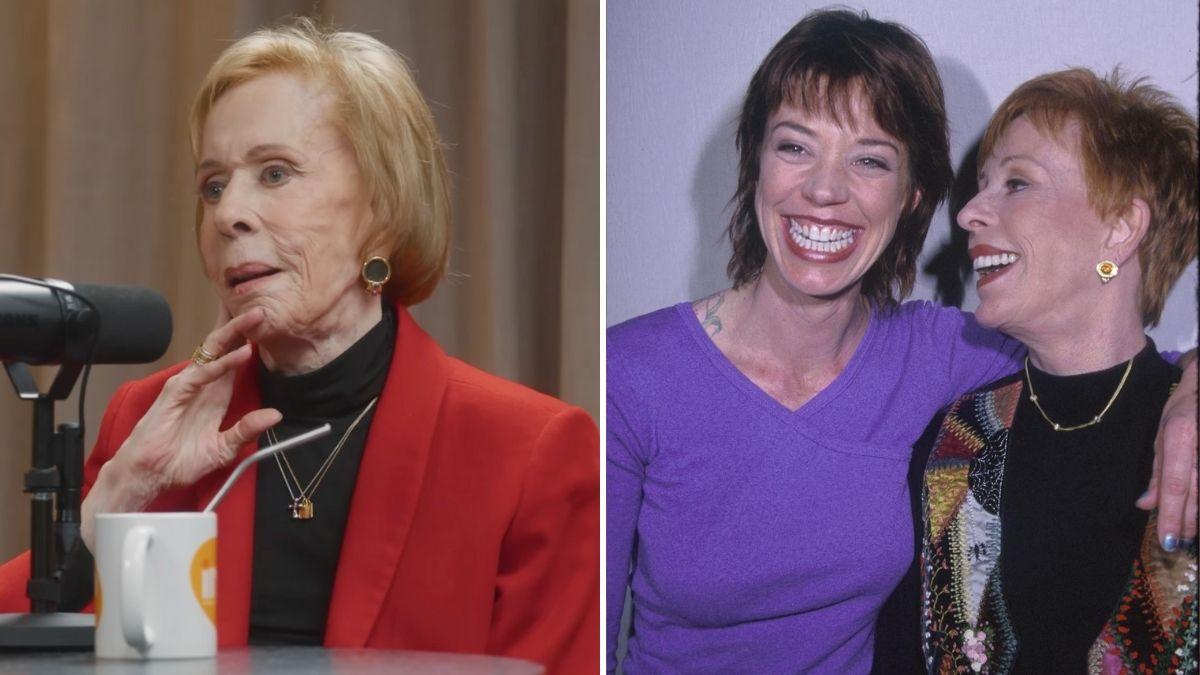
The confrontation did not end their partnership, however.
Korman returned to work with a dramatically improved attitude, and the two continued creating memorable comedy together for years. Burnett later turned the entire episode into a humorous story, even recalling that she placed a sign on his dressing-room door to remind him to behave professionally. Her account suggests that the incident was not born from lasting hatred but from a clear boundary she was finally willing to enforce.
That distinction matters because later online stories have exaggerated Burnett’s private conflicts into lists of men she supposedly “hated.”
Some versions claim that Marlon Brando humiliated her during a disturbing telephone call. Burnett did receive an unexpected call from Brando, but the story she publicly told was humorous: she was thrilled to hear from the famous actor while simultaneously embarrassed because she was in an uncomfortable situation at home. Available accounts do not support the darker version portraying the conversation as a cruel attack on her talent.
Other stories claim that Cary Grant publicly dismissed her as an untalented housewife or that Saturday Night Live creator Lorne Michaels privately banned her because he considered her comedy outdated. Reliable evidence supporting those specific incidents has not surfaced.
The verified stories of Burnett’s career show something very different from a woman consumed by grudges.
She regularly allowed other performers to shine, even when she was not part of the sketch. Vicki Lawrence later recalled that Burnett would stand in the wings watching her colleagues perform because she genuinely wanted everyone on the show to be as funny as possible.
That generosity helped make Harvey Korman indispensable.
His partnership with Burnett worked because each performer understood how to support the other. Korman could portray arrogant businessmen, frustrated husbands, pompous authority figures, and melodramatic villains, while Burnett knew exactly how to puncture his dignity at the perfect moment.
Their comic clashes looked spontaneous, but they were built on precision and trust.
The dressing-room confrontation demonstrated that trust could sometimes be tested. Korman’s frustration may have reflected the pressure of producing weekly television, but Burnett knew that personal unhappiness could not be allowed to poison the entire workplace.
She did not confront him because she disliked him.
She confronted him because she valued the show—and the people making it—too much to remain silent.
Korman ultimately stayed with The Carol Burnett Show for ten seasons, winning four Emmy Awards and a Golden Globe for his performances. His work remains inseparable from the show’s legacy, particularly his unforgettable attempts to keep a straight face while Tim Conway destroyed every carefully rehearsed scene around him.
Their relationship also endured beyond the difficult rehearsal.
Burnett continued speaking of Korman with admiration and affection, remembering him as a brilliant performer whose seriousness made the comedy even funnier. The isolated confrontation became a lesson in leadership rather than the conclusion of a bitter feud.
Burnett faced more painful struggles in her personal life.
Her 21-year marriage to producer Joe Hamilton ended in divorce in 1984. Their professional and personal lives had become deeply intertwined through The Carol Burnett Show and later projects connected to characters originating in its sketches. Burnett later acknowledged her own tendency to avoid conflict and described herself as having a lifelong need to please people—something that complicated both her relationships and her ability to express unhappiness.
The divorce also temporarily strained her relationship with Vicki Lawrence during the development of Mama’s Family, which Hamilton produced. Lawrence has explained that Burnett distanced herself during that painful period, but the two women eventually reconciled and became close again.
That pattern reveals more about Burnett than sensational stories about secret hatred ever could.
She was capable of being hurt.
She sometimes withdrew when emotions became overwhelming.
She occasionally reached a point where confrontation was unavoidable.
But she also forgave, repaired relationships, and repeatedly chose collaboration over bitterness.
The truth behind Carol Burnett’s most famous backstage conflict is therefore less scandalous—and far more meaningful—than the exaggerated rumors.
She did not spend her career secretly despising the men around her.
She spent it learning how to lead them.
When Harvey Korman crossed a professional boundary, Burnett finally found the courage to defend her guests, her crew, and the culture she had created. She risked losing one of her greatest collaborators, not because she wanted revenge, but because she understood that kindness without boundaries could eventually become weakness.
The confrontation lasted only a short time.
The partnership survived for years.
And together, Carol Burnett and Harvey Korman produced laughter that outlived the disagreement that nearly separated them.