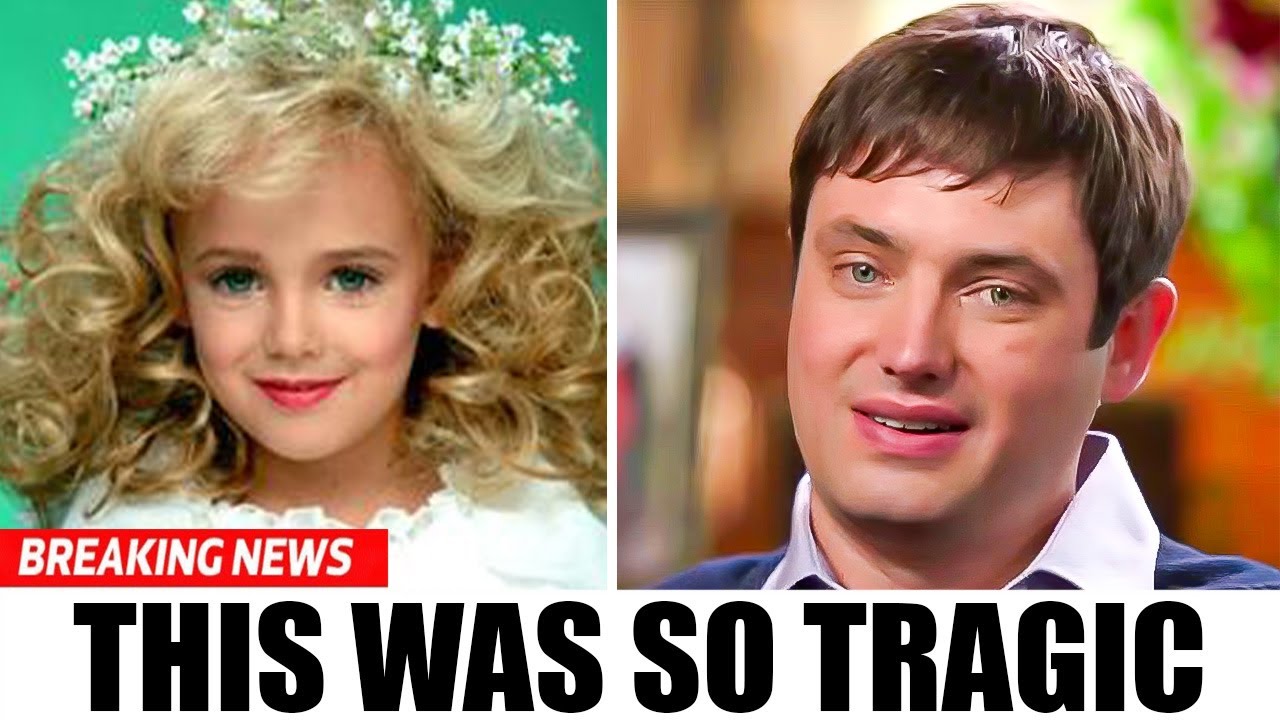
The murder of six-year-old beauty queen JonBenét Ramsey in December 1996 remains one of America’s most haunting unsolved crimes. For nearly three decades, the case has been a magnet for speculation, controversy, and conspiracy theories. Now, after 28 years of silence, JonBenét’s older brother Burke Ramsey has finally spoken publicly—reviving new questions, cautious hope, and renewed scrutiny of a case that never truly left the public consciousness.
The Night That Changed Everything
On the morning after Christmas, the Ramsey family’s world collapsed. JonBenét was found dead in the basement of her family’s upscale Boulder, Colorado home. She had been strangled with a garrote and suffered a severe skull fracture.
A chilling detail intensified the mystery: a two-and-a-half-page ransom note, written on paper from inside the house, demanding $118,000—an amount eerily close to John Ramsey’s recent work bonus. The note’s length, tone, and specificity immediately raised alarm bells.
Hours after police arrived, John Ramsey himself discovered JonBenét’s body in the basement wine cellar. The crime scene was already compromised—friends, family members, police officers, and clergy moved freely through the house, unknowingly contaminating evidence.
Experts would later describe the Boulder Police Department’s handling of the scene as catastrophic.
Suspicion Turns Inward
From the outset, suspicion gravitated toward the family.
There were no signs of forced entry. The garrote used in the killing was made from a paintbrush taken from Patsy Ramsey’s art supplies. Handwriting analysis on the ransom note could not conclusively eliminate Patsy.
As investigators struggled to find evidence of an intruder, attention turned inward—toward the Ramseys themselves.

Feeling besieged, the family hired attorneys and public-relations consultants. They limited police interviews and controlled their media exposure. While legally advised, these actions fueled public suspicion and shaped a lasting narrative of secrecy.
The Media Frenzy
The case exploded nationally, and the media became a second courtroom.
Tabloids and cable news dissected every gesture, every interview, every photograph. Patsy Ramsey was vilified for allowing JonBenét to participate in child beauty pageants. Burke, just nine years old at the time, was pulled into the spotlight, his behavior endlessly analyzed.
Journalists later condemned the coverage as reckless. Geraldo Rivera staged a mock trial on television. The case transformed into entertainment, and justice took a back seat to ratings.
As one veteran reporter later said, it became a “media assassination.”
DNA Evidence Shifts the Narrative
For years, the dominant theory centered on family involvement. Then, in 2006, a major development changed everything.
Advanced DNA testing found genetic material from an unknown male on JonBenét’s clothing—DNA that did not match any Ramsey family member.

In 2008, Boulder’s district attorney formally cleared John, Patsy, and Burke Ramsey, issuing a public apology for years of suspicion.
But the DNA deepened the mystery rather than resolving it. The profile was entered into CODIS, the national DNA database, yet no match emerged. Later analysis revealed the DNA was a mixture from multiple contributors, further complicating the case.
Burke Ramsey Breaks His Silence
For nearly three decades, Burke Ramsey said nothing.
Then, in a stunning move, he agreed to a three-part interview with Dr. Phil, marking his first major public appearance since childhood.
“If the story is going to be told,” Burke said, “I want to tell it. I don’t want people talking about me. I would rather tell my own story.”
He denied any involvement outright, responding “absolutely not” when asked whether he struck JonBenét. He described remaining in bed the morning she was reported missing, believing she was hiding.
His demeanor—nervous, occasionally smiling—was again scrutinized. Burke explained that his childhood reactions had long been misinterpreted as guilt rather than confusion and trauma.
Previously unseen police interview footage reinforced his account: a frightened, disoriented child—not a calculating suspect.

Investigative Failures and Lingering Theories
Despite official exoneration, theories persist.
Some believe an intruder was responsible—possibly someone connected to JonBenét’s pageant life. Others continue to argue a family cover-up, fueled by early investigative errors.
Those errors are well-documented:
-
The home was never properly secured
-
Evidence was contaminated
-
Statements were delayed for months
-
JonBenét’s body was moved by her father
-
Key evidence has never undergone modern DNA testing
Former Boulder Police Chief Mark Beckner later admitted the initial response was deeply flawed.
Despite advances such as genetic genealogy—which solved cases like the Golden State Killer—Boulder PD has been slow to deploy cutting-edge methods.
The Family’s Fight for Justice
JonBenét’s half-brother John Andrew Ramsey has emerged as a vocal advocate for renewed investigation.
“This case can be solved,” he insists. “If we follow the facts and use modern technology, we will find this killer.”
John Ramsey, now in his 80s, continues to push for answers. In early 2025, he met with Boulder’s new police chief, who promised a more transparent review. Since 2022, the department has partnered with Colorado’s Cold Case Review Team, digitizing thousands of tips.
Still, frustration remains. The family continues to petition for independent DNA testing.
Life After the Tragedy
Today, Burke Ramsey, 37, lives quietly in Michigan, working as a software engineer. He declined participation in Netflix’s 2024 documentary, citing years of unfair media treatment.
Patsy Ramsey died in 2006, never seeing public exoneration during her lifetime. John Ramsey remarried in 2011 and continues to advocate for justice.
Will There Ever Be Answers?
Nearly 30 years later, JonBenét Ramsey’s murder remains officially open—and unresolved.
As Burke Ramsey finally speaks, the hope is not for renewed accusation, but for clarity. For accountability. For truth.
The question remains unanswered:
Will JonBenét’s killer ever be found—or has time, error, and spectacle buried the truth forever?
Until then, her name endures—not as a headline, but as a child whose story still demands justice.