For decades, Dave Gahan has stood at the center of one of the world’s most influential electronic bands. As the unmistakable voice of Depeche Mode, he became the face of a musical revolution that shaped generations. Yet behind the sold-out arenas and timeless songs was a man fighting battles that nearly ended both his career—and his life.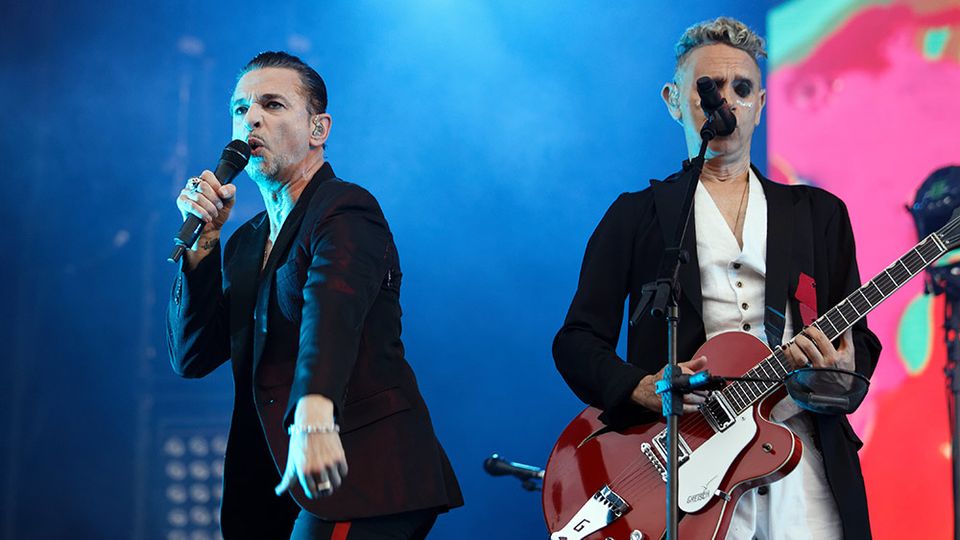
Looking back at his remarkable journey, Gahan no longer speaks with regret or denial. Instead, he reflects with honesty about the choices that almost destroyed him and the hard-earned peace he eventually found.
Born in 1962 in Basildon, Essex, Dave Gahan’s childhood was marked by instability long before fame entered the picture. He lost the man he believed to be his father at a young age, only to later discover that his biological father had left the family years earlier. Those experiences left lasting emotional wounds that he has acknowledged influenced much of his early life.
As a teenager, Gahan frequently found himself in trouble with the law. Vandalism, car theft, and repeated encounters with police painted the picture of a young man searching for direction. Looking back, he has often said that music became the one force capable of pulling him away from a destructive path.
That opportunity arrived in 1980.
After joining the band that would become Depeche Mode, Gahan’s charismatic stage presence and distinctive voice quickly transformed the group into one of the defining acts of modern music. Alongside Martin Gore, Andy Fletcher, and Alan Wilder, he helped create classics including “Enjoy the Silence,” “Personal Jesus,” and “Never Let Me Down Again.”
While millions admired the band’s success, few understood the personal cost that accompanied it.
Throughout the 1990s, Dave Gahan struggled with severe heroin addiction. As Depeche Mode reached new creative heights, his personal life spiraled into crisis. Repeated attempts at recovery failed, relationships suffered, and his health deteriorated dramatically.
Everything came to a head in May 1996.
While staying at the Sunset Marquis Hotel in Los Angeles, Gahan suffered a heroin overdose. Medical personnel later revived him after he was clinically dead for approximately two minutes. The incident became the defining turning point of his life.
Rather than allowing the experience to destroy him, Gahan eventually chose recovery.
The road back was neither quick nor easy, but over time he rebuilt both his health and his relationship with music. Sobriety also transformed his creative ambitions. No longer content to serve only as Depeche Mode’s lead singer, he began contributing his own songwriting, earning increasing recognition on albums including Playing the Angel and subsequent releases.
The loss of longtime bandmate Andy Fletcher in 2022 presented another profound challenge.
Instead of signaling the end of Depeche Mode, the tragedy strengthened the bond between Gahan and Martin Gore, who completed the album Memento Mori as both a tribute to their friend and a meditation on mortality, resilience, and hope.
Today, at 63, Gahan speaks with a perspective very different from the man who once believed he could outrun his past.
Asked about Depeche Mode’s future, he has explained that neither he nor Martin Gore feels pressured to rush into another project simply to satisfy expectations. After decades defined by relentless touring, addiction, and survival, they have earned the freedom to create only when inspiration genuinely arrives.
For Gahan, that may be the greatest confirmation of all.
He no longer measures success by chart positions, sold-out concerts, or public approval. Instead, he values something he once feared he would never achieve: peace with himself.
His story is ultimately not about rock-and-roll excess but about redemption. It is the story of a man who confronted addiction, survived the unimaginable, accepted responsibility for his past, and emerged with a deeper appreciation for life, family, and music.
More than forty years after joining Depeche Mode, Dave Gahan’s greatest achievement may not simply be the songs he helped create—but the life he fought so hard to reclaim.
💬 Which Depeche Mode song has stayed with you through the years? Do you think Dave Gahan’s personal journey adds even greater meaning to the band’s music? Share your thoughts below.
#DaveGahan #DepecheMode #MementoMori #MusicLegend #RockHistory #ElectronicMusic #MusicStories #Recovery #UntoldStories #ClassicMusic


