For decades, Ingrid Bergman was remembered as one of the most elegant and admired actresses in cinema history. Her face represented classic Hollywood beauty. Her performances represented emotional honesty. And her name became associated with unforgettable films such as Casablanca, Notorious, and Gaslight.
To audiences, she seemed almost untouchable.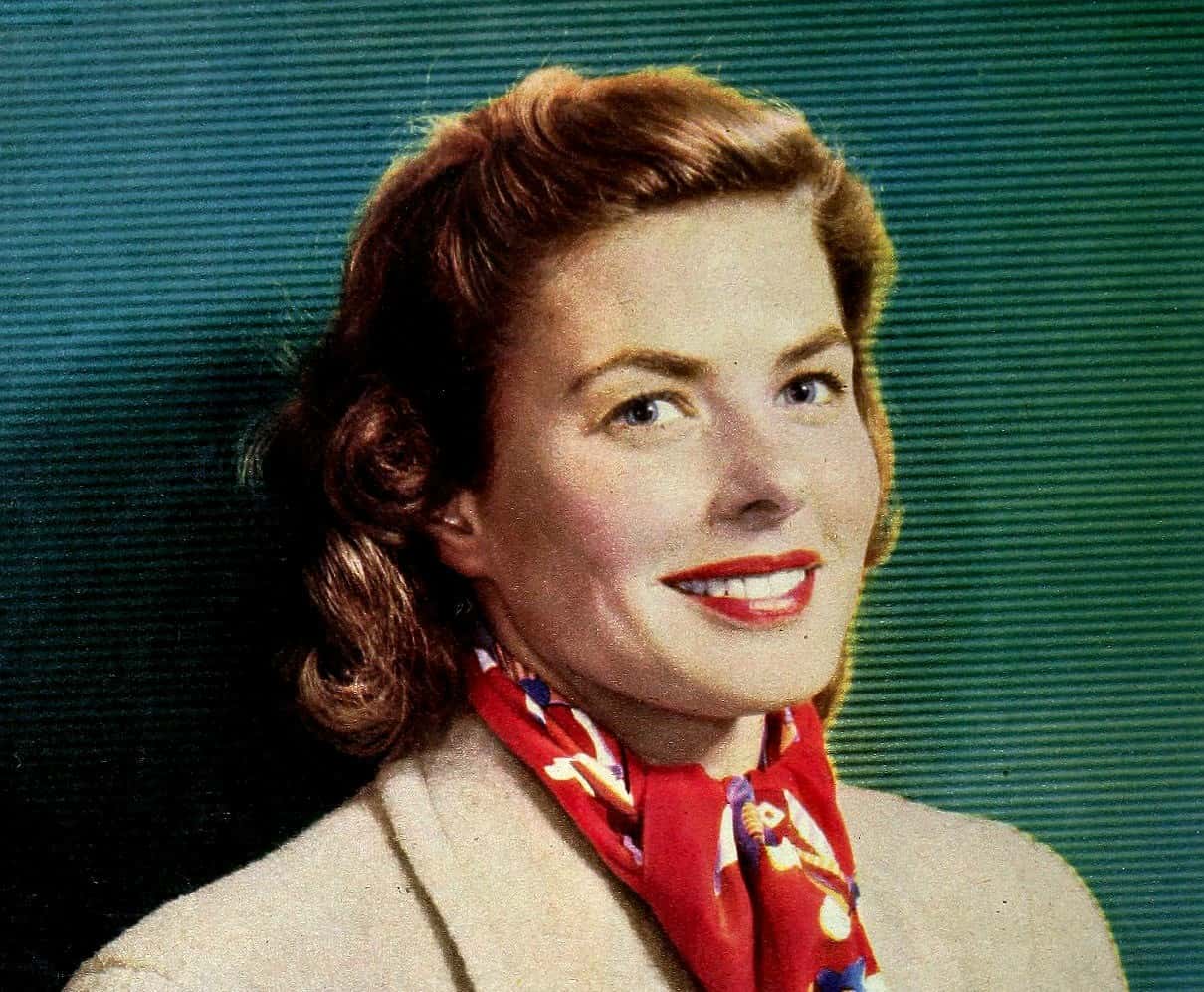
She was the image of grace, sophistication, and perfection.
But Ingrid Bergman’s real life was far more complicated than the characters she played on screen.
Behind the awards, the fame, and the admiration was a woman who made difficult choices, faced enormous public criticism, and refused to allow Hollywood to completely control her story.
Years later, her autobiography offered a rare glimpse into the private thoughts of a woman who had spent much of her life being viewed through the eyes of others.
It revealed not a perfect movie star.
But a real person.
Ingrid Bergman was born in Stockholm, Sweden, in 1915. From an early age, she showed a natural ability for performance, eventually studying acting and beginning her career in Swedish cinema.
Unlike many actresses of her era, Bergman did not rely on exaggerated glamour. Her appeal came from authenticity.
She looked like a real person.
She acted with emotional honesty.
And audiences connected with her because her performances felt genuine.
Hollywood quickly recognized her talent.
After moving to America, Bergman became one of the most celebrated actresses of the 1940s. Her role as Ilsa Lund in Casablanca alongside Humphrey Bogart transformed her into an international star.
The film became one of the most beloved movies ever made, and Bergman’s performance captured the complicated emotions of love, sacrifice, and impossible choices.
She followed that success with other acclaimed performances, including Gaslight, which earned her the first of three Academy Awards.
At the height of her career, Ingrid Bergman seemed to represent everything Hollywood wanted from a leading actress.
But the carefully created image of perfection would eventually collapse.
The moment that changed everything came in the late 1940s.
While filming Stromboli in Italy, Bergman developed a close relationship with director Roberto Rossellini. Their connection became one of the biggest scandals in entertainment history.
At the time, Bergman was married to Swedish dentist Petter Lindström and had a young daughter, Pia.
When news of her relationship with Rossellini became public, the reaction was overwhelming.
The same public that had admired her suddenly turned against her.
Newspapers criticized her.
Commentators questioned her morality.
Politicians even spoke publicly about the controversy.
In an era when female stars were expected to maintain a carefully controlled image, Bergman’s decision to follow her personal feelings was viewed by many as a betrayal of the persona Hollywood had created for her.
Her career in America suffered.
She was distanced from the Hollywood system and spent years working primarily outside the United States.
But Bergman refused to pretend her life was something it was not.
She believed honesty mattered more than maintaining an artificial image.
That decision came with consequences.
But it also became one of the defining examples of her independence.
Years later, when Bergman looked back on her life through her autobiography, she attempted to reclaim something she had lost during the scandal years.
Her own voice.
For much of her career, other people had told the story of Ingrid Bergman.
The press.
The studios.
The public.
Her memoir allowed her to explain her own experiences, emotions, and decisions.
One of the most discussed moments from her writing involved a provocative phrase that generated significant attention and speculation.
The line was interpreted by many readers as a revealing comment about her personal relationships, particularly her intense connection with Rossellini. But beyond the literal meaning, it reflected something deeper—the overwhelming emotional impact that certain people had on her life.
The phrase became controversial because it challenged the carefully controlled image audiences had of Bergman.
She was no longer simply the elegant actress from classic films.
She was a woman with desires, regrets, passions, and complicated emotions.
That honesty changed how many people viewed her.
Instead of damaging her reputation, the passage eventually became part of a larger understanding of who Ingrid Bergman really was.
She was not a flawless Hollywood symbol.
She was a human being.
After the controversy faded, Bergman rebuilt her career.
She continued delivering remarkable performances and eventually returned to Hollywood recognition. Her role in Anastasia earned her another Academy Award, proving that her talent remained stronger than any scandal.
In her later years, she continued acting with the same dedication that had defined her entire career.
Her performance in Ingmar Bergman’s Autumn Sonata in 1978 earned her another Academy Award nomination and became one of her most emotionally powerful roles.
The irony was that the woman once criticized for revealing too much about herself became admired precisely because she refused to hide.
Ingrid Bergman’s legacy is not only about the films she made.
It is about the courage to live honestly in a world that demanded perfection.
Her memoir did not destroy the image of Ingrid Bergman.
It completed it.
It showed that behind the beautiful face and legendary performances was a woman who made choices, faced consequences, and continued moving forward.
The real story of Ingrid Bergman was never about scandal alone.
It was about independence.
It was about resilience.
And it was about having the courage to tell your own story.