For decades, Graham Hancock has stood at the center of one of archaeology’s most polarizing debates. To mainstream scholars, he has long been viewed as a provocateur—an outsider challenging carefully constructed timelines of human civilization. To his supporters, he has been a voice asking the questions others refused to ask: What if advanced knowledge existed far earlier than we’re willing to admit? What if parts of human history were erased by catastrophe and time?
Now, a wave of extraordinary tomb discoveries across multiple continents is intensifying that debate in ways never seen before. While no single find “proves” Hancock’s theories outright, the accumulation of evidence is forcing experts to confront an uncomfortable possibility: our understanding of ancient civilizations may be incomplete—perhaps profoundly so.
 The Tunnel Beneath Cleopatra’s World: An Engineering Enigma
Near Alexandria, Egypt, archaeologists have uncovered what many are calling one of the most baffling structures ever found from the late Ptolemaic era: a 1-kilometer-long underground tunnel, carved through solid rock, buried more than 13 meters beneath the Temple of Taposiris Magna.
Led by Dominican archaeologist Kathleen Martinez, the excavation revealed a structure whose precision geometry, drainage systems, and architectural symmetry rival some of the most advanced ancient constructions ever documented.
The tunnel’s slope is mathematically consistent. Its walls are remarkably uniform. Sections appear designed to manage groundwater intrusion—something modern engineers still struggle to perfect underground.
Martinez believes the passage may be linked to Cleopatra VII’s final resting place, a tomb that has eluded archaeologists for centuries. But beyond its destination, the tunnel itself is what has stunned experts.
According to conventional timelines, Egypt in Cleopatra’s era was politically weakened and technologically diminished. Yet this structure suggests engineering knowledge far beyond what the period is traditionally credited with.
This is where Graham Hancock’s arguments re-enter the conversation.
 Inherited Knowledge or Lost Civilization?
Hancock has long argued that ancient Egypt did not develop its brilliance in isolation or from scratch. Instead, he proposes that Egyptians may have inherited fragments of advanced knowledge from a much older civilization—one potentially wiped out by global cataclysms near the end of the last Ice Age.
He points to recurring patterns:
-
Monumental stonework with near-impossible precision
-
Advanced geometry appearing suddenly, not gradually
-
Engineering methods that seem to emerge fully formed
The Cleopatra tunnel, Hancock suggests, fits this pattern disturbingly well.
“How,” he asks, “does a civilization supposedly in decline produce subterranean architecture that rivals modern engineering logic?”
While critics remain cautious, even they admit the tunnel raises serious questions about continuity of knowledge in ancient Egypt.
 China’s Terracotta Army: Too Advanced for Its Time?
Discovered in 1974, the Terracotta Army has always been impressive. But recent analyses have deepened the mystery.
Over 8,000 life-sized warriors, each with unique facial features, armor styles, and postures, were crafted with astonishing realism. Metallurgical studies show advanced bronze casting techniques. Traces of lost pigments indicate vibrant original colors—achieved using chemical processes ahead of their time.
What unsettles historians is not just the artistry, but the organizational sophistication required to produce such a force:
-
Standardized yet individualized components
-
Assembly-line efficiency without loss of detail
-
Logistical coordination across decades
This level of complexity challenges older narratives that portray the Qin dynasty as technologically crude or transitional.
Again, Hancock argues this suggests knowledge systems already in place, rather than inventions emerging slowly over generations.
 The Maya Tomb That Changed Everything
In Guatemala, the discovery of the tomb of Takab Chak, a previously unknown Maya ruler, has upended long-held assumptions about early Maya civilization.
The tomb contained:
-
Exquisitely carved jade masks
-
Painted ceramics with symbolic narratives
-
Architectural alignment consistent with astronomical events
Radiocarbon dating places the tomb centuries earlier than expected for such cultural sophistication.
For decades, historians taught that the Maya gradually evolved from simple villages into complex societies. Takab Chak’s tomb suggests something else entirely: a fully developed elite culture appearing almost suddenly.
To critics of Hancock, this may still fit within revised timelines. To Hancock’s supporters, it echoes a global pattern of “civilizations appearing fully formed.”
 Egypt’s ‘Dark Age’ That Wasn’t So Dark
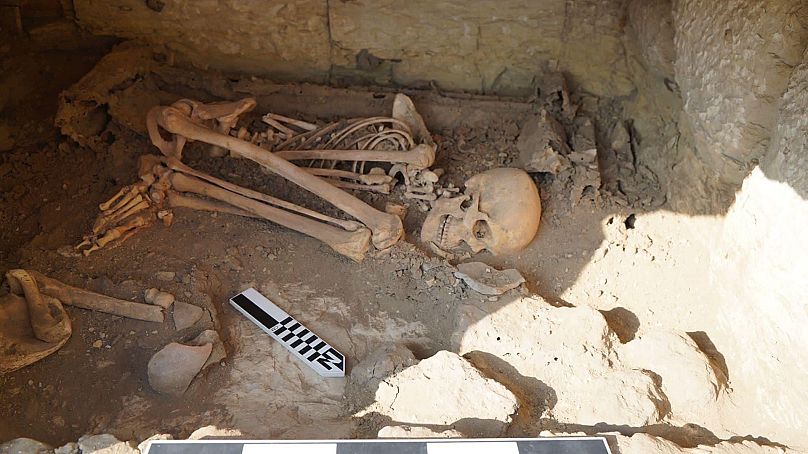
Perhaps most damaging to traditional narratives is the tomb of Susenesis I, discovered in Tanis. Long believed to belong to a so-called “Egyptian dark age,” the tomb contained vast treasures of silver, gold, and masterfully crafted artifacts.
Silver, rarer than gold in ancient Egypt, requires extensive trade networks and metallurgical expertise. Its presence contradicts the idea of cultural collapse.
Instead, it suggests continuity—knowledge preserved, not lost.
If Egypt never truly forgot its skills, where did those skills originate?
 A Global Pattern Emerging
Individually, each of these discoveries can be debated. Collectively, they form a troubling pattern:
-
Advanced engineering appearing earlier than expected
-
Artistic mastery emerging without clear developmental stages
-
Knowledge surviving political collapse and cultural upheaval
This is the exact pattern Hancock has argued points toward a much older global legacy, fragments of which were inherited by later civilizations.
Mainstream archaeologists still reject the idea of a lost Ice Age civilization—but many now concede that human history is far less linear than once believed.
 History at a Crossroads
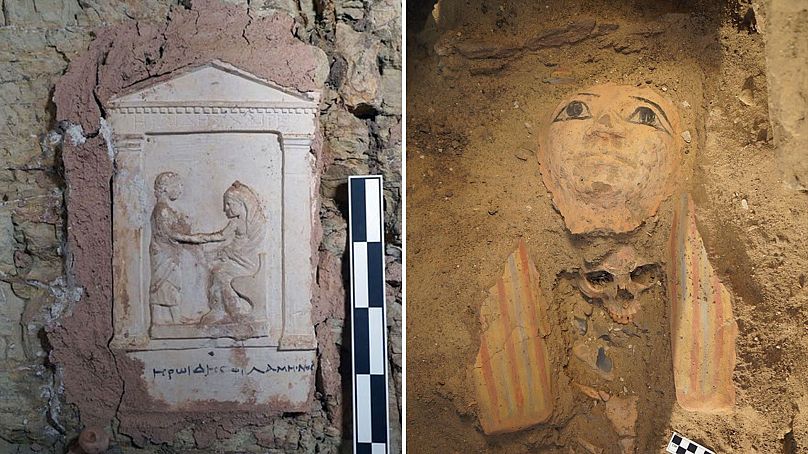
What makes this moment different is not just the discoveries themselves, but the growing willingness of scholars to admit uncertainty.
As excavation technology improves and previously inaccessible sites are explored, the past is revealing itself to be messier, richer, and more interconnected than textbooks ever suggested.
Graham Hancock may not be fully vindicated—but his central question now echoes louder than ever:
What if ancient humans knew far more than we’ve allowed ourselves to believe?
As more tombs are opened and more anomalies emerge, one thing is clear:
the story of human civilization is still being written—and the next chapter may change everything.