At 100 years old, Dick Van Dyke has finally addressed the relationship that defined five of the most celebrated years in American television history — and the answer is more complicated than any single version of the story that has circulated for decades.
For more than half a century, three people who were inside it offered three different accounts. Carl Reiner, who created The Dick Van Dyke Show, insisted Van Dyke and Mary Tyler Moore would have been a couple if they had not been married to other people. Moore herself said plainly that she loved everything about him.
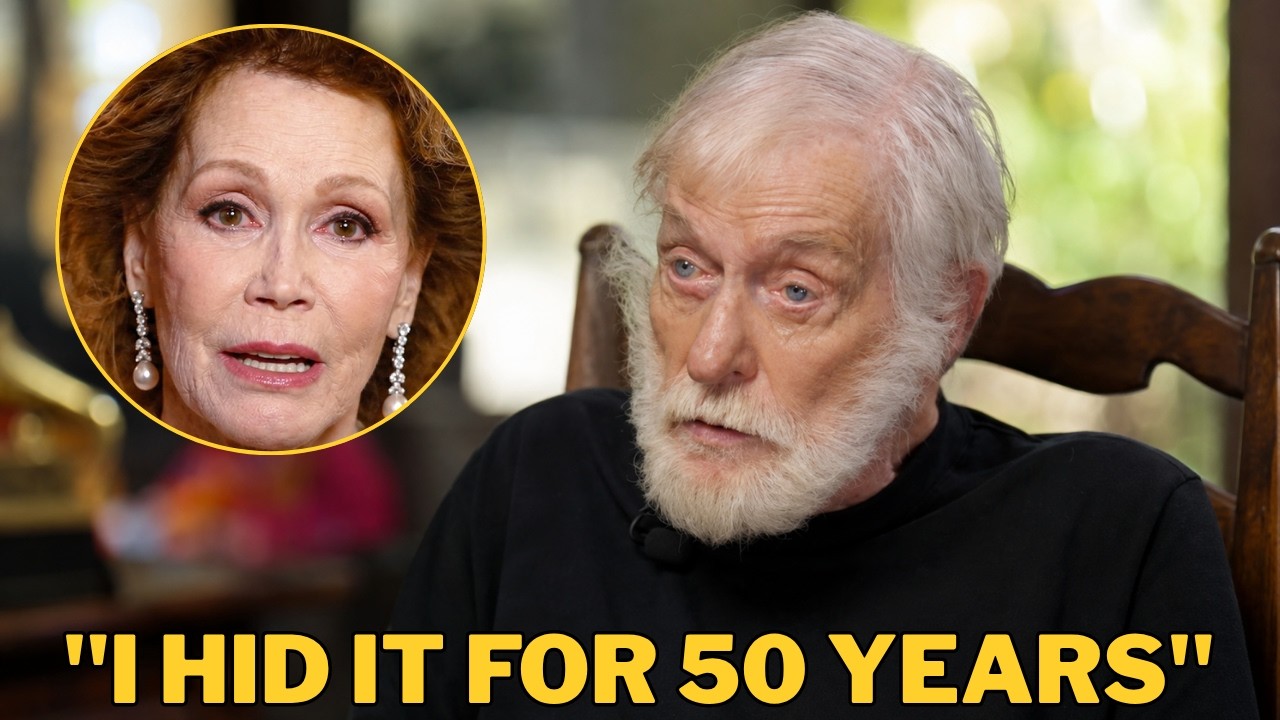 And Van Dyke, now the last surviving witness from that set, has long framed it as something closer to a sibling bond.
Now, at a century of life, with every contemporary from that era gone, Van Dyke is the only one left to reconcile those versions. He has not denied Reiner’s claim. He has not confirmed it either.
But in his recently published book and in interviews given around his 100th birthday, he has allowed something through that suggests the story was never as simple as he once made it seem.
Reiner went to his grave in June 2020 carrying a knowledge he had held for more than 50 years. In the days after Moore’s death in January 2017, Reiner finally said it publicly: both Van Dyke and Moore had admitted to him privately, separately, that if they had not been married to other people during those five years, they definitely would have been a couple. They were made for each other, he said.
Van Dyke’s public response has been characteristically careful. He acknowledged the crushes. He called the chemistry “serendipity.”
He described their bond as more of a sibling relationship than anything else. But he has never once said Reiner was wrong.
Moore was the most direct of the three. Across decades of interviews, she consistently used one word: love. She loved his kindness.
She loved his humor. She loved his dance. She said she loved and connected to everything about him.
She too reached for the sibling metaphor, comparing their bond to a favorite brother, but the word she always returned to was love.
The show that brought them together premiered October 3, 1961, on CBS. It initially drew the worst ratings of any program on television that night. The network nearly cancelled it.
 But something was already happening between the 35-year-old man from Danville, Illinois, and the 23-year-old woman they had almost not cast.
Moore arrived with almost no television credits. Van Dyke’s first reaction was hesitation. “She is too young to be my wife,” he later admitted.
That concern proved completely irrelevant. What developed was something neither had experienced before. They became, Van Dyke said, like an improv group.
She read him very well. He read her timing very well.
The set became a place no one wanted to leave at night. Moore said it herself: they loved being there. The cast, the crew, the writers stayed late not because they were required to but because it was one of the best places any of them had ever been.
Van Dyke has called those five years the best five years of his life.
The show ended in 1966 by design. Van Dyke, Moore, and Reiner decided together to stop while still at the height of their powers. It was the right decision, and one of the lonelier ones.
When it was over, the room that had been the best room any of them had ever been in was gone. What remained was the memory — and the question of what to call it.
They stayed in each other’s orbit for five decades after the show ended. They appeared together at events, spoke warmly of each other in interviews, maintained a connection neither could fully explain to anyone who was not there. When Moore died on January 25, 2017, at age 80 in Greenwich, Connecticut, Van Dyke went first to the public square of the era.
 “There are no words,” he wrote. “She was the best. We always said that we changed each other’s lives for the better.”
He then wrote a longer tribute for The Hollywood Reporter, and his words there were even more revealing. “Outside of her family, I don’t think there was anyone more proud of her than I was,” he wrote. “Just to watch her grow was such a thrill for me.”
He said he got to be on hand to watch her become the talent she became.
That phrase — “I got to be on hand” — is the language of a man who understood that proximity to Moore was the privilege of a lifetime. Not the Emmys. Not the fame.
The getting to watch her grow. He was 91 when she died. He is 100 now.
He has outlived everyone who shared that world with him.
In his book “100 Rules for Living to 100,” published in November 2025, Van Dyke wrote with the honesty that extreme age sometimes makes available. “Every single one of my dearest lifelong friends is gone,” he wrote, “which feels just as lonely as it sounds.”
Mary Tyler Moore is part of that inventory. Carl Reiner is part of it. The writers and crew members from the show are part of it.
Van Dyke is the last witness — the only person alive who knows the full version of this story from the inside.
 He has lived long enough to watch everything he helped build become history. He has been married since 2012 to Arlene Silver, a woman 46 years younger, who he says makes him feel somewhere between two-thirds and three-quarters of his age — “which is still saying a lot,” he added with the timing of a man who has never lost it.
He still draws caricatures. He once drew one of Moore with her mouth too big, and she was so furious he had to go back and draw it again. That small memory, carried across nearly 60 years, tells you more about what they had than any grand statement could.
So which version is closest to the truth? Reiner’s — that they would have been a couple? Van Dyke’s — that it was a sibling bond?
Or Moore’s — that she loved everything about him?
The answer may be that all three are true at once. What they shared fits no available category. It was not quite a romance.
It was more than a friendship. It was something that existed in the overlap, built by two people who found in each other exactly what the other needed and who carried the memory of it for the rest of their lives.
Van Dyke is 100 years old. He is the last person who can hold all three versions simultaneously. What he has chosen to say and not say, to name and not name, is the final chapter of a love story that never quite became one.
He called those years the best five years of his life. Moore said she loved everything about him. Reiner said they were made for each other.
At 100, Van Dyke is still here, still drawing, still carrying the story. The memory of the woman who made everything better is still with him.
That is not nothing. For a love story that never quite became one, it is just about everything.