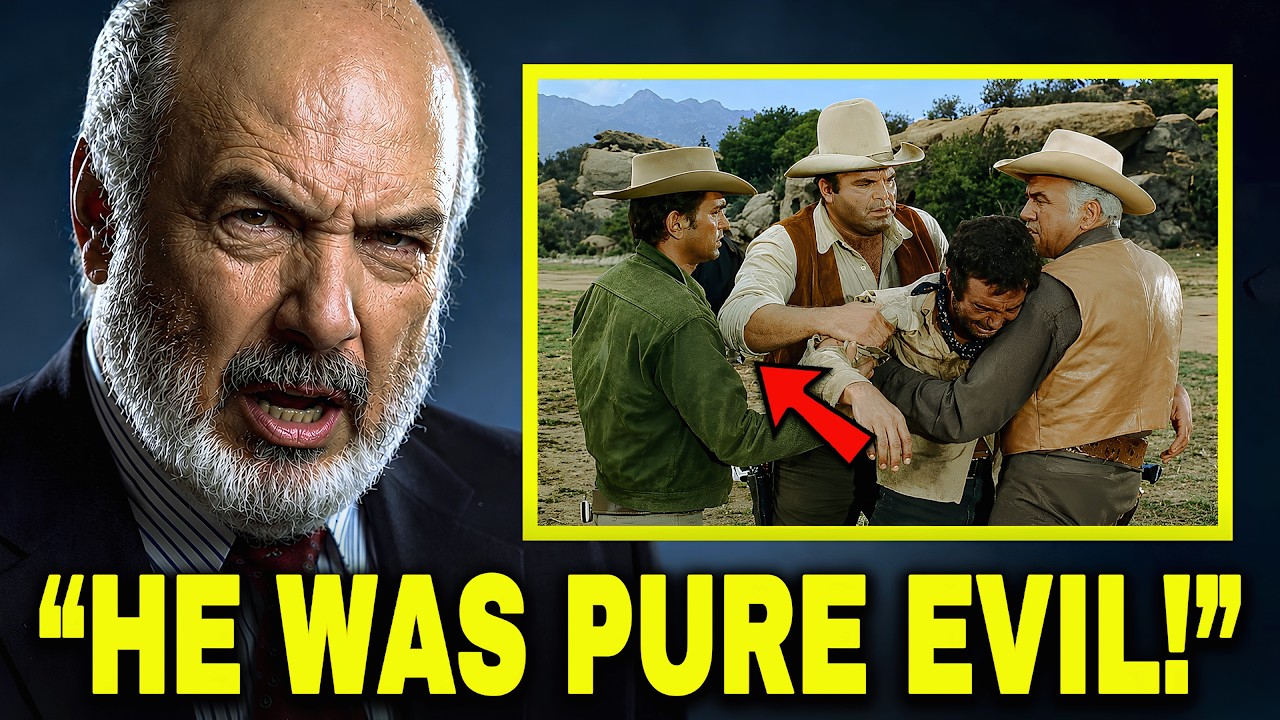
In a world where Hollywood stars often flicker and fade, Dan Blocker stood as a beacon of reliability and warmth. His sudden passing at just 43 years old shattered the illusion of permanence, leaving fans and family grappling with the loss of a beloved figure who felt like a constant in their lives.
Blocker, best known for his role as Hoss Cartwright on the iconic series “Bonanza,” seemed to embody the very essence of stability. While many actors chased fleeting fame, he found himself in a position of respect and trust, becoming a cherished member of countless households. His journey to stardom was not marked by the typical Hollywood hustle; instead, it was shaped by a life of discipline, compassion, and resilience.
 Born in Texas in 1928, Blocker’s early years were defined by the struggles of the Great Depression. His family worked tirelessly to survive, instilling in him a sense of reliability that would later resonate with audiences. Initially, he pursued football, earning scholarships for his athleticism, but a chance involvement in college theater redirected his path.
A simple request to help with heavy props led him to discover a passion for acting that would change his life.
However, before he could fully embrace this new direction, Blocker was drafted into the U. S. Army during the Korean War.
The experiences he faced on the front lines profoundly impacted him, shaping the empathy and strength that would define his portrayal of Hoss Cartwright. Those who served alongside him remembered a man of quiet courage, willing to shoulder the burdens of others even in the most perilous situations.
 After the war, Blocker returned home, opting for a life of stability over the chaos of fame. He married, pursued his education, and began teaching, all while acting remained a secondary pursuit. It was only when financial needs arose that he returned to the screen, eventually landing the role of Hoss, which would solidify his legacy.
As Hoss, Blocker brought depth to a character that could have easily become a stereotype. He infused Hoss with emotional complexity, making him a figure of loyalty and decency in a tumultuous world. Audiences didn’t just see Hoss; they felt a connection to him, trusting the character as a source of comfort and stability.
Yet, as “Bonanza” soared in popularity, Blocker found himself increasingly at odds with the fame that accompanied his success. Despite the adoration of fans, he longed for privacy and normalcy, often retreating from the spotlight. In a bold move, he relocated his family to Switzerland, seeking a life away from the relentless gaze of Hollywood.
 Tragically, in the spring of 1972, Blocker returned to the U. S. for what was supposed to be a routine surgery to address gallstones.
Initially, everything seemed to go well, but complications arose unexpectedly. A blood clot led to a pulmonary embolism, and within hours, Blocker was gone, leaving his family and fans in shock.
His wife, in the wake of this devastating loss, chose to step back from the public eye. Rather than seeking attention or sympathy, she focused on raising their children in a space of privacy and dignity. Her decision to avoid the spotlight became a powerful act of resistance against the industry’s tendency to exploit personal tragedy.
 Years later, she too faced health struggles, passing away quietly in 1999 without fanfare. Their children, now adults, carry the weight of two profound losses, navigating life with the memories of a father taken too soon and a mother who shielded them from the public’s gaze.
The story of Dan Blocker and his wife is a poignant reminder of the quiet tragedies that often go unnoticed in Hollywood. Their lives, marked by resilience and authenticity, stand in stark contrast to the typical narratives of fame and 𝒔𝒄𝒂𝓃𝒹𝒶𝓁. In a world that often amplifies the extraordinary, their tale invites reflection on the deeper, quieter costs of sudden loss.
How do we remember those who lived with such grace amid the chaos of fame?