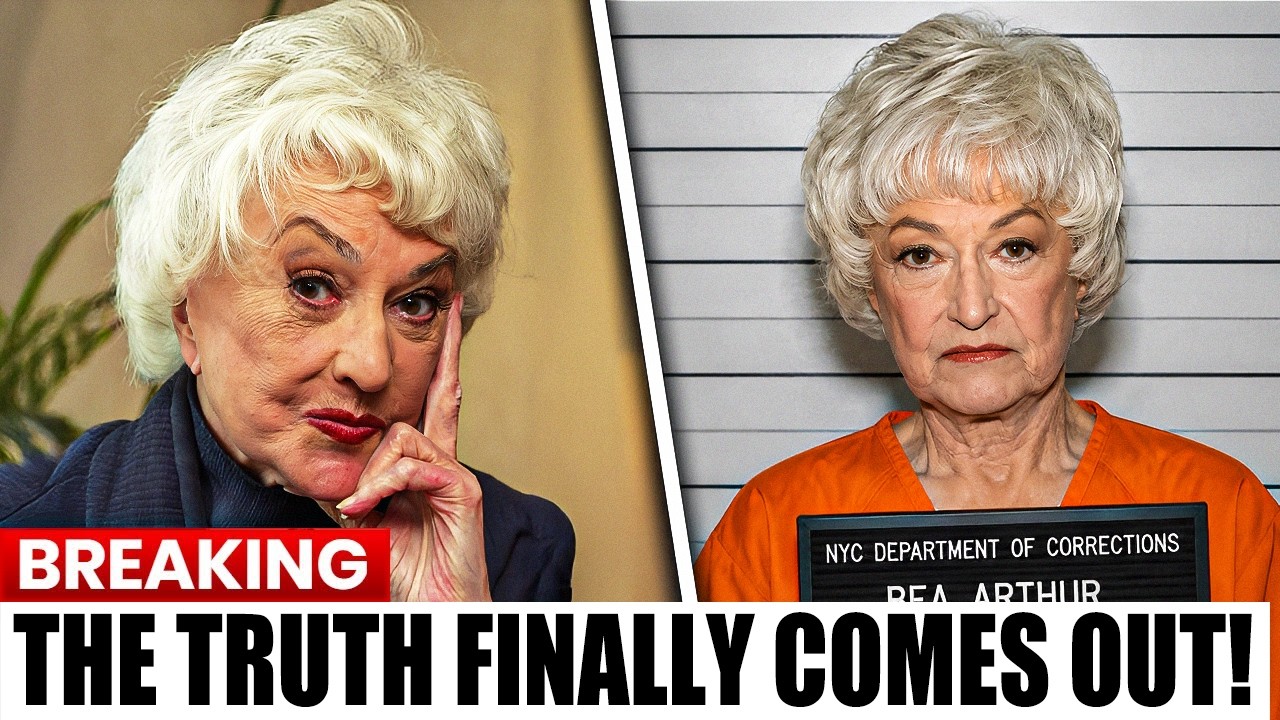
For 36 years, Bea Arthur kept a second life hidden behind her famous deadpan stare—and now that the truth has surfaced, it has shattered everything fans thought they knew. The beloved star of Maude and The Golden Girls spent decades concealing a secret military career, a hidden fortune given to charity, and private battles that never matched her public image.
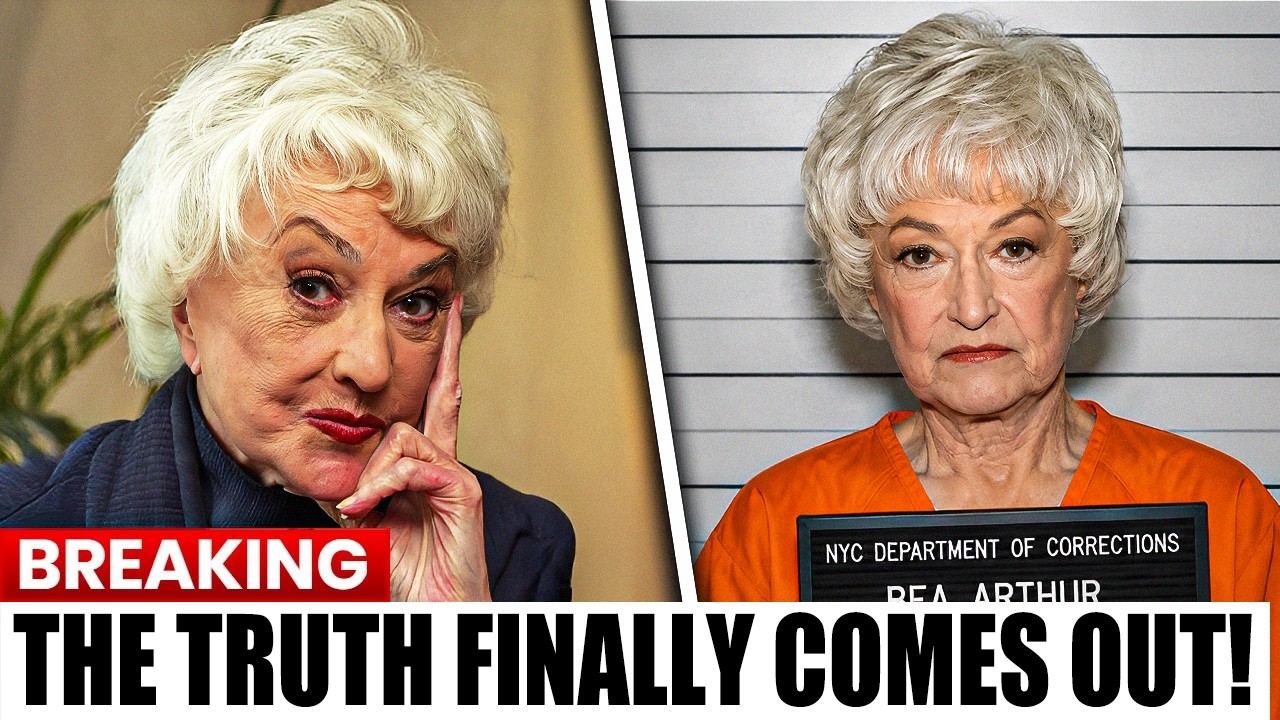
Newly released military records, probate documents, and interviews with her own son have exposed a woman far more complex than the towering, wisecracking figure audiences cheered for three decades. The actress who could level a man with one raised eyebrow was quietly serving her country, saving lives, and guarding secrets so closely that even family members were stunned by what they discovered after her death.
The first bombshell: Bea Arthur was a United States Marine. Born Bernice Frankle in Brooklyn in 1922, she enlisted in the Marine Corps Women’s Reserve in February 1943, joining one of the first groups of women ever permitted to serve. She trained as a typist, retrained as a motor transport operator, and spent 1944 and 1945 as a truck driver and dispatcher at Cherry Point, North Carolina.
She rose to the rank of staff sergeant and received an honorable discharge in September 1945. Yet in 2001, when directly asked about military service, Arthur denied ever having served. The denial stood until her official military file was released in 2010, a year after her death—revealing a deception that had held for decades.
Her wartime service also changed her name. During her time in the Marines, she met and married fellow Marine Robert Allen Arthur. The marriage lasted only a few years, but she kept his surname for the rest of her life.
A young woman who once dreamed of being a tiny movie star instead built an identity on discipline, precision, and a refusal to show weakness.
That discipline carried her through early obscurity. After the war, she trained as a medical laboratory technician, realized the work was not for her, and moved to New York to study drama under Lee Strasberg. She built her reputation slowly, in off-Broadway productions, until originating the role of Yente in Fiddler on the Roof in 1964.
Two years later, she won a Tony Award for her performance in Mame, stealing scenes as Vera Charles opposite Angela Lansbury. Television followed, and with it the role that made her a household name: Maude Findlay, Archie Bunker’s outspoken liberal cousin, launched her into the national conversation in 1972.

Maude did not just make her famous; it made her fearless. The series tackled abortion in a two-part episode in late 1972, months before Roe v. Wade, and several CBS affiliates refused to air it.
The controversy did not slow Arthur down. The show remained a top-ten hit for years, and she won an Emmy in 1977.
But the woman playing television’s most opinionated feminist was far more private than her character. Her marriage to director Gene Saks lasted 28 years before ending in divorce in 1978, a split that coincided with her departure from Maude. She adopted two sons, Matthew and Daniel, and devoted herself to a quiet home life far from the Hollywood social circuit.
Friends described her as a homebody who preferred cooking, reading the New York Times, and caring for her dogs. Yet she was also a ferocious professional. On the set of The Golden Girls, she clashed with co-star Betty White, viewing White’s habit of joking with the live audience between takes as an unprofessional break in the fourth wall.
The tension between Arthur and White became the stuff of Hollywood legend. RuPaul-less—rather, Rue McClanahan remembered years of strain, including an Emmy loss to White in 1986 that reportedly enraged Arthur. She won her own Emmy two years later, but the rivalry simmered until the series ended.
Even so, the women respected each other professionally, and Arthur was capable of fierce loyalty. McClanahan called her “giving and loving,” and credited Arthur with pushing her to take creative risks. The friendship between them lasted from Maude through The Golden Girls and continued until Arthur’s final days.
Arthur made the shocking choice to leave The Golden Girls after its seventh season in 1992, believing the show had reached its natural end. The other stars continued without her, but The Golden Palace lasted only one season. Her departure mirrored her exit from Maude: she preferred walking away on her own terms to staying for ratings.

What the public never knew was that the real Bea Arthur was being transformed in these years into a surprisingly generous advocate. She championed women’s rights, Jewish causes, and the LGBTQ+ community that had embraced her since the 1970s. She also supported the Ali Forney Center, which shelters homeless LGBTQ+ youth in New York.
In 2005, already gravely ill with lung cancer, she flew from Los Angeles to New York to revive her one-woman show for a benefit that raised $40,000 for the center. She did not publicize it. She did not make a spectacle of it.
She simply did the work, telling friends the organization was literally saving lives.
When she died peacefully at her Los Angeles home on April 25, 2009, at age 86, her son Matthew believed he knew the full extent of her generosity. Then her will revealed a breathtaking final act: she had left $300,000 to the Ali Forney Center without discussing it with anyone, including her own family.
Her support did not end with her death. In 2017, the organization opened the Bea Arthur Residence, an 18-bed home in Manhattan for homeless LGBTQ+ youth, funded in tribute to her quiet compassion. Her son admitted his mother would have bristled at the publicity, but he believes she would have been proud.
She was also a heavy smoker who hid her declining health from the public; she did not want fans seeing her become frail. She died with family nearby, was cremated, and her ashes scattered at sea. Broadway dimmed its lights in her honor.
Friends gathered for tributes in New York and Los Angeles.
 Then the final surprise: her official military file, released posthumously, confirmed the service she had denied years earlier. The proof was there in black and white—her enlistment, her rank, her honorable discharge. The actress who once joked about no one ever asking her to play Juliet had been playing a far more serious role offstage.
What emerges from these scattered records and intimate recollections is a portrait of a double life built on purpose. Arthur used her public platform to speak truthfully about difficult subjects while protecting her private self with absolute ferocity. She gave millions in laughter and donated hundreds of thousands in silence.
The military records even offered a glimpse into the personality that would later define her career. Evaluators called her “officious” and “overaggressive,” while also noting her careful taste and strong work habits. Those same qualities made Maude unforgettable, made Dorothy Zbornak sharp as a blade, and made Bea Arthur impossible to replace.
Her final years were spent in quiet advocacy until cancer silenced her forever. She was 86. And yet, even in death, she continues to surprise.
The residence that bears her name shelters kids who have been rejected by their families—the same kids she described with blunt clarity in 2005, when she said the organization was saving lives.
Now history must rewrite her story. Bea Arthur was not merely a comedian, not merely a television icon, but a Marine, a philanthropist, and a woman who let her actions speak louder than any punchline. Her double light—one half blazing on stage, the other deliberately dimmed—has finally been merged into a single truth.
It took more than three decades, a stack of declassified documents, and a last will and testament to reveal the real Bea Arthur. The woman who made millions laugh spent her final years quietly saving lives. And no one truly knew until now.

)