Suge Knight, the incarcerated former Death Row Records mogul, has broken his silence on the Tupac Shakur murder trial, delivering a bombshell phone call to TMZ Live that directly challenges the official narrative and hints at a broader conspiracy involving multiple unnamed figures. Speaking from a California prison, Knight, who was driving the car in which Shakur was fatally shot in 1996, declared that the murder was not a gang-related dispute over a chain or colors, but a calculated assassination. He insisted that the truth has been buried for three decades and that he has paid the price with his freedom while others remain free.
The call came as the trial of Keefe D, the man accused of orchestrating the drive-by shooting that killed Tupac Shakur, is underway in Las Vegas. Knight, who has long been a subject of speculation and accusation in the case, used his first extended public remarks to cast doubt on the prosecution’s case and to suggest that Keefe D is not the only person responsible. “This was assassination,” Knight said, his voice clear despite the prison monitoring.
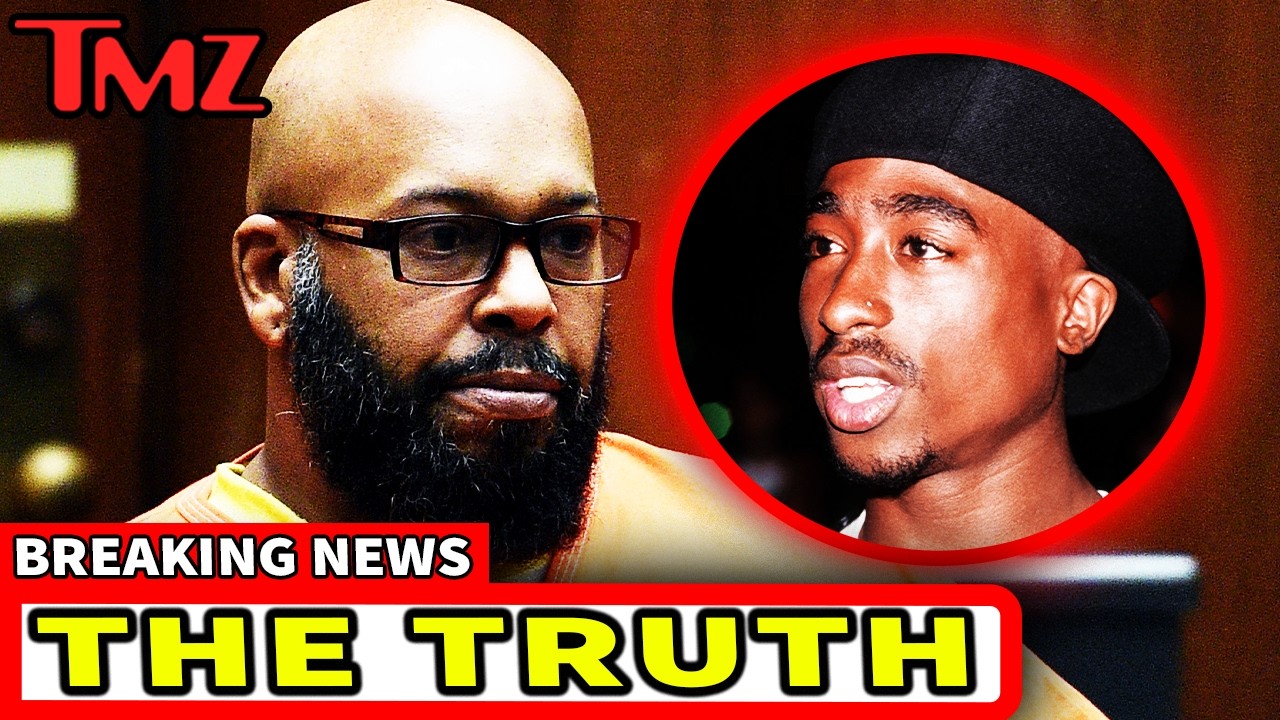 “It wasn’t over no chain. It wasn’t over no colors. This was assassination.
And they can do one who assassinated Kennedy, and everybody can talk about it. But when it come to Tupac, nobody really want the truth.”
Knight’s call to TMZ Live, which aired on the program, was a rare moment of direct engagement from the man who was at the center of the shooting that night in Las Vegas. He was driving the black BMW when a white Cadillac pulled up alongside and opened fire, striking Shakur multiple times. Knight himself was wounded in the head but survived.
For years, he has refused to speak publicly about the events, citing a code of silence. But now, with Keefe D on trial, Knight has decided to offer his perspective, even as he remains incarcerated on a separate murder conviction.
Knight’s statements were laced with frustration and a sense of vindication. “For 30 years or so, it cost me my freedom, it cost me money, it cost me business deals. I paid a lot on the fact that from day one, even though I got a bullet an inch to my skull, they always say I’m the one who had Tupac killed, which is far from truth,” he said.
He emphasized that every person who participated in the crime has never been brought to light, and he pointedly noted that the prosecution’s case against Keefe D relies heavily on the defendant’s own admissions in a book and podcasts, which Knight said may have unintentionally destroyed his legal immunity.
The TMZ Live hosts, Harvey Levin and Charles Latibeaudiere, pressed Knight on whether he believes there are other conspirators beyond Keefe D. Knight responded with careful ambiguity, saying, “I’m not going to say these guys’ names, but everybody know.” He referenced a woman he identified as SKG, a black Asian woman from his past, and claimed that people in Keefe D’s camp have been spreading lies about him and about Tupac.
 “All these people were saying the most horrible things about Tupac that you possibly could say about a man, and they were all lies,” Knight said. “Now they want to act like they’re going to report what’s going on, but these guys is in Keefe D’s camp who tried to belittle me and help him.”
Knight also revealed that he has a book coming out titled “Your Pain Is My Joy,” originally scheduled for release this month but pushed back to September to avoid interfering with the trial. He claimed the book contains details of certain events but does not name names. “It tells the details of certain things, but there’s still no names involved,” he said.
“I think it’s an opportunity for him to clear the board.” He urged Keefe D to tell the truth, including the involvement of others, but stopped short of calling for punishment. “I don’t believe in the revenge.
I believe that my kindness come from God. My strength come from God.”
The call took a sharp turn when Knight criticized the American justice system, comparing his own sentence to that of Courtney Clenney, a white woman who stabbed a Black man to death and was released after less than two years. “You just had on your show a white woman stabbed a black man to death and killed him and they get 3 or 4 years,” Knight said. “People had guns and they had texts to prove they were trying to 𝓀𝒾𝓁𝓁 me.
It was a hit. And someone dies and look how much time I got.” He was referring to the 2022 case of Clenney, who was sentenced to time served after pleading guilty to manslaughter in the death of her boyfriend.
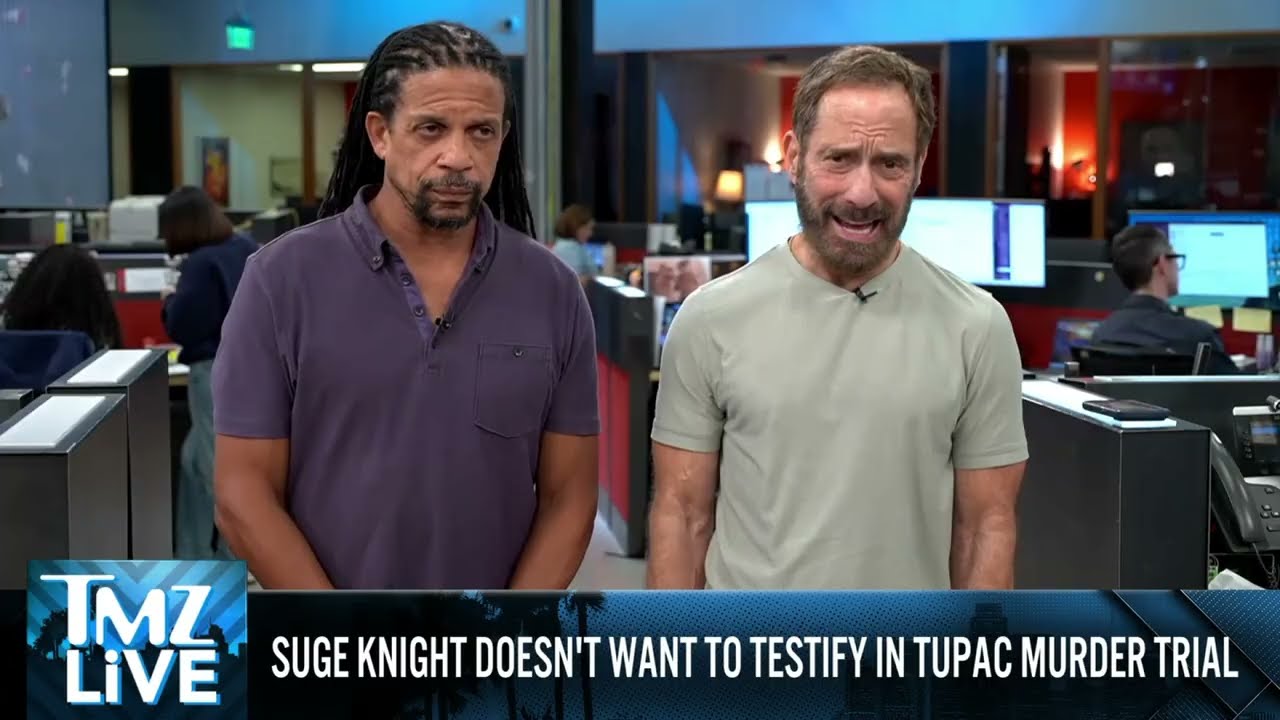 Knight, by contrast, is serving a 28-year sentence for a 2015 hit-and-run death that he claimed was self-defense.
The conversation ended abruptly when prison officials cut off the call, with Knight saying, “You heard they said 60 seconds left. And they mean business in the penitentiary.” The TMZ hosts noted that Knight seemed to be watching the show, as he referenced the Clenney case that had been discussed earlier in the program.
Harvey Levin commented that Knight’s primary message was for Keefe D to name the other people involved. “It sounds like what Shug really wants is for Keefe D to name some of those names of the other people,” Levin said.
The implications of Knight’s call are significant for the ongoing trial. Keefe D, whose real name is Duane Davis, is charged with murder with the use of a deadly weapon. He has pleaded not guilty.
The prosecution’s case relies heavily on his own admissions, including a book titled “Compton Street Legend” and multiple interviews in which he described his role in the shooting. Knight’s assertion that there were others involved could potentially introduce new leads or complicate the prosecution’s narrative. However, Knight’s refusal to name names means that his testimony may not be directly usable in court.
Legal experts point out that Knight’s credibility is deeply compromised. He is a convicted felon, and his own account of the night of the shooting has been inconsistent over the years. He has also been accused of abusing his position as head of Death Row Records.
 Yet, his call to TMZ Live is a reminder that the Tupac Shakur case remains one of the most enduring mysteries in hip-hop history, and that the trial of Keefe D is only one chapter in a story that has spanned generations.
Knight’s emotional connection to Shakur was evident in his words. He spoke of his son Legend, who idolizes Tupac, and of his granddaughter, who loves the rapper’s music. “That says a lot.
That makes me happy, you know,” he said. He also praised Shakur’s mother, Afeni Shakur, calling her “one of the greatest mothers around.” But his tone turned dark when he discussed the broader impact of the case on hip-hop and on Black communities.
“We go through so much over the years,” he said. “And we can’t learn from it and learn something about it and teach something, we wasting our time.”
The call ended with a sense of unfinished business. Knight’s book, his promise of more details, and his insistence on a larger conspiracy all point to the possibility that the trial of Keefe D may not be the final word on who killed Tupac Shakur. For now, the world waits to see if Keefe D will take the stand and whether he will follow Knight’s advice to “put everything on the table.”
The breaking news from Suge Knight’s prison call is that the truth, as he sees it, is far more complex than the official story, and he is determined to speak his piece, even if it means breaking a code of silence that has lasted three decades.

