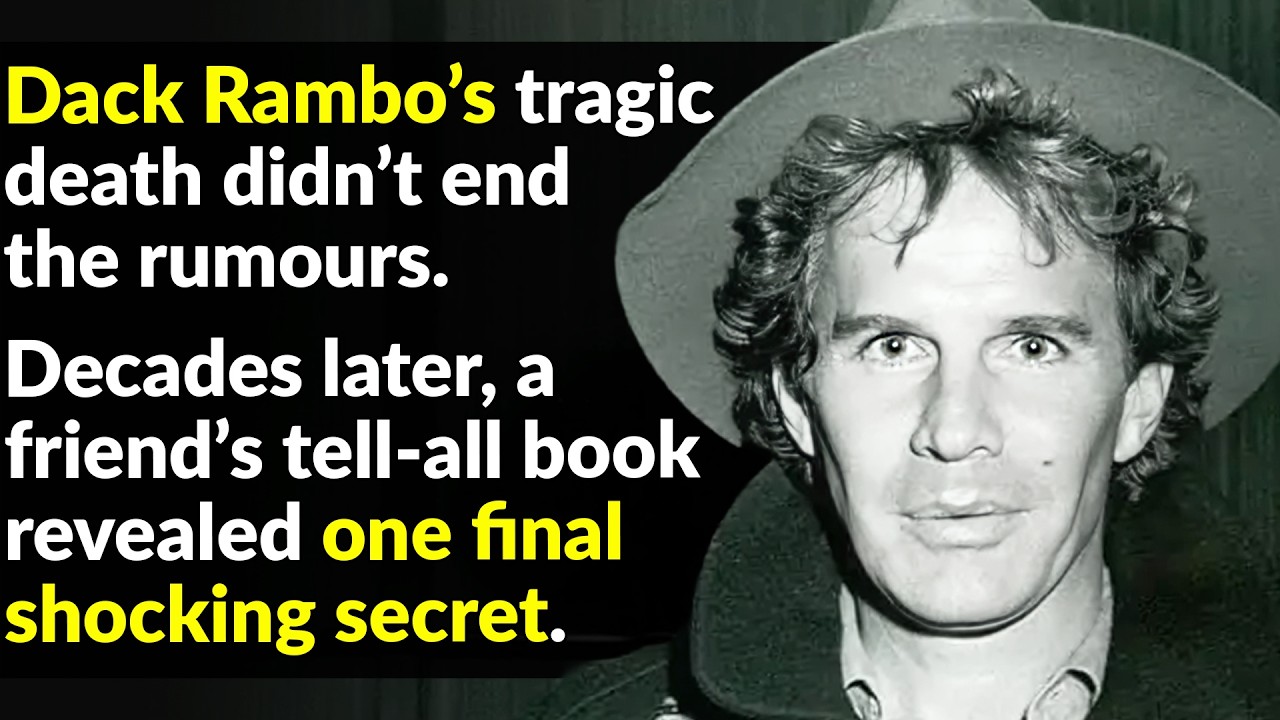
The twin brothers from a California dairy farm arrived in Hollywood with nothing but matching smiles and a shared dream, but the entertainment industry would ultimately consume one of them in a car crash and drive the other into a spiral of addiction, secret affairs, and a devastating diagnosis that he would transform into a public crusade. Norman J. Rambo and his identical twin Orman were born in 1941, the middle children in a family of four siblings, and their parents saw them as a practical blessing—two strong boys to milk cows and work the fields.
The brothers grew into ruggedly handsome young men, but they chafed at their nearly identical names, separated by a single letter, and decided to reinvent themselves as Dak and Durk Rambo. The twins packed their bags and headed for Los Angeles, where they studied acting under the legendary Lee Strasberg, who had mentored Marilyn Monroe and James Dean, and they stayed with their aunt, who insisted they attend church every Sunday. That act of familial piety would prove to be their first big break, because television star Loretta Young attended the same congregation and spotted the twins, offering them roles as her sons on her new variety show.
 The Loretta Young Show lasted only one season, but the Rambo brothers had tasted the spotlight and had no intention of returning to the farm, so Durk landed guest spots on The Virginian and Dragnet, building momentum for what seemed like a promising career. On February 5, 1967, tragedy struck when Durk was killed in a car crash, leaving Dak to carry on alone, haunted by the loss of his other half. Dak Rambo pushed forward, securing a starring role on the western series The Guns of Will Sonnett, which featured early appearances by Jack Nicholson and Dennis Hopper, but the show fizzled after two seasons, and a made-for-TV movie called River of Gold failed to ignite his career.
He spent the next decade bouncing between guest appearances on Wonder Woman, Charlie’s Angels, and The Love Boat, roles that paid the bills but felt like a humiliating comedown from his earlier ambitions, and he finally landed a lead in the short-lived action series Sword of Justice before taking his talents to daytime television. On the soap opera All My Children, he played Steve Jacobi for just 11 episodes, then found a recurring role on Fantasy Island as Prince Peter Danati, which led to a part in the prime-time soap Paper Dolls, a show set in the fashion world that starred Lloyd Bridges, Morgan Fairchild, and Lauren Hutton. Critics praised Paper Dolls and urged viewers to tune in, but the show was scheduled against Major League Baseball playoffs, and ABC canceled it after only three months, leaving a trail of unresolved cliffhangers that would never be answered.
Rambo’s manager sat him down in the mid-1980s and asked what he truly wanted, and after reflecting on his farm roots and his work in westerns, he decided he needed to be on the prime-time juggernaut Dallas, a show he later admitted he schemed and manipulated to join. He got the part, but he found himself an outsider on a set that had been running for years, and he hinted that some of the cast members were as manipulative as the characters they played, leaving him isolated and miserable. To cope with the daily dread of going to a place where he felt unwanted, Rambo turned to prescription drugs, numbing himself with pills that allowed him to endure the toxic environment, and he also launched a bizarre side venture selling his own line of underwear, which he marketed with a toll-free number in television ads.
 He eventually escaped his Dallas contract and landed a role on the daytime soap Another World, playing Congressman Grant Harrison, but while rehearsing a scene in 1991, he received a phone call from his doctor that shattered his world: he had contracted HIV. Rambo did not hesitate to inform the producers of Another World about his diagnosis, knowing that his time was limited, and just weeks earlier, AIDS had claimed the life of movie star Brad Davis, while basketball legend Magic Johnson had abruptly retired after revealing he was HIV-positive. The public was desperate to know how Rambo had contracted the virus, because the disease was still overwhelmingly associated with gay men, and as far as anyone knew, Rambo was straight, so he made the courageous decision to come out as bisexual in a November 25, 1991 interview with the Washington Post.
In an era when such a revelation could destroy a career, Rambo’s honesty was remarkable, and he began speaking openly about his faith with evangelist Ronnie Pierce, appearing in churches and on Christian television shows to share his story and his belief in God. He co-founded the Dak Rambo Healing Foundation to support people facing life-threatening illnesses, and when asked how he wanted to be remembered, the man who had been an object of desire for countless viewers said he wanted fans to think of him as a great man of God. As his health deteriorated, a National Enquirer reporter named William Kek received an anonymous tip from an employee at a California medical center, who claimed that a famous prime-time soap star was in the final stages of AIDS and close to death.
 Kek suspected it was Rambo, and he paid the caller $860, with an additional $400 promised if the story made the cover, then learned that a male friend had brought Rambo to the facility and that the actor was so weak he could not even sign his name. The reporter and a colleague heartlessly decided to interview Rambo as he lay dying, but when they arrived at the clinic, his bed was empty, and they were too late, because Rambo had passed away on March 21, 1994 at Delano Regional Medical Center. He had previously said he did not fear death, viewing it as another adventure, and he was buried beside his twin brother Durk, finally reunited with the sibling he had lost nearly three decades earlier.
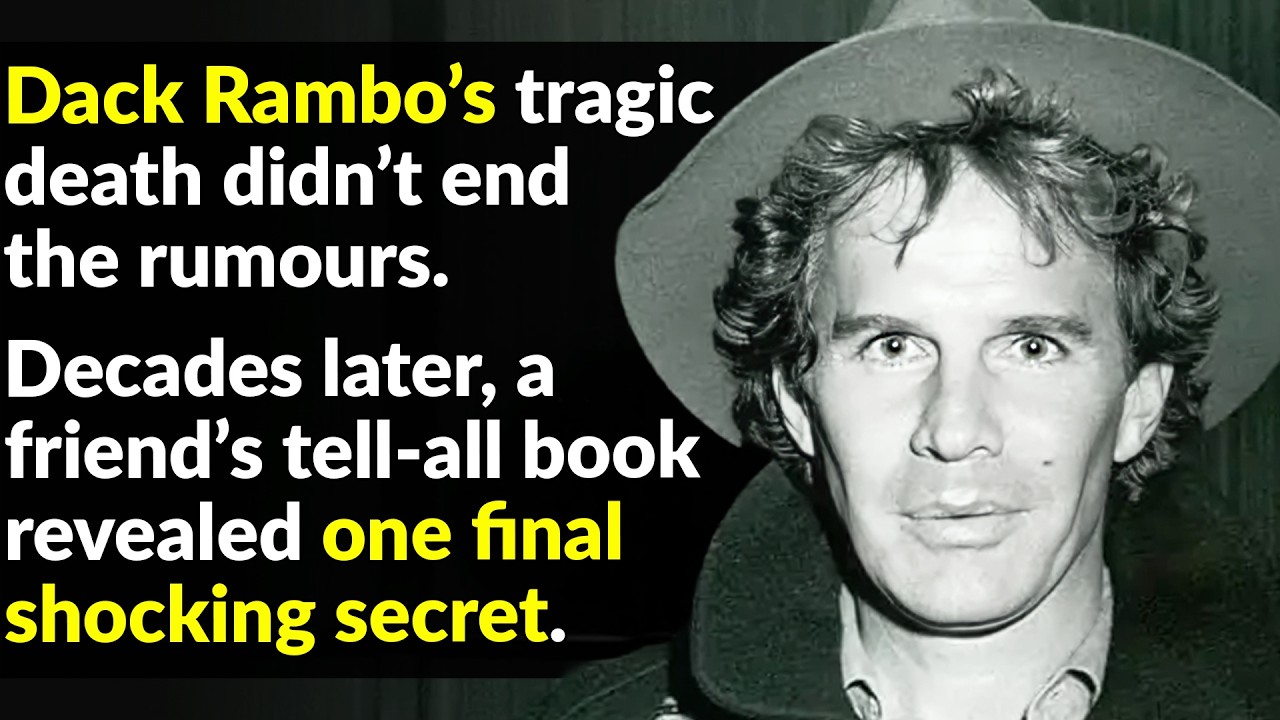
The National Enquirer still published a supposed last interview with Rambo, but Kek later admitted in his memoir that the newspaper had completely fabricated the entire conversation, and he claimed he had no part in the deception. The stories about Rambo did not end with his death, because in 2021, a man named Sha Matt, whose real name is Doug Probst, published a tell-all memoir titled Matt, the Musings of a Narcissist, a Survivor Story, in which he claimed to have worked as a male escort for closeted celebrities. Probst alleged that he had encounters with Robert Reed, who played the father on The Brady Bunch, and music mogul David Geffen, and he wrote that Rambo responded to his advertisement, called him, and arranged a meeting at a hotel, where Probst was impressed by Rambo’s beautiful Porsche.
 According to Probst, even though Rambo was allegedly paying for the encounter, the two men fell in love and bonded over more than just physical intimacy, and Probst claimed he was there for Rambo when he received his HIV diagnosis, remaining his friend until the end. Most accounts of Dak Rambo paint him as a fundamentally kind man, and Sheree J. Wilson, who joined the Dallas cast after Rambo, recalled being terrified on her first day because she feared being an outsider, but Rambo told her to relax and assured her that everyone was friends.
Wilson remembered that Rambo himself hated being on the show, but he still found the perfect words to comfort his anxious co-star, and she praised his bravery in using his celebrity to educate the public about AIDS at a time when the stigma was overwhelming. Even in his darkest hours, facing the end of his life, Rambo was thinking of others, and his legacy is not the failed shows or the tabloid scandals but the courage he showed in revealing his truth and the compassion he extended to those around him. The twin brothers who left a dairy farm for Hollywood stardom ended up separated by death, but Dak Rambo’s final act was one of grace, turning his personal tragedy into a platform for honesty and healing that continues to resonate decades after his passing.