The grandmother of Perez Hilton’s three children has filed for temporary custody of the boys, a legal maneuver that signals just how grave and prolonged the celebrity blogger’s mental health crisis has become following his apparent suicide attempt on a live stream.
Court documents confirm that Hilton’s mother initiated the temporary custody proceedings, seeking legal authority over the children ages 13, 11, and 8. The move marks a decisive shift from informal childcare arrangements into a formal, court-supervised structure that will govern Hilton’s parental access during his recovery.
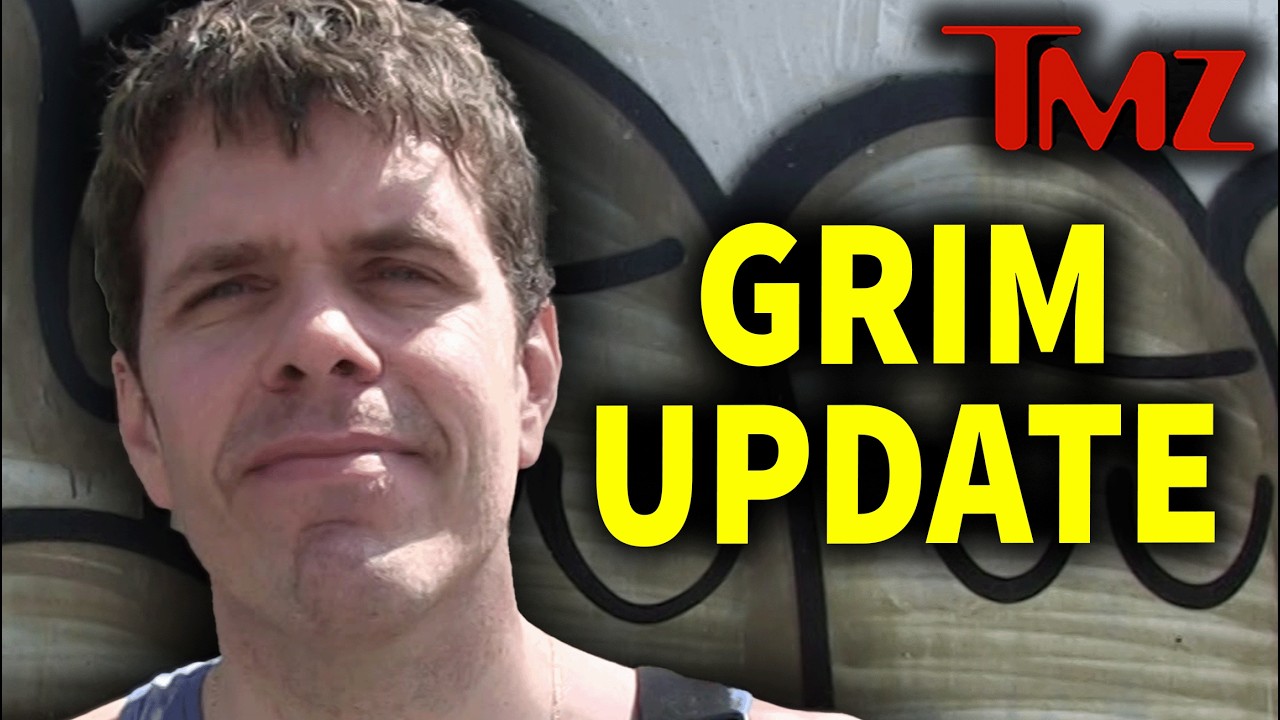 The filing arrives as Hilton remains under a Baker Act psych hold, according to a family statement released Saturday. The Baker Act, a Florida statute, permits involuntary institutionalization of individuals who pose a danger to themselves or others, and its invocation underscores the severity of his condition.
What makes this case legally fascinating is the timeline. Hilton signed off on the custody documents on Friday, the very day before his family publicly confirmed he remained under the Baker Act hold. That means he was executing legal documents while formally designated as a psychiatric patient.
Legal experts point out that this is entirely permissible. A Baker Act hold addresses the immediate safety concern of an individual being a danger to themselves or others. It does not, by itself, establish legal incompetence or an inability to understand the nature of legal documents.
The distinction between being a danger and being incompetent is a crucial one in mental health law. A person can be in a state of crisis that warrants involuntary hospitalization while still possessing the cognitive capacity to review, understand, and execute legal instruments affecting their family.
For Hilton’s three children, the custody arrangement provides something undeniably essential: stability. With the new school year either approaching or already underway, the grandmother needs the legal authority to register the children, communicate with teachers, and make educational decisions on their behalf.
School may have already started without them. The temporary custody filing clears the path for the grandmother to handle enrollment paperwork, medical authorizations, and all the routine administrative tasks that schools require of a legal guardian.
The term “temporary” is purposeful. This is not a permanent termination of Hilton’s parental rights. It is a stopgap measure designed to be revisited once Hilton stabilizes and can demonstrate his capacity to resume his role as a primary caregiver.
But the order also functions as a shield. When Hilton is eventually discharged, he may not be immediately stable. If, in a moment of diminished judgment, he were to demand the children’s return prematurely, the grandmother would have the legal authority to push back.
 This is fundamentally about decision-making power. Under the temporary custody order, the grandmother can make healthcare decisions, educational choices, and other critical determinations for the children without needing to seek Hilton’s approval or face legal ambiguity.
From a practical perspective, the household dynamic may not shift dramatically. Reports indicate that Hilton’s mother has lived with him and the children for essentially their entire lives, creating an environment where the grandmother’s presence is familiar and comforting.
The children were in the house at the time of the incident but did not witness the event itself. However, they were acutely aware that their father had been struggling with mental health issues in the days leading up to the crisis, according to reports.
That awareness carries its own psychological weight. Children who know their parent is in distress but cannot fully comprehend the nature of that distress often experience anxiety, confusion, and fear. Counseling will almost certainly be necessary for them.
The grandmother’s custody filing removes at least some of the uncertainty from their lives. The children now know who will be taking them to school, who will be making dinner, and who holds the legal authority to care for them while their father heals.
The incident has reverberated through the entertainment community, where Hilton remains a complex and polarizing figure. A caller to TMZ Live from Las Vegas offered a deeply personal perspective on the man behind the headlines.
The caller recounted bumping into Hilton at her workplace in Las Vegas and described him as profoundly kind, noting that the provocative persona of his 2007 Britney Spears-era heyday had long since evolved into something more measured and approachable.
 Watching his current crisis unfold, she said, was tragic, particularly given reports that the children were in the house during the incident. Her words highlight the chasm between the public caricature and the private man.
The juxtaposition matters. The public had watched Hilton transform from a notorious gossip provocateur into a more subdued, family-focused figure. The apparent suicide attempt, broadcast on a live stream, was a jarring reminder that mental health crises can strike anyone.
The Baker Act hold is not indefinite. At some point, Hilton will be discharged, and at that critical juncture, the temporary custody order will dictate the parameters of his parental involvement. The family has built legal scaffolding designed to protect the children regardless of what comes next.
Mental health professionals will be central to this process. Hilton’s treatment team will need to assess his readiness to resume parenting responsibilities, and the courts will likely depend heavily on their clinical recommendations when deciding whether to extend, modify, or dissolve the temporary arrangement.
This is not an unusual legal strategy in cases involving serious mental health crises. Courts routinely grant temporary custody to grandparents and other relatives when a parent is incapacitated, even when that incapacitation is expected to be temporary and does not involve formal incompetency proceedings.
What renders this case notable, beyond the celebrity dimension, is the speed of the family’s response. The custody filing came within days of the incident, signaling that Hilton’s medical team and relatives are taking his condition with the utmost seriousness.
The recovery timeline remains deeply uncertain. Mental health professionals emphasize that recovery from a suicide attempt is rarely linear, often involving setbacks, adjustments in medication, and prolonged therapeutic work. The family’s legal posture suggests they are braced for a lengthy road.
 Public reaction has spanned concern, shock, and in many corners, genuine sympathy. The entertainment world has witnessed too many public figures suffering through mental health struggles in isolation. There is hope that Hilton’s situation will chart a different course.
For the children, who have already endured a profoundly destabilizing event, the return to routine is paramount. School drop-offs, homework, sports practices, and family dinners become lifelines of normalcy in a turbulent time.
For Hilton, the path forward will involve intensive psychiatric treatment, regular therapy sessions, and careful medication management. Whether he can reclaim his previous life and his role as a hands-on father remains an open question that only time and sustained treatment can answer.
The curiosity surrounding his signing of legal documents while under a Baker Act hold has generated considerable discussion, but the legality is clear. The Baker Act addresses immediate physical safety, not broad cognitive capacity.
There is a public tendency to conflate mental health holds with incapacity. The law, however, treats these as fundamentally different concepts. Hilton’s ability to execute the custody paperwork is, in fact, a cautiously encouraging development.
It suggests that despite his crisis, he retains cognitive function, decision-making capacity, and a measure of self-awareness. His willingness to sign off on his mother’s custody petition indicates cooperation and perhaps a recognition that he is not currently in a position to care for his children alone.
The situation remains fluid and evolving. Court proceedings will continue, Hilton’s medical status will be closely monitored, and the children will be cared for by their grandmother under the authority of the court. The coming weeks and months will be decisive.
As the family navigates this difficult terrain, the children’s welfare remains the central priority. Their stability, their emotional health, and their safety anchor every decision being made in courtrooms and hospital rooms alike.
This is a developing story. TMZ Live will continue to track new developments as they emerge regarding Hilton’s recovery progress, the custody hearings, and any statements from the family. The breaking nature of this situation means new details could surface at any moment.