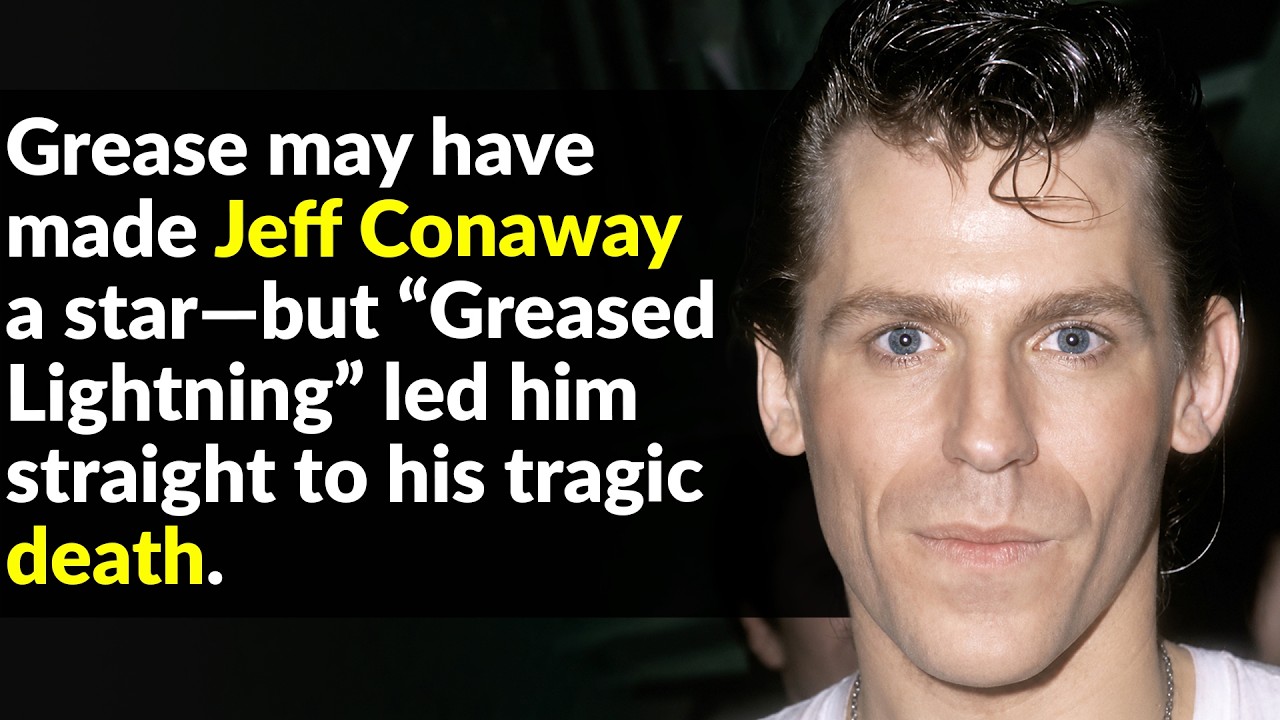
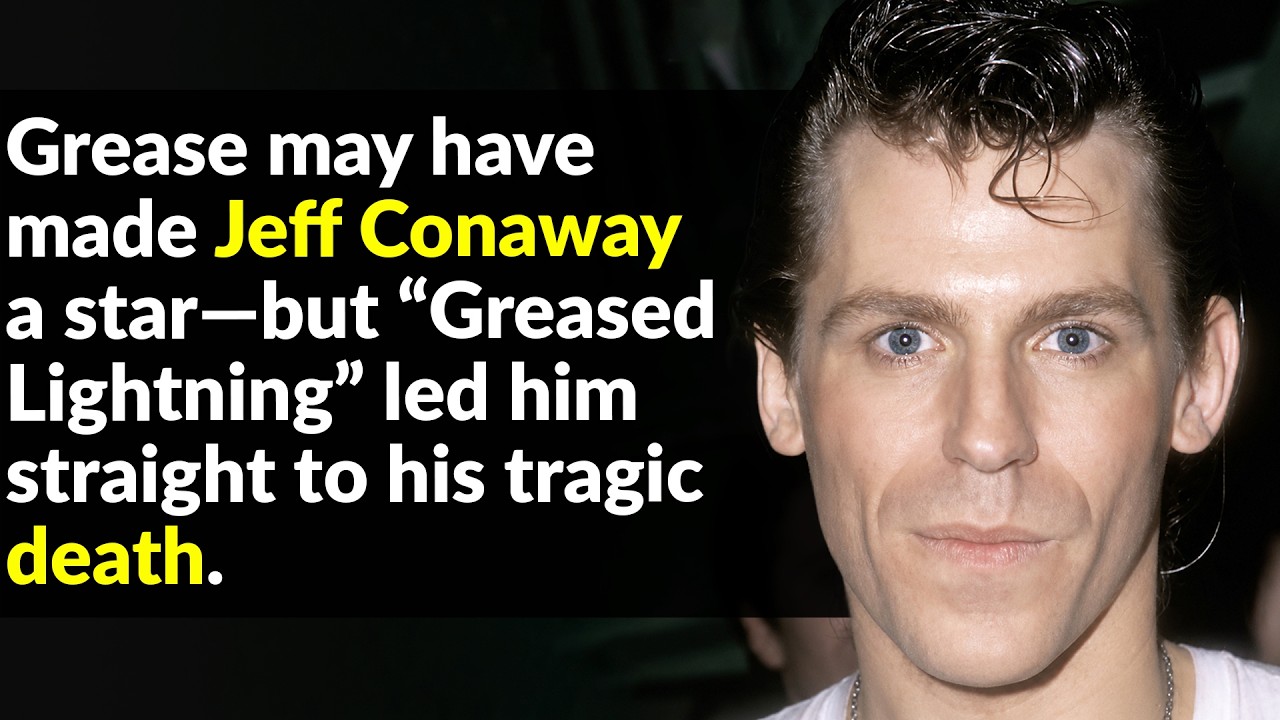
The life of Jeff Conaway, forever immortalized as the cocky yet charming Kenickie in the 1978 blockbuster Grease, ended not with a triumphant curtain call but in a silent, lonely hospital room where his family made the agonizing decision to pull the plug after weeks of unconsciousness. The 60-year-old actor, whose slicked-back hair and rebellious swagger defined a generation, passed away on May 27, 2011, after a catastrophic battle with addiction that began, ironically, on the set of the very film that made him a star. The incident known as “Grease Lightning” was not just a musical number but a curse, as a devastating back injury during filming led to a prescription for painkillers that spiraled into a lifelong, losing war against substance abuse, ultimately robbing the world of a talented and tormented soul.
Born Jeffrey Charles William Michael Conaway on October 5, 1950, in New York City, he was destined for the stage from his first breath, cradled by actor parents who immersed him in the world of theater, music, and production. Yet, the foundation of his life was cracked at the tender age of three when his parents divorced, forcing his mother to whisk him and his two sisters away to the quiet, rural expanse of South Carolina. It was there, under the care of his grandparents, that young Jeff formed his first memories, a Southern accent that would later become his golden ticket into the brutal but glamorous world of Broadway, a world that promised dreams but delivered exhaustion.
 His acting career began not with a starry-eyed leap but with a pragmatic audition at age ten, when his mother brought him to a casting call for a Broadway play, seeking any role that could showcase his natural talent and distinct drawl. Jeff charmed his way into a small part in All the Way Home, but the thrill of the stage quickly soured as he realized the grueling reality of an 11-month, 333-performance run that consumed his childhood from November 1960 to October 1961. He was just a teenager, performing nightly while also touring in The Critic’s Choice, the relentless schedule leaving him burnt out and desperate for an escape from the very dream he had so eagerly pursued.
At 15, Conaway swapped the greasepaint for guitar strings, becoming the singer and guitarist for a rock band called the Three and a Half, hoping to find a faster path to success than the exhausting grind of live theater. His venture into the music world yielded a couple of singles but ultimately led nowhere, a frustrating detour that only ended when fate pulled him back to New York City with a surprising twist in store. In 1971, at the age of 21, he briefly married an unnamed dancer, a mysterious union that ended in annulment almost as quickly as it began, leaving no trace or record behind.
The shadows of that forgotten marriage were quickly eclipsed in 1972 when Conaway landed a role in a stage production that would define his life: Grease. In a twist of fate that would haunt him, he played the lead role of Danny Zuko on Broadway for two years, a character audiences would forever associate with John Travolta, after Travolta himself joined the cast in a secondary role as Doody. The two men became close friends, sharing a manager and a dream, but when the movie adaptation was announced, Conaway faced a devastating blow.
He was passed over for the lead, forced to watch Travolta step into the leather jacket and white pants of Danny Zuko, while Conaway was relegated to the role of Kenickie, the sidekick with the iconic car Greased Lightning.
The pain of losing the lead role was compounded by a humiliating request from the director, who reportedly asked Conaway to walk slightly stooped so that Travolta’s character, the leader of the T-Birds, would appear taller on screen. Despite this cruel attempt to diminish his presence, Conaway’s charm was undeniable, and he captivated Olivia Newton-John’s elder sister, Rona, at a cast party, igniting a romance that would last for years and eventually lead to marriage. But while his personal life was blossoming, a single, catastrophic moment on set was laying the groundwork for his demise.
 During the filming of the musical number Grease Lightning, Conaway fell and injured his back, a seemingly minor accident that led to a prescription for painkillers, the first step on a path that would ultimately destroy him.
Those painkillers became an irresistible siren, pulling Conaway into a vortex of addiction that rapidly expanded to include other prescription medications and illicit substances, even as his career peaked. After Grease and a stint on Happy Days, he landed a pivotal role as the aspiring actor Bobby Wheeler on the hit comedy series Taxi, a part that was almost taken from him when producers considered making the character black. Conaway fought for the role and won, but his victory was short-lived, as his growing addiction and chaotic behavior turned his time on set into a personal hell.
His professional relationships frayed, most famously with co-star Andy Kaufman, whose bizarre antics and perceived arrogance infuriated Conaway to the breaking point. At a team-bonding event, a drunken Conaway shouted at Kaufman, accusing him of thinking he was superior, and then threw a punch that knocked the comedian into a table, a violent outburst that signaled the end of his tenure on the show. The reasons for his departure remain contested.
Conaway claimed it was about money and disrespect, but the show’s producer, Sam Simon, revealed a darker truth on Howard Stern’s radio show, stating that Conaway’s addiction was the real deal-breaker, culminating in a heartbreaking day when he was found lying on the floor of his dressing room, too intoxicated to stand.
 His journey as Bobby Wheeler was over, and his career began a slow, agonizing spiral, reducing him to smaller roles and guest appearances on shows like Wizards and Warriors and Barnaby Jones. In 1985, his marriage to Rona Newton-John collapsed, the addiction likely a poison that infected their union, and his personal life mirrored the descent of his professional one. Near the end of the 1980s, Conaway sought treatment, bidding goodbye to his painkillers, and found a glimmer of hope in a new romance with Keri Young, whom he married in 1990.
The 1990s brought a brief renaissance, with Conaway landing a notable recurring role as Sergeant Zack Allen on the sci-fi series Babylon 5, a character he played for three seasons, and even a cameo in the 1999 Jim Carrey film Man on the Moon, portraying himself in the story of his former nemesis, Andy Kaufman. But the demons were merely dormant, and as he approached the age of 50, a midlife crisis triggered a devastating relapse that plunged him back into the depths of addiction. The public witnessed his struggle in the most raw and harrowing way when he joined the reality show Celebrity Rehab with Dr.
Drew, where he appeared ghost-like, his body ravaged, his mind shattered.
In one of the most disturbing episodes of the series, Conaway revealed to Dr. Drew that he was contemplating self-harm, staring into a mirror and describing how he saw himself breaking the glass and using it as a weapon. He confessed to having attempted suicide not once, not twice, but 21 times, and opened up about childhood traumas that included being tied up and threatened by older boys in his neighborhood, experiences that he linked directly to the origin of his addiction.
 The show exposed the horror of his daily existence, as he suffered from unbearable back pain, struggled to walk to the bathroom, and screamed threats that he would leave the treatment center.
His personal life turned into a public spectacle with his fiery, codependent relationship with musician Vicki Spinoza, who was also battling addiction. In 2011, the relationship imploded in a storm of accusations, with Spinoza obtaining a temporary restraining order, claiming Conaway threatened her with a hammer and swore to ruin her life. Conaway retaliated, filing his own restraining order, accusing her of stealing his medication and injecting him with something that left him drowsy and disoriented, a scandalous feud that played out in courtrooms and tabloids.
Travolta, his old friend and rival, tried to intervene, urging Conaway to embrace Scientology as a cure for his addiction and depression, but the religion’s methods proved to be just another false hope. On May 11, 2011, authorities found Conaway unconscious in his home, rushed him to a California hospital, and into a coma that he would never wake up from. His sister and Spinoza were at his bedside as doctors delivered the grim news; his condition was critical, and the two weeks that followed were a vigil of despair.
The official cause of death was pneumonia with sepsis, a stark and undramatic end for a man who had lived such a dramatic life. Dr. Drew Pinsky concluded that while the death was not directly caused by an overdose, Conaway’s addiction had likely clouded his ability to recognize the severity of his illness, leaving him to suffer silently until it was too late.
The world did not lose Jeff Conaway to a single, violent act of self-destruction, but to a slow, creeping, and relentless disease that had been festering for decades, starting with a fall on a soundstage during a song about a souped-up car.
In the end, the man who brought joy to millions as the wisecracking Kenickie, the man who sang about greased lightning and dreamed of fast cars, was taken by the slow, grinding weight of his own past. His legacy is etched in celluloid, forever young and vibrant in the diner of Rydell High, but his true story is a cautionary tale of how the pursuit of a dream can sometimes lead to a nightmare from which there is no awakening.