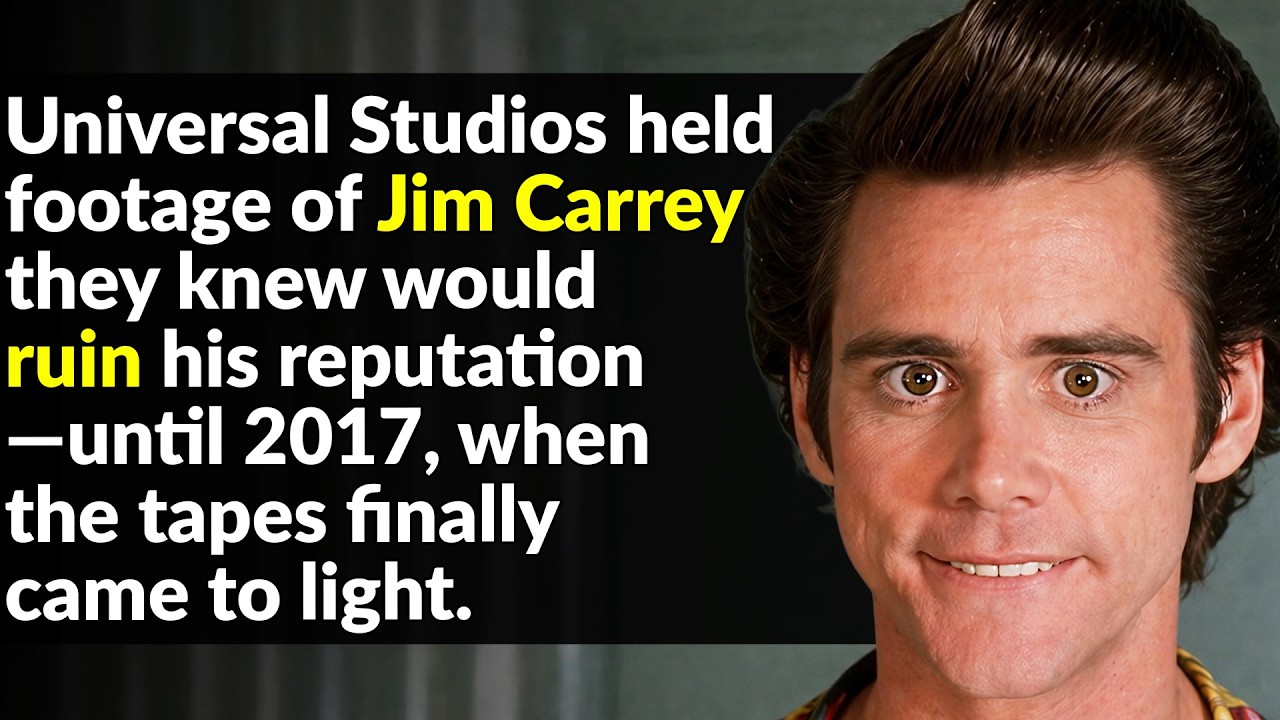
Jim Carrey’s rise from a struggling teenager living in a tent to the highest-paid movie star in the world was fueled by a manic energy that captivated audiences—but behind the laughter, a darker story of obsession, tragedy, and relentless controversy has emerged, painting a portrait of Hollywood’s last truly unhinged movie star.
Born north of Toronto to Kathleen and Percy Carrey, young Jim learned early that making people laugh was a survival mechanism. His mother, suffering from various health problems, coped by joking about her own mortality, leaving her son with a crippling fear of death. Desperate to soothe her, Carrey began doing impressions, throwing himself down stairs, and contorting his face—anything to bring a smile to his mother’s face.
 By age eight, he was writing to Carol Burnett, insisting he was ready for the big time. He didn’t get the job, but Burnett wrote back, a small kindness that fueled his dreams.
But his family’s stability collapsed when his father lost steady work. The Carreys lost their home and lived out of a Volkswagen van. Jim, then a teenager, spent months in a tent on the shores of Lake Ontario.
It wasn’t rock bottom, he later said—the family kept their spirits up. His father eventually landed a job at the Titan Wheels factory in Scarborough, and the family lived across the street. To keep the job, Jim and his brother had to work nights at the factory.
He dropped out of school on his 16th birthday, looking across Lake Ontario to the steel mills of Hamilton, dreaming of a life of labor.
But the drive to make people laugh never left him. As a teenager, he started performing at seedy comedy clubs, but audiences wanted raunchy humor, not a skinny kid doing impressions. He was booed off stage more times than he could count.
He auditioned for Saturday Night Live three times—each time, Lorne Michaels said no. Rodney Dangerfield saw something in him, however, and invited Carrey to open for him on tour. That gave Carrey the confidence to move to Hollywood.
In Los Angeles, Carrey set his sights on The Tonight Show. He got booked—then unbooked after a disastrous set at the Improv. He eventually made a lukewarm appearance, but his Hollywood dreams were off to a rocky start.
In 1987, he married Comedy Store waitress Melissa Womer. Their daughter, Jane, was born soon after. But Melissa soon realized her husband was an “extremely depressive person,” spending countless nights counseling him until 4 or 5 a.
 m.
m.
Then came the break. In 1990, Carrey joined the cast of In Living Color, creating bizarre characters like Fire Marshall Bill. Audiences took notice.
Morgan Creek Productions was casting an offbeat comedy called Ace Ventura: Pet Detective. Rick Moranis turned it down, as did Damon Wayans. Producers considered Alan Rickman and Judd Nelson before one of them spotted Carrey on In Living Color.
They offered him the lead role. No one could have predicted what happened next.
Released in early 1994, Ace Ventura grossed over $100 million domestically. That same year, The Mask—another $100 million grosser. Then came Dumb and Dumber, which earned nearly $250 million worldwide.
Three over-$100-million movies in a single year. Jim Carrey was suddenly the biggest movie star in the world. He went from earning $350,000 for Ace Ventura to commanding $7 million for Dumb and Dumber—and then, in 1996, he became the first actor to earn $20 million for a single film, The Cable Guy.
But the fame came at a cost. His marriage to Melissa ended in 1995. He married Lauren Holly, his Dumb and Dumber co-star, but the marriage lasted less than a year—the paparazzi hounded them, and Holly couldn’t take it.
 Carrey’s next relationship, with Renee Zellweger, fizzled. Then came Jenny McCarthy, a four-year partnership that ended amid her controversial anti-vaccine comments. But the most tragic relationship was with Irish makeup artist Cathriona White.
Carrey met White in 2012. They dated on and off for three years. After their breakup in 2015, White died of an overdose on September 28.
Carrey was a pallbearer at her funeral. But then details emerged: White had been married to another man throughout much of her relationship with Carrey. Her husband, Mark Burton, filed a wrongful death lawsuit, accusing Carrey of using his celebrity to acquire the drugs that killed her.
Carrey countersued, calling the lawsuit a “heartless attempt to exploit” him and the woman he loved.
White’s mother also filed a lawsuit. Court documents revealed notes from White’s therapist that painted a disturbing picture: Carrey’s anger problems, manipulative behavior, and verbal abuse. Even more shocking, records showed Carrey had tested positive for multiple STIs—including hepatitis, herpes, and chlamydia—and had hidden this from White.
When she noticed bumps on his privates, he lied, claiming they were from shaving. He eventually forced her to sign a confidentiality agreement. The breakup left White in a fragile state, afraid Carrey might burst into her apartment to hurt her.
The lawsuits were eventually dismissed, but the damage to Carrey’s public persona was done.
 Carrey’s on-set behavior was equally notorious. On the set of Man on the Moon, he went method—claiming Andy Kaufman’s spirit had taken over his body. He refused to communicate with co-stars except telepathically.
He filled his pockets with Limburger cheese, the stinkiest cheese, and insisted on hugging people. He spat on pro wrestler Jerry Lawler during a fight scene, and Lawler retaliated for real, sending Carrey to the hospital with a neck brace. Director Milos Forman later said of Carrey’s alter ego, Tony Clifton: “I have never been intimidated by another man, and I am intimidated by Tony Clifton.”
On the set of How the Grinch Stole Christmas, Carrey hated the prosthetic suit so much that he kicked a hole in the wall after a two-and-a-half-hour makeup session. He frequently disappeared to throw tantrums, and after two weeks, only three days of footage had been shot. The makeup artist, Kazuhiro, quit.
Carrey had to be trained by a man who teaches CIA agents how to endure torture just to survive the suit.
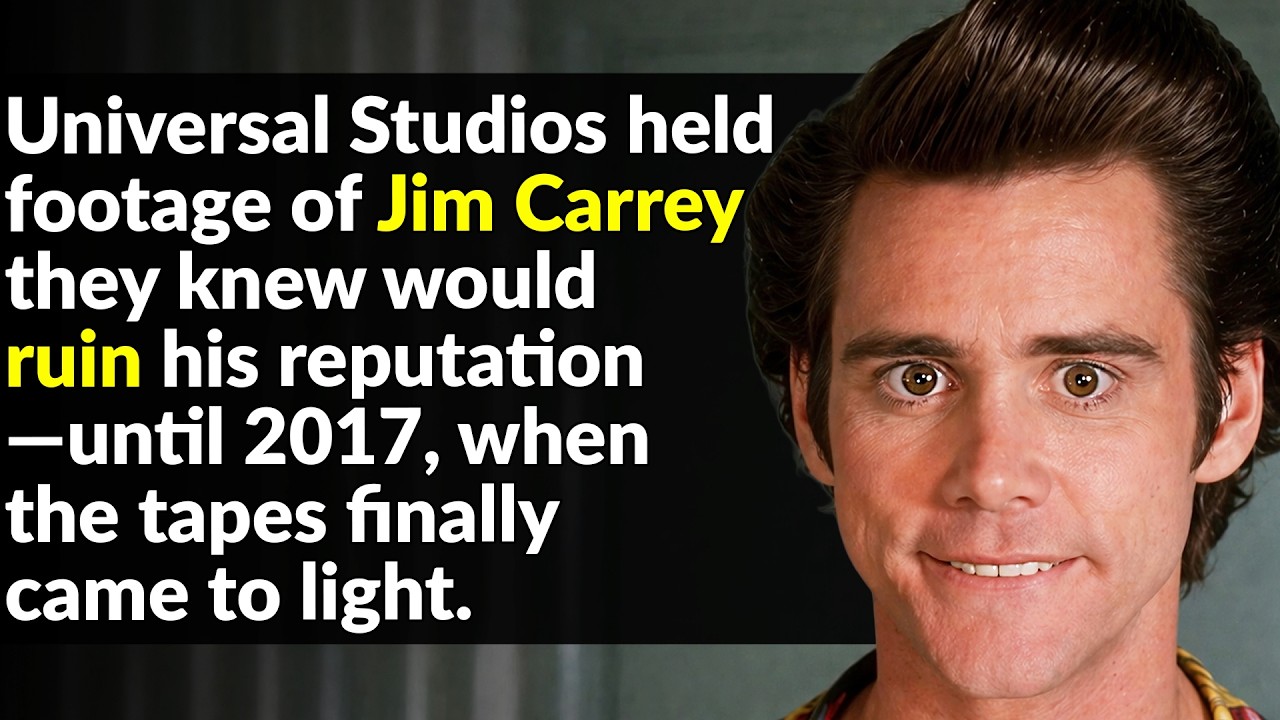
In 2013, Carrey took a role in Kick-Ass 2, but after the Sandy Hook school shooting, he publicly disavowed the film, saying he could not support that level of violence. For years, Universal suppressed footage from the Man on the Moon set that showed Carrey’s abusive behavior. It was finally released in 2017, and it was damning.
Jim Carrey remains one of the most iconic and controversial performers of his generation. His manic energy made him a star, but it also came with a dark side—a side that has left a trail of broken relationships, legal battles, and a legacy that is as unsettling as it is unforgettable.