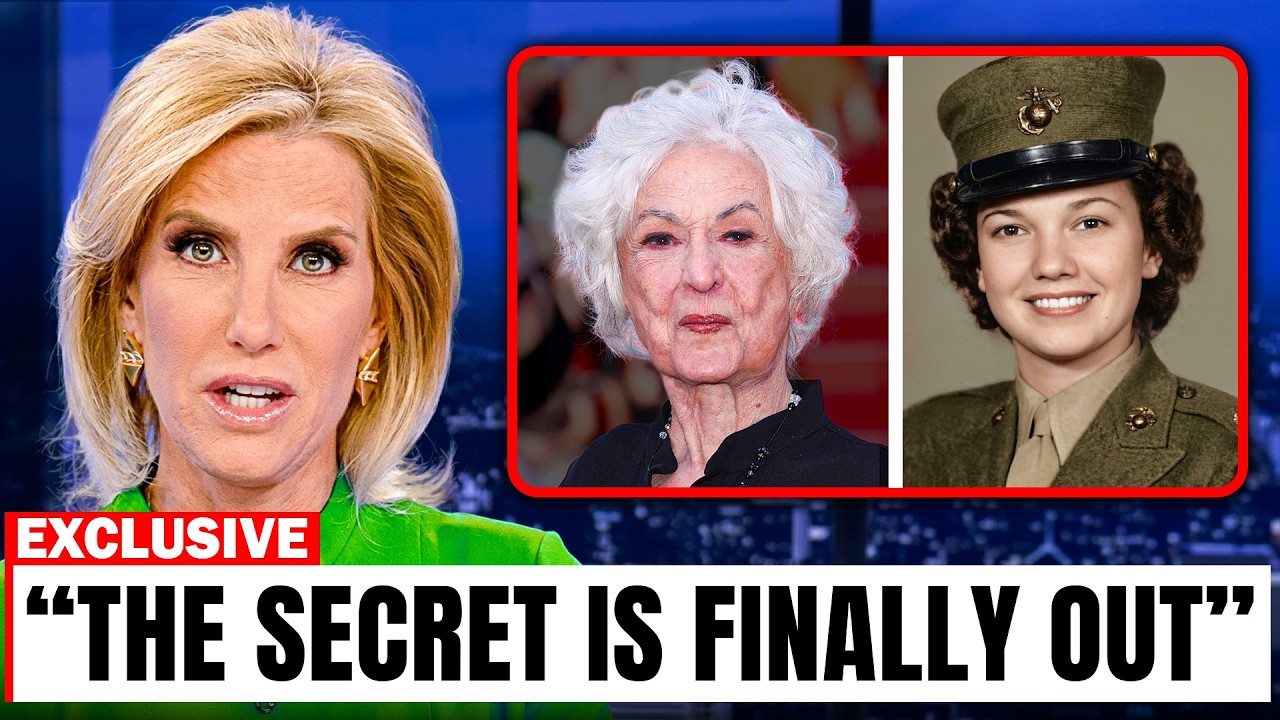
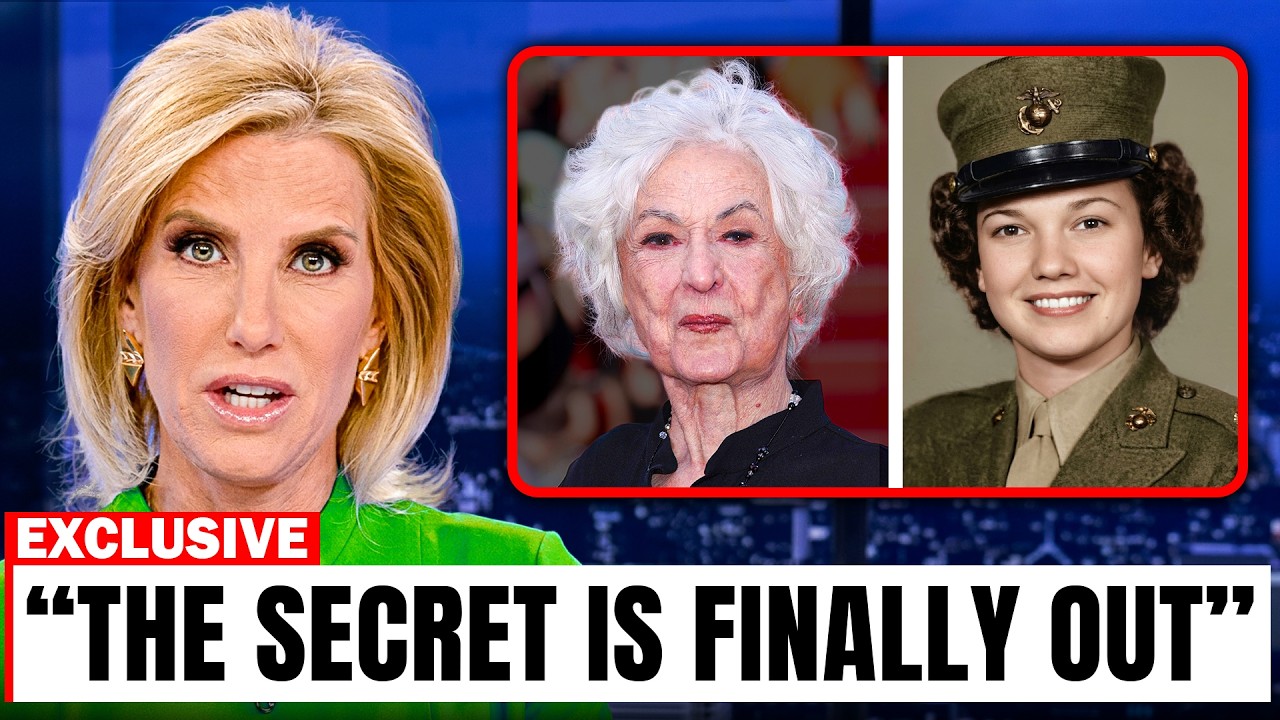
She was one of the most recognizable voices in television history, a towering figure with a razor-sharp wit who commanded every room she entered. But for decades, Bea Arthur, the beloved star of Maude and The Golden Girls, lived with a secret so carefully guarded that she took it to her grave: before she ever stepped onto a soundstage, she was a United States Marine.
The revelation, confirmed by official military records held at the National Personnel Records Center in St. Louis, Missouri, shatters the long-held public narrative of Arthur’s life. The woman born Bernice Frankel in Brooklyn, New York, on May 13, 1922, did not merely dabble in military service.
 She enlisted in the newly formed Marine Corps Women’s Reserve in February 1943, just days after the recruiting campaign launched. She trained as a typist, then transferred to Motor Transport School at Camp Lejeune, North Carolina, where she completed a grueling four-week course in motor mechanics. She drove trucks, dispatched convoys, and served as a staff sergeant at the Marine Corps Air Station at Cherry Point, North Carolina, through 1944 and most of 1945.
Yet, throughout her entire public life, Arthur flatly denied any of this had happened. She looked people in the eye and insisted it was not true. The denial was so absolute that researchers and historians, digging through her personnel file decades later, were stunned by the contradiction.
The file includes her original enlistment paperwork, a handwritten letter dated February 23, 1943, in which she explained her reasoning for joining, and personality appraisals from her superiors that one historian noted read almost exactly like the sharp, quick-witted personality of the television character she would later become famous for playing. The evidence is irrefutable.
So why did a woman who broke barriers as one of the first women in the Marine Corps spend the rest of her life hiding that very fact? The answer, buried in her own military file and the context of her era, is a complex tapestry of personal choice, professional strategy, and the painful weight of a divided America.
Arthur’s service was not a footnote. Congress authorized the Marine Corps Women’s Reserve on July 30, 1942, but the Corps itself resisted the idea. Commandant Major General Thomas Holcomb did not want women in his ranks.
He delayed the program for months. What changed his mind was the brutal math of war. The fighting on Guadalcanal in 1942 had cost enormous casualties, and the Corps needed every able-bodied man on the front lines.
 Women were needed to fill desk jobs, motor pools, and supply depots. Arthur was among the earliest to answer that call. She signed her enlistment paperwork on February 18, 1943, five days after the program officially began.
She was 20 years old.
Her file reveals a young woman of remarkable capability. She listed her hobbies as hunting with a . 22 caliber rifle and playing the piano.
Other records describe her as someone who also played the organ and enjoyed archery. This was not a reluctant recruit. This was a capable young woman comfortable with firearms and machinery, walking straight into one of the most demanding branches of the U.
S. military by choice. She married a fellow Marine, Robert Allen Arthur, in 1944.
 The marriage ended in divorce three years later, but she kept a version of his last name, adjusting the spelling from Arthur to Arthur, for the rest of her life. The name that would eventually appear in television history books was born not in a studio publicist’s office, but in a wartime marriage between two Marines.
By the time her active duty was winding down, she had climbed the ranks to staff sergeant, earning an honorable discharge in 1945 after 31 months of service. Her discharge paperwork captured a small but telling detail: she wanted to attend dramatic school. Even before she took off her uniform for the last time, the performer inside her was already looking toward the next chapter.
But that next chapter came with a price. Arthur left the Marine Corps and spent years building a career from the ground up in New York theater. Her breakthrough came in 1954 with the off-Broadway premiere of The Threepenny Opera.
She worked alongside comedy legend Sid Caesar on Caesar’s Hour, and in 1964, she landed the role of Yente the Matchmaker in the original Broadway production of Fiddler on the Roof. Two years later, she won a Tony Award for playing Vera Charles in the Broadway musical Mame. By the time she became a household name as Maude Findlay in 1972 and Dorothy Zbornak in 1985, she had built an entirely new identity for herself in show business, one built purely on talent, without a single mention of the uniform she once wore.
The denial, researchers believe, was deliberate and strategic. Arthur became a national star in the early 1970s playing an outspoken political character during the Vietnam War era, a time when military service was an emotionally charged, divisive topic in American culture. It is possible she worried that being publicly tied to the military could complicate the image she had built as a progressive, outspoken feminist icon.
 Others suggest it may have simply been about privacy and control, a performer deciding, deliberately, which parts of her life belonged to the public and which parts did not. Whatever her private reasons, the silence was absolute.
Bea Arthur passed away on April 25, 2009, at her home in Los Angeles, following a battle with cancer that she had also kept largely private. She was 86 years old. Days later, Broadway theaters across New York City dimmed their marquee lights for one minute in her memory.
Today, she is remembered through two very different legacies, both entirely real. To television audiences, she remains Maude Findlay and Dorothy Zbornak, one of the sharpest comedic voices American television ever produced. To military historians, she is now recognized as one of the earliest women to serve in the Marine Corps Women’s Reserve, a staff sergeant who helped prove, at a moment when the Marine Corps did not want to believe it, that women belonged in uniform.
The mystery here was never really about whether Bea Arthur served her country. The paperwork settles that question completely. The real mystery is why a woman with absolutely nothing to be ashamed of spent her entire adult life insisting otherwise.
Perhaps the most striking part of this entire story is that Bea Arthur never needed her Marine Corps record to prove she was tough. She built her entire identity in show business on raw talent alone, without ever mentioning that she had already proven her grit years earlier, behind the wheel of a military truck on an active air station in North Carolina. Whatever her private reasons for the silence, the record now speaks clearly on her behalf.
Bea Arthur was, by every official measure, one hell of a Marine.