The Plantagenet princess who became a European duchess and repeatedly conspired to overthrow the Tudor dynasty has been revealed as one of the most dangerous women of the Wars of the Roses, a figure whose treachery against her own bloodline shaped the fate of England for decades.
Margaret of York, Duchess of Burgundy, was born on May 3, 1446, the sixth of twelve children of Richard Plantagenet, Duke of York, and Cecily Neville. Her siblings included future kings Edward IV and Richard III, placing her at the heart of the conflict that tore England apart.
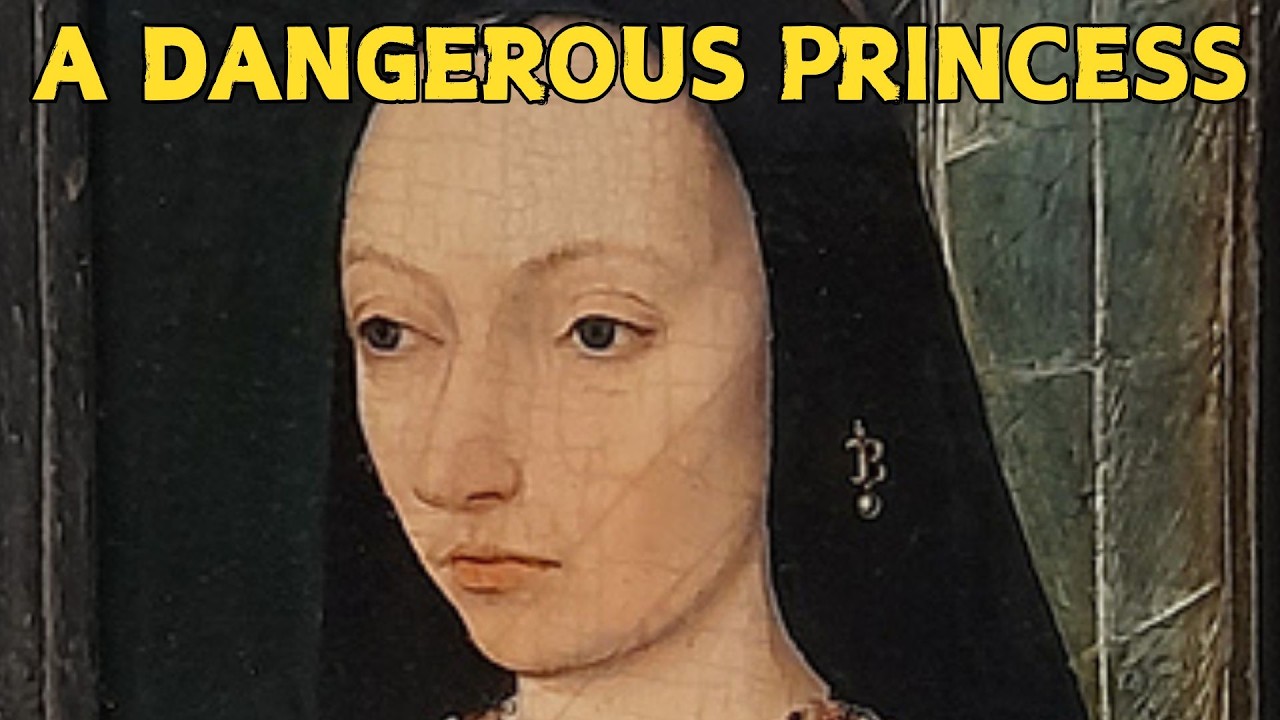 Though her father never wore the crown, Margaret styled herself a princess, calling herself Margaret of England rather than Margaret of York. Her identity was forged in the crucible of the Wars of the Roses, a brutal civil war between the Houses of York and Lancaster.
The conflict began when Henry VI, a Lancastrian king, proved incapable of ruling. Margaret’s father, the Duke of York, claimed a superior bloodline through descent from Edward III’s second son, but the throne had been seized by Henry IV in 1399.
Margaret was just a child when her father was killed at the Battle of Wakefield in December 1460. His head was mounted on the walls of York with a paper crown, mocking his ambitions. Her brother Edward, now Duke of York, avenged him by defeating the Lancastrians and seizing the throne as Edward IV in 1461.
Margaret became the sister of a king, but her marriage prospects languished for years. At age 21, she was still unmarried, a delay that reflected the chaos of the times. Suitors came and went, including a Portuguese prince who died before the wedding.
In 1468, she married Charles the Bold, Duke of Burgundy, one of Europe’s most powerful rulers. The match was a diplomatic triumph for Edward IV, securing an alliance against France. Margaret left England with a fleet of 16 ships, never to return permanently.
The wedding festivities in Bruges lasted nine days, with pageants, tournaments, and banquets that became legendary. Margaret wore a white cloth of gold dress and a coronet that still survives today, housed in Aachen Cathedral, a rare relic of medieval English royalty.
Despite the splendor, Margaret’s marriage was marked by a profound disappointment: she bore no children. Charles, busy with wars and governance, spent little time with her. They were together for only a combined year in the first seven years of marriage.
Margaret found purpose in her new role. She toured the Burgundian lands, gave generously to the church, and deputized for her husband in diplomatic matters. She built a strong relationship with her stepdaughter, Mary of Burgundy, who became a surrogate daughter.
The Wars of the Roses continued to haunt her. In 1470, her brother George, Duke of Clarence, and cousin Warwick rebelled against Edward IV, forcing the king into exile. Margaret sheltered her brothers in Burgundy, helping Edward reclaim the throne in 1471.
 Edward’s return was swift and brutal. Warwick was killed at Barnet, and the Lancastrian Prince of Wales died at Tewkesbury. Henry VI was murdered in the Tower.
Margaret celebrated with a banquet in Ghent, but the stability was short-lived.
Charles the Bold died in battle in 1477, leaving Margaret a widow at 31. Her stepdaughter Mary became Duchess of Burgundy, but the realm was under attack from France. Margaret and Mary worked together to preserve the dynasty.
Mary married Maximilian of Austria in 1477, a match Margaret helped secure. But Mary died tragically in 1482 after a horse-riding accident, leaving Margaret to raise her grandchildren, including Philip the Handsome and Margaret of Austria.
Margaret’s loyalty to Burgundy never wavered, but her heart remained tied to England. When Edward IV died in 1483, her brother Richard III seized the throne, imprisoning the Princes in the Tower. Margaret’s nephews vanished, presumed murdered.
Richard’s reign was brief. Henry Tudor, a Lancastrian claimant, defeated him at Bosworth Field in 1485. Margaret’s niece Elizabeth of York married Henry VII, uniting the houses, but Margaret saw the Tudor king as a usurper.
Henry VII did not honor the trade licenses Edward IV had granted Margaret. She lost income and influence. The new king’s coldness turned her into an enemy.
She began plotting to overthrow him, using pretenders to challenge his throne.
 The first was Lambert Simnel, a boy who impersonated Margaret’s nephew, the Earl of Warwick. Margaret and Maximilian funded an invasion in 1487. Simnel was crowned in Dublin as Edward VI, but his army was crushed at Stoke Field.
Henry VII showed mercy to Simnel, putting him to work in the royal kitchens. Margaret escaped open blame, but her hatred for the Tudor king only grew. She waited for another opportunity to strike.
That opportunity came with Perkin Warbeck, a Flemish youth who claimed to be Richard of Shrewsbury, the younger Prince in the Tower. Margaret publicly recognized him as her nephew, teaching him English court manners and funding his cause.
Warbeck was treated like royalty in Burgundy, attending funerals and riding alongside Philip the Handsome. Henry VII was furious, imposing trade boycotts and accusing Margaret of malice. She became a symbol of Tudor paranoia.
Warbeck’s invasion in 1495 failed. He fled to Scotland, married a kinswoman of James IV, and tried again in 1497. Captured, he confessed to being an imposter.
Margaret apologized to Henry, but the damage was done.
Warbeck was executed in 1499 alongside the real Earl of Warwick. Henry VII had eliminated two threats, but Margaret’s role in the plots cemented her reputation as a traitor to her own bloodline.
Margaret spent her final years in the Low Countries, managing her estates and raising her grandchildren. She died on November 23, 1503, at Mechelen, at age 57. Her alabaster tomb was destroyed in the 16th century, but her epitaph survives.
 The inscription calls her a “marvelous and devoted patroness of justice, of religion, and of reform.” It also notes her as sister of Edward IV and Richard III, kings of England. Her legacy is one of fierce loyalty to Burgundy and relentless opposition to the Tudors.
Historians have debated whether Margaret truly believed Warbeck was her nephew. Some argue she was duped, others that she cynically used him to destabilize Henry VII. Her actions suggest a woman driven by both conviction and ambition.
Margaret’s life spanned the entire Wars of the Roses, from her father’s death to the rise of the Tudors. She witnessed the rise and fall of three Plantagenet kings and helped shape the fate of two European dynasties.
Her story challenges the notion that medieval women were passive. She wielded immense wealth, influence, and political acumen. Without children of her own, she built a legacy through her stepchildren and grandchildren.
Margaret of Austria, her namesake, became a key figure in European politics. Philip the Handsome fathered Charles V, the Holy Roman Emperor. Margaret’s bloodline, through her stepfamily, shaped the Habsburg dynasty for centuries.
Yet she is often overlooked in English history, overshadowed by her brothers and the Tudor narrative. Her treachery against the Tudors made her a villain in their chronicles, but her life reveals a woman fighting for her family’s legacy.
The Wars of the Roses ended with Henry VII’s victory, but Margaret never accepted it. She spent years trying to reverse the outcome, using every tool at her disposal. Her failure does not diminish her audacity.
Margaret of York was a Plantagenet princess who became a Burgundian duchess and a Tudor nemesis. She was a traitor to her bloodline, but a loyalist to her cause. Her life is a testament to the power of women in an age of kings.


