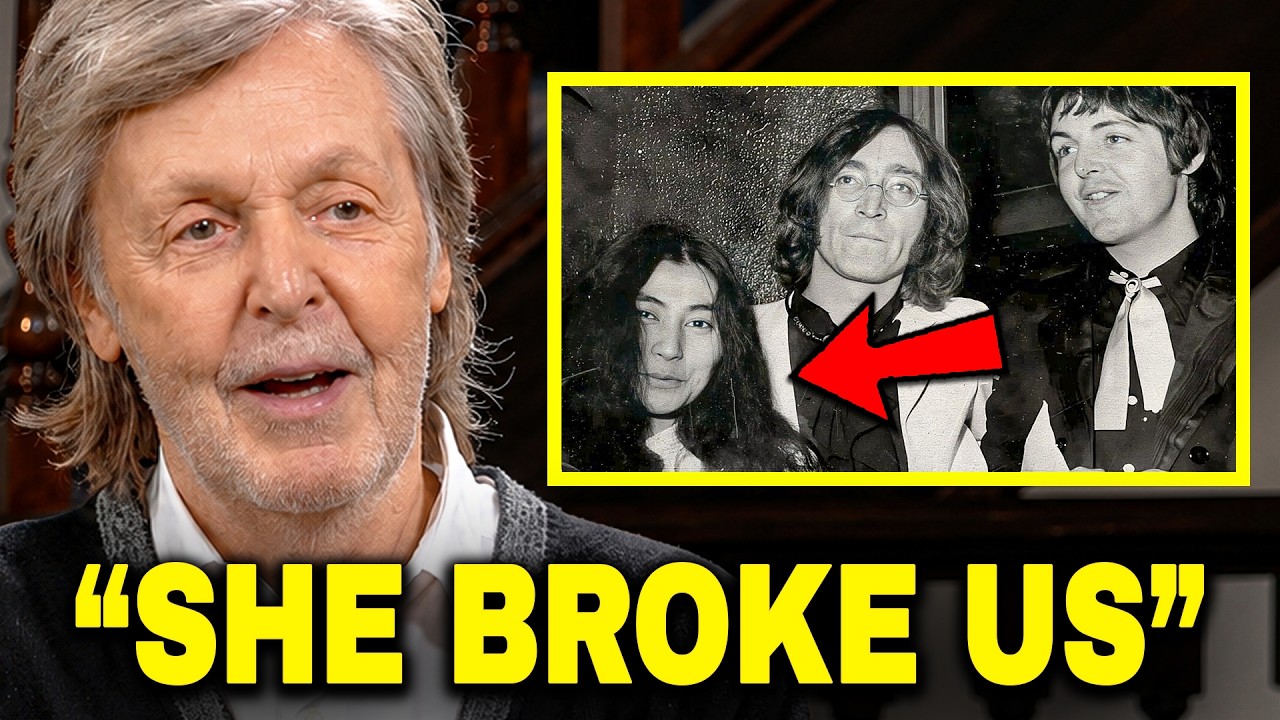
For over five decades, the question of why The Beatles disbanded has lingered like a haunting melody. Paul McCartney, one of the band’s iconic members, has finally shed light on the internal dynamics that led to their split in 1970, revealing a story that diverges from the narrative many have held onto for years.
In a recent interview, McCartney opened up about the private conversations that preceded the public announcement of the band’s breakup. He emphasized that the dissolution was not a sudden event but rather a culmination of tensions that had been brewing behind closed doors. Contrary to popular belief, Paul insists he was not the architect of the band’s end; instead, he points to John Lennon’s decision to leave as the pivotal moment that changed everything.
 Reflecting on his childhood, McCartney recalled the warmth of his family home in Liverpool, where music was a constant presence. His father, a musician himself, nurtured Paul’s talent, which blossomed as he taught himself to play instruments and write songs. This passion for music would eventually lead him to form a partnership with John Lennon that would redefine popular music.
Their friendship was forged in shared experiences of loss, both having lost their mothers at a young age. This bond deepened their songwriting, allowing them to express emotions that were often difficult to articulate. As they transitioned from the Quarrymen to The Beatles, their musical journey took them from local performances to global stardom, ushering in Beatlemania.
However, as the years went by, the pressures of fame began to take their toll. The Beatles were no longer just a band; they had become cultural icons. McCartney, often labeled the “cute Beatle,” felt the weight of public perception, which began to overshadow his true identity as a musician and artist.
 By the late 1960s, the creative landscape within the band began to shift. The departure of their manager, Brian Epstein, left a void that Paul tried to fill, but it also sparked tensions among the members. Lennon’s growing relationship with Yoko Ono and his desire for independence contributed to the rifts that formed.
In his interview, McCartney expressed that he never wanted The Beatles to end. He believed their music was still vibrant and that they could have continued to create together. But when Lennon privately announced his departure, Paul felt the foundation of their partnership crumble.
 The subsequent legal battles over the band’s management further complicated matters, leading to a public perception that Paul was the one responsible for the breakup.
Despite the challenges, McCartney remains proud of the legacy they created together. He has often stated that while he fought for the band’s interests, he did not wish for their dissolution. The complexities of their relationships and the pressures of fame ultimately shaped the band’s fate.
 As fans continue to grapple with the story of The Beatles’ breakup, McCartney’s reflections invite a deeper understanding of the emotional landscape that defined one of music’s greatest partnerships. What more could he reveal about those transformative years?