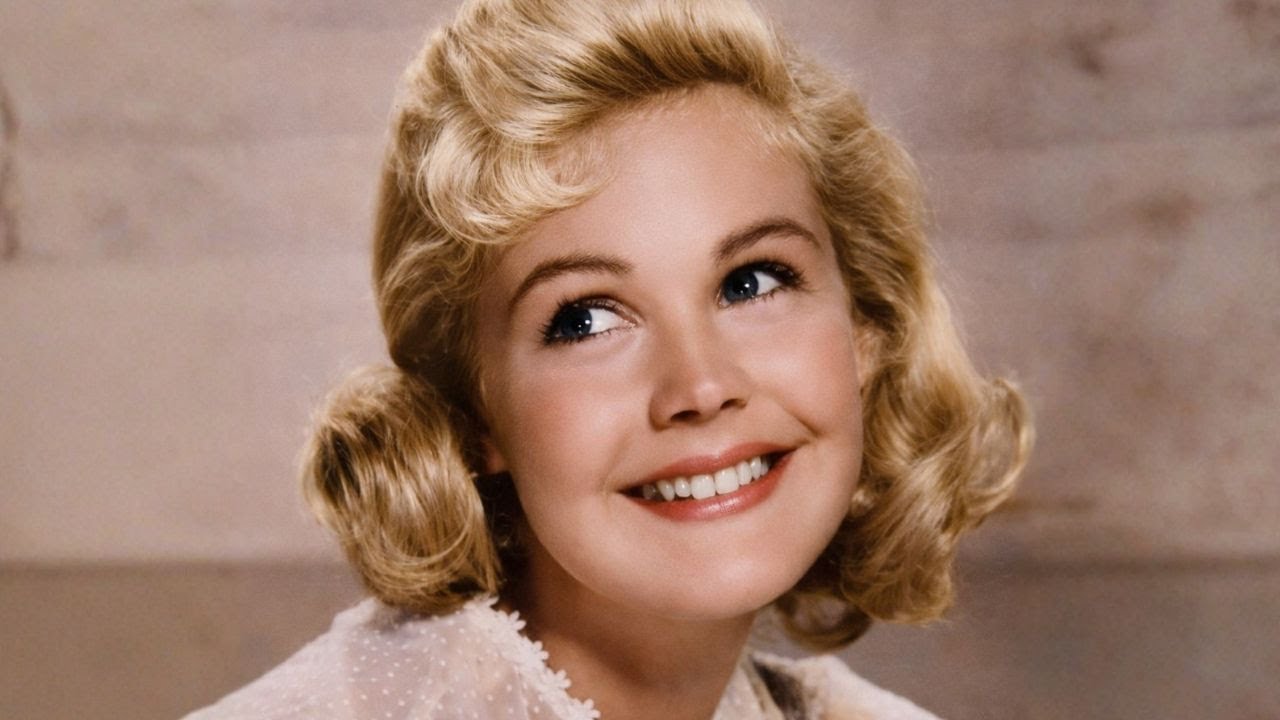
The image flickered on millions of screens across America, a beacon of purity in a decade obsessed with conformity. Sandra Dee, with her halo of blonde hair and a smile that promised only wholesome tomorrows, was the nation’s sweetheart. But the girl the world adored was a carefully constructed fiction, a hologram projected over a life of profound suffering.
Behind the studio gates and the glossy magazine spreads, a different story was unfolding, one of control, exploitation, and a soul slowly being crushed by the very machinery that made her a star. The public saw a fairy tale; the reality was a prison built of contracts and silence.
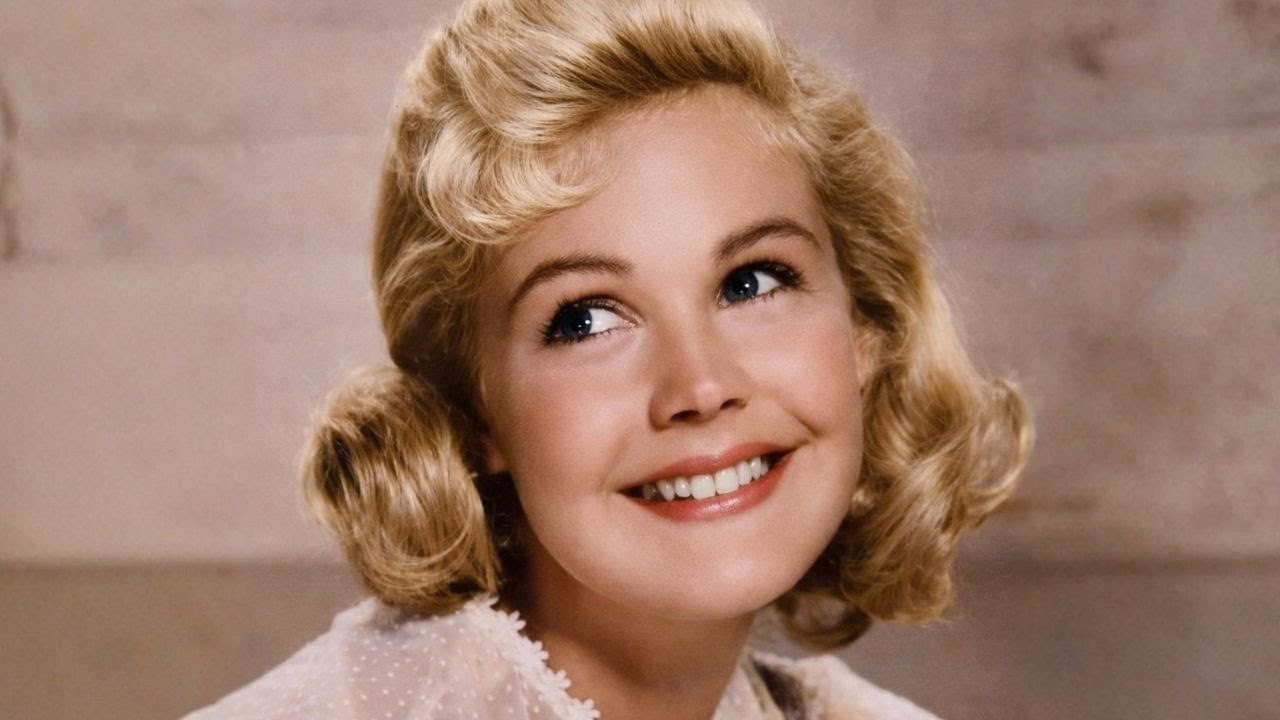 The truth of Sandra Dee’s life, which remained hidden for over three decades, is not a tale of sudden scandal but of systematic erosion. It is the story of a child stripped of her autonomy, a teenager forced to embody a purity she was never allowed to possess, and a woman who spent her adult life trying to outrun the ghosts of a manufactured past. The recent revelations, pieced together from her own posthumous admissions and the testimonies of those closest to her, paint a harrowing portrait of a double life where the cost of perfection was the complete annihilation of the self.
Born Alexandra Zuck in 1942, her life was never her own. From the moment her parents divorced, she became the sole property of her mother, Mary. This was not a typical mother-daughter relationship; it was a totalitarian regime of two.
Mary Zuck, driven by ambition and a need for control, transformed her daughter into the family’s primary economic engine. By the age of four, Sandra was working. Her childhood was not filled with playgrounds and birthday parties but with photo shoots and modeling contracts, her income becoming the lifeblood of their small, fractured family.
The money she earned was substantial, but it was never hers. Every dollar was funneled through her mother, who managed it with an iron fist. Sandra was never taught about finances, never given an allowance, never allowed to make a single decision about her own earnings.
She was an asset, a product whose value was determined by her ability to comply. This economic dependence was the first and most insidious chain, binding her to a life where her worth was measured in contracts and her voice was a liability. The boundary between maternal care and professional management dissolved entirely, leaving a child with no concept of personal agency.
Within this suffocating structure, the abuse began. It was not a single, dramatic event that could be pointed to as the moment her childhood ended, but a creeping, silent horror. Sandra would later reveal that she was sexually abused by her stepfather, a violation that occurred within the very silence her mother demanded.
The unspoken rule was clear: what happened at night must never interfere with the work schedule of the day. This forced compartmentalization taught Sandra a devastating lesson early on: her body was not her own. It was a tool for others, a vessel for their ambitions and their secrets, and her feelings about it were irrelevant.
Her body was also a constant source of external scrutiny. From a young age, her figure was monitored, adjusted, and critiqued. Dress seams were taken in, camera angles were discussed to maintain a specific silhouette, and lighting was arranged to preserve an air of fragile innocence.
This relentless focus on her physical form laid the groundwork for a lifelong battle with her own reflection. Eating was no longer a natural act of nourishment but a negotiation with the demands of her career. Skipping meals became a form of control, the only control she had left in a life dictated by others.
The discipline required to stay thin blurred into self-punishment, a silent obedience that earned her praise from the adults who profited from her diminishment.
 When Hollywood came calling, it did not see a damaged child; it saw a blank canvas. After a small role in 1957, the industry quickly recognized her potential as a product. The label “grown-up Shirley Temple” was affixed, a narrative that promised the public a safe, non-threatening transition into adulthood.
Universal Studios signed her to a contract that was less about her talent and more about managing an image. They didn’t just book her films; they curated her entire existence. Her clothing, her hairstyle, her public statements, and even her private life were all managed as components of a single, unified brand: The Good Girl.
This branding reached its zenith in 1959 with Imitation of Life and A Summer Place. These films were not just successes; they were cultural phenomena that cemented her iconic status. She became the template for the American teenage girl—energetic, adorable, and utterly devoid of shadows.
Her face was a guarantee of a certain feeling: reassurance. The public didn’t go to see Sandra Dee act; they went to see the image they had been trained to love. This created an invisible contract that she could never break.
To deviate from the image was to risk financial ruin and public rejection. She was locked into a persona that allowed for no growth, no complexity, and no humanity.
The pressure of maintaining this facade was immense. While she was projected as the epitome of innocent youth, she was a married woman and a mother, struggling with the demands of a body that was both a public commodity and a private vessel. Her marriage to singer Bobby Darin, which the press celebrated as a fairy tale, was in reality a collision of two deeply wounded individuals.
For Sandra, it was an escape from her mother’s control, a desperate grab for a life of her own. For Bobby, who lived with a constant awareness of his own mortality, it was a frantic race to experience life at full speed. They were two people who needed saving, but they were incapable of saving each other.
The marriage was strained from the start. Sandra had never been allowed to develop the skills necessary for adult intimacy. She had no sense of personal boundaries, having had them violated from childhood.
The trauma of her past did not disappear; it manifested in the marriage as distance, unexplained withdrawal, and an inability to feel safe in moments of closeness. Bobby, with his own frantic energy and demanding career, could not understand the depth of her pain. He saw instability but not its source.
 The birth of their son, Dodd, in 1961, brought joy but also immense pressure. Sandra was expected to be a mother while maintaining the grueling schedule of a movie star, all while her body was healing from the physical and emotional toll of childbirth.
To cope, she turned to the medicine cabinet. Pills to give her energy, pills to suppress her appetite, and pills to help her sleep. This pharmaceutical crutch quickly became a dependency.
The miscarriages she suffered in the following years were not allowed to be moments of grief. They were treated as failures of her body, further eroding her sense of self-worth. Each loss was internalized as a personal inadequacy, a betrayal by her own biology.
Alcohol began to mix with the pills, creating a fog that allowed her to escape the present moment, a present that was filled with unprocessed trauma and the suffocating weight of her public persona.
The divorce from Darin was not an ending but a beginning of a different kind of pain. Ironically, it was only after the legal separation that they grew closer, finally able to communicate without the pressure of the marriage. It was during this time that Sandra began to tentatively speak about her childhood abuse, the first time she had ever voiced the secret that had defined her life.
But this opening was short-lived. When Bobby died in 1973 at the age of 37, Sandra lost the one person who had begun to understand her hidden history. His death sent her spiraling deeper into alcoholism and depression.
As her career faded, so did the structure that had, in a perverse way, kept her functioning. The phone stopped ringing. The scripts stopped arriving.
The system that had exploited her for so long simply moved on, leaving her with nothing but the wreckage of her own life. She was no longer Sandra Dee, the icon; she was just a woman alone with her demons. The eating disorders that had been a tool for control became a prison.
The alcohol that had been an escape became a daily necessity. She withdrew from the world, her life shrinking to the four walls of her home.
 The public had no idea. To them, she was still the frozen image of youth from the late 1950s. They didn’t see the decades of silent struggle, the hospitalizations, the desperate loneliness.
The double life she led was not one of glamorous secrets but of profound isolation. She was a prisoner in her own home, serving a life sentence for the crime of being a beloved icon. The world loved a ghost, a memory, a product, while the real woman was left to wither in the shadows of that manufactured identity.
In 1994, she attempted to reclaim her narrative with the memoir Dream Lovers. It was a raw and unflinching account of her life, detailing the abuse, the addiction, and the exploitation. It was not a plea for sympathy but an act of defiance, a final attempt to break the silence that had defined her existence.
The book was a revelation to many, finally exposing the dark underbelly of the golden age of Hollywood. It was a story of survival, but it was not a story of triumph. The damage had been too deep, the wounds too old.
She was not seeking a comeback; she was seeking to be seen, truly seen, for the first time in her life.
Sandra Dee died in 2005 from complications of kidney disease, a condition exacerbated by years of alcohol abuse and eating disorders. Her death was a quiet echo of her life. The news cycle barely paused.
There was no national mourning, no outpouring of grief for the woman who had once been America’s sweetheart. The culture had already moved on, having replaced her image with newer, shinier models of innocence. The system that built her up had long since discarded her, and the public that adored her had forgotten the real person behind the poster.
Her legacy is a tragic paradox. She is remembered as an icon of purity, a symbol of a simpler, more innocent time. But that memory is a lie.
The real Sandra Dee was a victim of that very ideal. She was a child who was never allowed to be a child, a woman who was never allowed to be a woman. Her story is not a cautionary tale about the fleeting nature of fame, but a damning indictment of an industry that consumes its young.
It is the story of a girl who lost herself the moment the world began to love her, and who spent the rest of her life searching for the pieces that were taken from her. The smile that made America believe in goodness was a mask for a pain so profound it ultimately consumed her. The double life she lived for 30 years was not a choice; it was a survival mechanism, a way to exist in a world that only wanted her to be a fantasy.
And when the fantasy was no longer needed, the real person was left with nothing but the silence she had been forced to keep for so long.