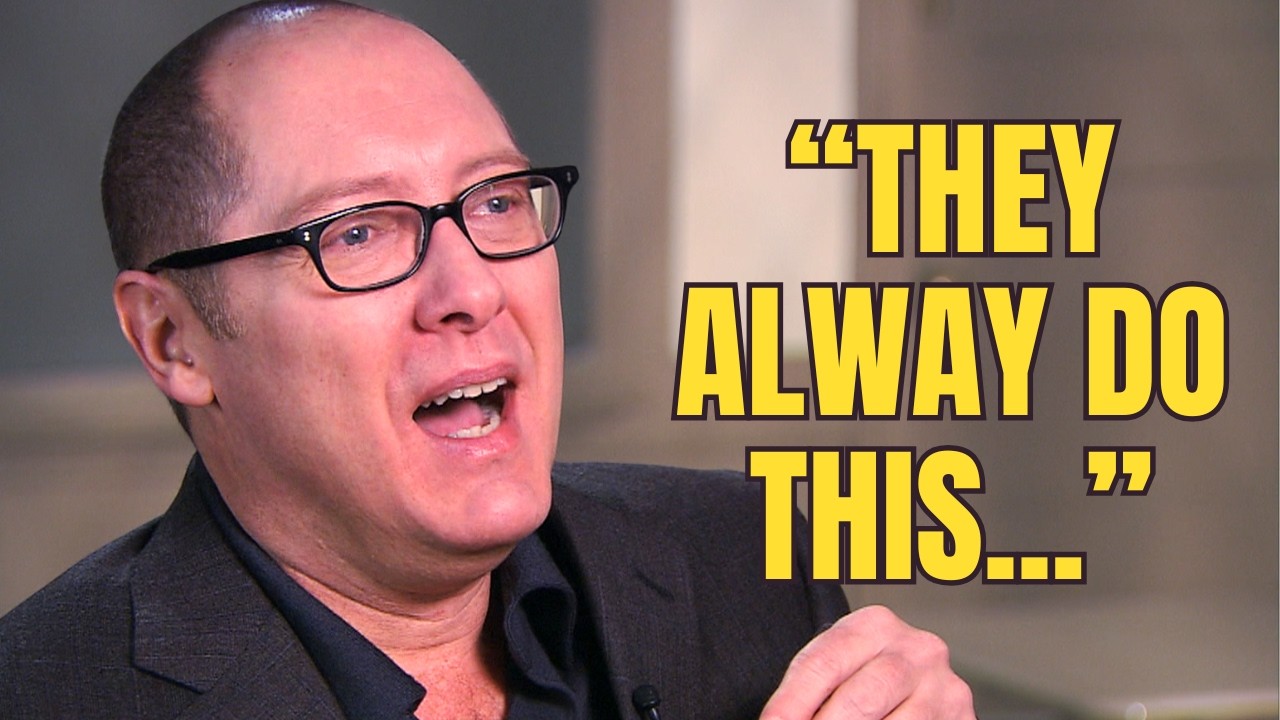
James Spader spent decades being pulled toward Hollywood’s definition of stardom, and at the moments when audiences wanted him most, he turned and walked the other way. At 29, he won Best Actor at Cannes and then spent months driving across America to escape his own momentum. At 63, after playing Raymond Reddington for 218 episodes of *The Blacklist*, he let the show end in a Spanish field and quietly offered no replacement. Now Marvel is bringing him back as the voice of Ultron for the Disney+ series *Vision Quest*, set to premiere on October 14, 2026—11 years after *Avengers: Age of Ultron* and three years after Reddington’s final episode.
Neither departure was forced by cancellation, scandal, or a lack of work. Spader kept choosing to leave at the exact moments the industry expected him to cash in. His instinct to escape the expected life predated any screen career. Born in Boston on February 7, 1960, he was the youngest of three children raised by teachers.
He attended Phillips Academy in Andover but left at 17 for New York without a diploma or any guarantee that acting would support him. Through a friendship with John F. Kennedy Jr. , he found restaurant work with help from Jacqueline Kennedy Onassis—until a dropped tray ended that job.
He studied at the Michael Chekhov studio while unloading railroad cars, tending horses, driving a meat truck, and teaching yoga, a job that introduced him to Victoria Kheel, a fellow yoga instructor who would later become his wife. Hollywood first noticed him for a quality that made audiences recoil before they learned his name. In *Pretty in Pink*, Spader played Steff, the wealthy young man whose soft voice and unhurried contempt humiliated Molly Ringwald’s character without ever raising his voice. Director Howard Deutch found Spader so unpleasant during the audition that he called John Hughes and argued against hiring him.
Hughes responded with a startling reversal: that reaction *was* the part. Spader got the job, and Steff’s menace outlived many larger performances. *Less than Zero* sharpened that threat, and *Jack’s Back* let suspicion move between twin brothers played by Spader. Then his agent sent him a script that was frightening other actors away—a warning that sounded more like an invitation.
Steven Soderbergh’s *sex, lies, and videotape* centered on a video camera and a character defined by what he withheld. With roughly a week of rehearsal and a month of shooting, Spader built Graham Dalton through hesitation and the silence he left after other people finished speaking. The independent film won the Palme d’Or in 1989, and Spader received Cannes’ Best Actor award at 29. The victory should have settled his future as a conventional leading man, but publicity created an unexpected trap.
Spader later said he had not worried about being typecast until the press tour kept asking whether he was worried—turning a label he had ignored while acting into something he had to defend. That same summer, the scandal surrounding Rob Lowe pulled the production of *Bad Influence* into a publicity storm and showed Spader what success could drag into private life. He noted the real ugliness in the business, then put distance between himself and his career by driving across America for months between jobs. Marriage to Victoria and a baby on the way changed the vehicle rather than the instinct: the 1969 Porsche convertible gave way to what he called a more domestic car.
His next roles kept preventing one success from becoming a permanent cage. *White Palace* replaced Steff’s polished cruelty with a grieving, working-class widower, while *Stargate* placed an awkward Egyptologist inside a big-budget adventure. *Crash* and *Secretary* chose fascination and discomfort over the easy affection available to a safer leading man. The sequence made little sense as a campaign for uncomplicated stardom, but it obeyed a choice Spader later described clearly: the offers most likely to receive a yes were the ones that took him somewhere he could not have predicted.
Television executives initially thought that unpredictability made him dangerous in the wrong way for American homes. When David E. Kelley proposed Spader for Alan Shore during the final season of *The Practice*, the resistance was blunt—he was not considered a face network audiences would welcome. Alan Shore overturned that judgment, manipulating cases, exposing his own damage, and trading scenes with William Shatner’s Denny Crane.
The character moved into a new series, *Boston Legal*, built entirely around him. Spader’s pauses made closing arguments feel like thoughts arriving under pressure, and audiences who once loathed Steff learned to trust a man who had not always earned it. He won Emmys in 2004, 2005, and 2007. His marriage to Victoria ended after 17 years and two sons, and Leslie Stefanson became his partner in the next long chapter of his life.
A guest actor’s memory captures how Spader used that authority. Jim O’Heir, filming a bar scene as a department store Santa who had lost his job, knew his performance had been only adequate. The crew was packing up and overtime costs were rising, so he hesitated to ask for another take. Spader noticed and asked whether he was satisfied.
When O’Heir admitted he wanted another attempt, Spader turned to the director and said, “We’re going to do this again,” then promised further tries if needed. The actor famous for dominating rooms used his power to slow a hurried set down for someone who could not safely demand it himself. His next reinvention involved one of the strangest financial bargains in his career. Spader entered *The Office* as Robert California, an applicant who talked his way from regional manager to chief executive and made innocent conversation sound threatening.
Two scenes expanded into a season. Some viewers found him brilliant; others wanted the familiar room back. Spader stayed because he had committed to Steven Spielberg’s *Lincoln*, whose ensemble scale and long schedule offered modest pay. *The Office* thus became the job that actually paid his bills.
Robert California existed partly because Abraham Lincoln could not cover the months required to play him. Raymond Reddington arrived in 2013, five years after Spader and Stefanson welcomed their son Nathaniel. The role offered a wanted criminal who entered FBI headquarters, removed his hat, knelt beneath drawn weapons, and surrendered without surrendering control. Spader cut his hair short for a fugitive traveling lightly, then helped make a practical black fedora Red’s signature.
The cruel reversal was that a role chosen partly for its New York location began consuming the life he had tried to protect. During the first season, he worked seven-day weeks, studied scripts away from the set, and called writers in Los Angeles because one careless disclosure could damage Red’s mystery. Executive producer John Eisendrath once sent pages at 2:30 in the morning and found Spader had read them and prepared notes by breakfast. Megan Boone later saw him stop a take when an extra moved a piece of paper at the wrong line—nothing in the room was merely background to him.
He described network television as something that swallowed and chewed him without spitting him out. His vigilance did not disappear when filming stopped. During breakfast in Manhattan, Spader noticed a man half-hidden across the street and began testing explanations for his presence. Twenty minutes later, after the conversation had drifted into novels and private corners of New York, he looked up and found the stranger gone—books had absorbed him more completely than the possible threat.
A simple question about owls once sent him through seven minutes of corrections and detours, and no one hurried him because listening had become more pleasurable than arriving. Calm rage in his eyes produced fear while his voice remained almost comforting, allowing one man to sound capable of affection and violence within the same measured sentence. He called Reddington a scary monster whom people liked, and over 10 seasons that contradiction turned a criminal into a familiar weekly presence. *Avengers: Age of Ultron* tested whether that presence could survive the removal of his face.
Spader did far more than record dialogue: technicians marked his face, fitted him with performance-capture cameras, and recorded his body while scene partners sometimes aimed their eyes at red reference lights raised several feet above his head to represent the robot’s height. Watching an eight-foot digital Ultron reproduce his head turns and gestures gave him a physical character he could adjust in real time. When unprocessed footage surfaced, the joke wrote itself: Robert California appeared to have talked a machine into becoming him, and Reddington seemed to have found a metal body. Removing his face did not reduce the performance—it exposed how much of Spader had always lived beneath the voice.
*The Blacklist* ended on July 13, 2023, after 218 episodes, with enough warning for its creators to choose their final movement. Red’s journey closed in Spain, where Dembe found him in a field after a fatal encounter and returned the fedora to his head. The ending divided the audience, and unanswered questions turned some loyalty into frustration. Yet the sharper absence arrived afterward: the voice that had filled living rooms with danger, wit, and unexpected comfort no longer arrived each week.
Spader offered no rapid comeback, no replacement series, and no campaign explaining the quiet. The silence should not have surprised anyone. In 1989, when Cannes should have made momentum irresistible, he called freelance choice precious because a finished job returned the rest of his life. He later spoke just as plainly about protecting summers with his sons and realizing that five relentless television years had left too little room to live healthily.
By 2013, the arrangement fit one sentence: “If I don’t need the money, I don’t work. ” The pre-dawn notes, three Emmys, and 218 episodes prove acting never lost its hold on him. What he rejected was the machinery that converted every quiet interval into publicity positioning. He preferred walking New York, entering a museum, cooking, reading, and returning to his family over remaining a performance after the camera stopped.
Marvel’s decision to bring him back as Ultron in *Vision Quest* makes that boundary visible. The years of silence had not made audiences forget him—they made another performance feel rare. Spader accepted one carefully chosen role without turning the private interval into a comeback story. At 29, he answered Cannes by taking the open road.
At 63, he answered 10 seasons of devotion by letting a black fedora rest in a Spanish field. Now the voice returns from inside a machine while the man who owns it remains outside the spectacle until the work begins.