A doctor once warned Rusty Dennis that her two-year-old son Rocky would not live past age seven. He died at sixteen, having outlived that prognosis by more than twice as long. But the story behind that outcome is far more complicated than the 1985 film Mask ever showed. Before Rusty died, she made revealing comments about Rocky, the movie, her family, and the choices she made as a mother.
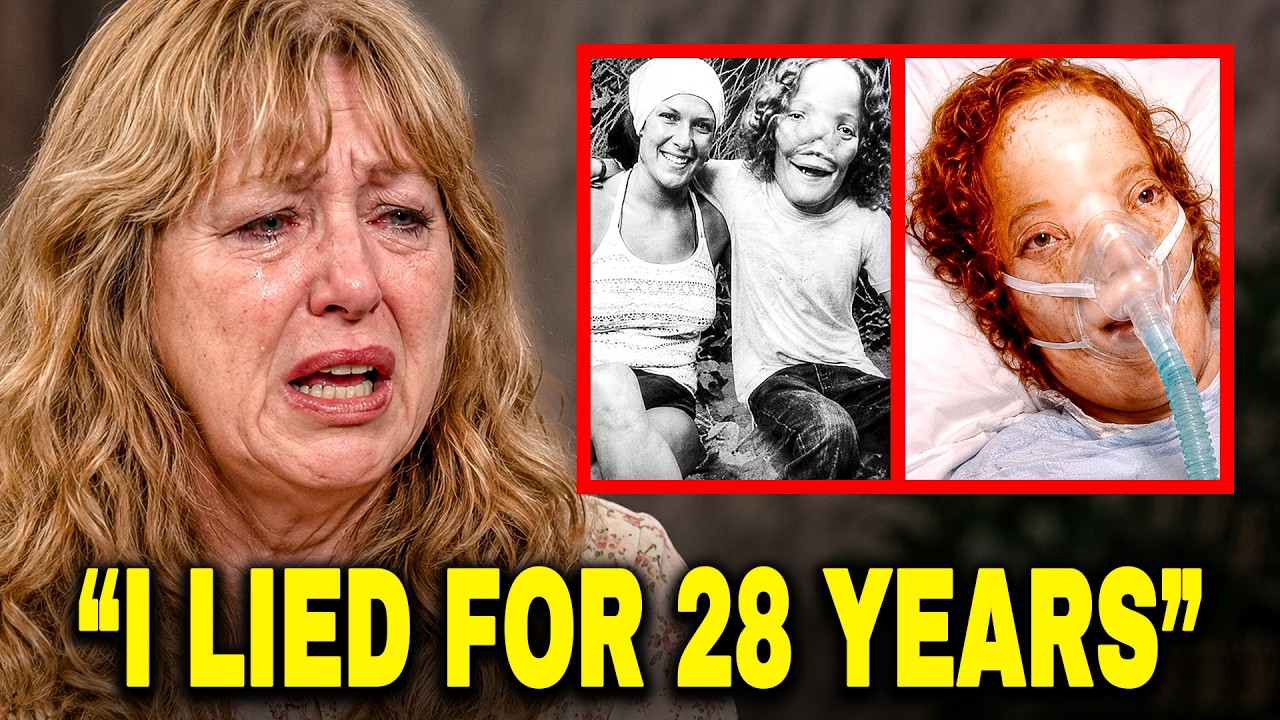
Her account challenges the Hollywood version of her life in ways that most viewers never knew. Roy Lee Rocky Dennis was born on December 4, 1961, in Glendora, California, to Florence Rusty Tullis and her second husband, Roy Dennis. From the beginning, he was difficult to settle, and his mother noticed he would not sleep unless someone rocked him, which led to the nickname Rocky. For the first couple of years, nothing suggested his life would become extraordinary.
He was often sick with ear and sinus infections, but those problems seemed ordinary for a young child. That changed when Rocky was around two years old. He went in for a tonsillectomy, and during the procedure, an X-ray technician noticed something unusual about his skull. Doctors could see that his bones were not developing normally.
What initially seemed like a routine medical procedure became the start of a long search for answers. Rocky was taken to UCLA Medical Center for further testing. Rusty later described months of appointments and examinations, with the family making repeated trips to the hospital, sometimes several times a week. Eventually, doctors gave the condition a name: craniodiaphysial dysplasia.
The disorder was extremely rare. It caused abnormal calcium deposits to build up in the bones of the skull, making them unusually thick. As the condition progressed, the growing bone could affect nerves and structures around the eyes, ears, and brain. In the mid-1960s, doctors had very little experience with it, and Rusty was reportedly told that only a small number of cases had ever been documented.
The prognosis was devastating. Doctors reportedly warned Rusty that Rocky would eventually lose his eyesight, could suffer serious neurological problems, might become intellectually disabled, and would probably die before reaching age seven. Rusty refused to accept that prediction. Instead of treating him as a child who was already dying, she pushed for him to have as normal a childhood as possible.
She wanted him in school, around other children, learning, making friends, and taking part in everyday activities. His eyesight created another problem. As the condition progressed, his ability to see became increasingly limited, and some doctors and educators questioned whether he could read or keep up academically. Rusty disagreed.
She believed people were judging Rocky by his appearance and medical condition instead of his intelligence. When schools considered moving him away from mainstream classes, Rusty fought the idea. She later explained that she believed some resistance had less to do with what Rocky could actually do and more to do with how uncomfortable other adults were around him. Rocky gave her plenty of evidence to support her position.
Despite his condition, he became an honor student at Sandberg Junior High, developed close friendships, and became known for his humor and friendly personality. He was not simply surviving school; he was participating in it. His personality also made an impression on people outside the classroom. Screenwriter Anna Hamilton Phelan encountered Rocky during a visit to UCLA’s Center for Genetic Research.
Struck by his warmth and sense of humor, she eventually used his story as the foundation for Mask. Phelan later described Rusty as an unconventional mother, but said she was exactly the mother Rocky needed. Before becoming known as the mother portrayed by Cher in Mask, Rusty had already lived a remarkable and complicated life. She was born May 29, 1936, in Brooklyn, New York, to a working-class family.
Her father was a truck driver, and she developed a rebellious personality early. At 13, she was expelled from junior high school for truancy. By 14, she was using marijuana and spending time around motorcycle gangs. At 15, she dropped out of school completely and began working as a hoochie coochie dancer at Coney Island.
At 17, she married truck driver Tommy Mason. The marriage produced her first son, Joshua Mason, but did not last. After the marriage ended, she eventually married Roy Dennis and moved to California, where Rocky was born in 1961. By then, Rusty had developed a personal philosophy that became central to how she raised her son.
She believed that if people could make themselves sick through their thoughts and actions, they could also make themselves well. She applied that belief directly to Rocky. Whenever he experienced severe headaches, Rusty would send him to his room and tell him to make himself well. She did not want him constantly thinking about his illness or believing his future had already been decided by doctors.
There was a complicated side to this approach. Rocky was living with a serious condition that caused real physical problems, and his headaches could be severe. Telling a child to make himself well could not change the disease itself. But Rusty was not simply denying what was happening.
Her goal was to keep Rocky from seeing himself only as a sick child waiting to die. Rusty also surrounded Rocky with people very different from what many doctors considered conventional. She remained closely connected to the Turks, a motorcycle gang, and the bikers were genuinely involved in Rocky’s life. They became part of his wider family and treated him as a person rather than someone defined by his appearance.
One of the most important figures in that circle was Bernie Tullis, Rusty’s partner, who later inspired the character Gar in Mask, played by Sam Elliott. The motorcycle community reflected Rusty’s personality. She had never been interested in presenting herself as a traditional mother, and she did not suddenly become one. Her drug use was another part of her history she later discussed openly.
Mask presented some of her drug use as if she were overwhelmed by circumstances and using drugs to cope. Rusty pushed back against that interpretation. She explained that she partied heavily and that drugs were simply part of the partying lifestyle she had chosen. That distinction mattered to her.
Rusty did not want Hollywood to rewrite her past into something more acceptable. She had made mistakes, lived recklessly at times, and surrounded herself with people and situations far from conventional. But she believed those experiences were part of who she was. By the fall of 1978, Rocky was 16, and the condition doctors had expected to kill him before his seventh birthday had finally begun taking a serious toll.
He had already lived nearly a decade longer than the original prognosis, but his health was declining quickly. The headaches that had followed him throughout his life had become much more severe. His physical condition had deteriorated, and during his final weeks, he was using a wheelchair. Even then, he was not isolated.
Rusty remained close, as did Bernie Tullis and the group of friends and bikers who had become part of the family’s life. On the evening before his death, the family went out to a restaurant for dinner. Rocky was already extremely weak, and everyone could see his condition had become serious. After dinner, he returned home suffering from another severe headache.
Rusty responded the same way she had for years. She sent him to his room and told him to make himself well. That sentence is important because it was not something Rusty suddenly said because she did not understand how sick her son was. It was part of the philosophy she had used throughout his childhood.
She wanted Rocky to believe he could still fight, still participate in life, and still think of himself as more than his disease. Rocky went to his room and never woke up. He died at home in his sleep on October 3, 1978, at 16 years old, just a few months short of his 17th birthday. One of the biggest differences between the real story and Mask comes at the moment of his death.
The movie presents Rusty as the person who discovers Rocky’s body, one of the film’s most emotional scenes. In reality, she was not. According to accounts of his death, Rusty was away from home at the time dealing with a drug possession matter at her lawyer’s office. Bernie was the person who called her and told her Rocky had died.
That detail is difficult to hear because the movie makes Rusty’s discovery such a central moment. But the difference does not automatically make Rusty a bad mother or mean she abandoned her son. It simply shows how much the film changed real events to create a dramatic story. There is another uncomfortable aspect of Rocky’s death that deserves careful explanation.
It would be easy to assume Rusty later regretted her belief that he could make himself well. But the available record does not show Rusty publicly describing it as a mistake or admitting she had failed Rocky by believing in it. In fact, she continued to defend the basic idea behind it. Her belief was that Rocky should not spend his life thinking of himself as someone already dying.
She wanted him to focus on living. At the same time, a difficult question cannot be ignored. Could that philosophy have caused some of Rocky’s pain or medical problems to be treated less seriously at times? It is a reasonable question, especially given the way Rusty responded to his headaches.
But there is no basis for presenting that interpretation as something Rusty herself admitted. Rocky’s life cannot be reduced to his final illness. He was an honor student, developed close friendships, and was known for being warm, funny, and friendly. He tutored other students and charged three dollars an hour, negotiating his own rate.
He had a strong interest in astronomy and memorized details about the night sky. At summer camp, he fell in love with a blind girl who could not judge him by his appearance. He also refused to let his appearance decide how he should be treated. When doctors reportedly discussed surgery that could alter his features, Rocky reportedly asked, Who will I see in the mirror if I change my face?
He understood that his appearance was part of his identity and did not want a medical procedure to make him look more acceptable to other people. When people watch Mask, it is easy to think Rocky was Rusty’s only child. The film largely leaves out her first son, Joshua Mason. Joshua was born years before Rocky and remained closely connected to Rusty even after her first marriage ended.
Yet when Mask was made, Joshua was largely removed from the story, and that omission reportedly bothered Rusty. Joshua was not simply a minor character left out for time. By the 1980s, he was living in San Francisco and working as a writer. He was openly gay and had a relationship with his mother that, despite her unconventional lifestyle, was described as supportive.
Rusty even suggested he could use a sperm bank because she hoped he would eventually have children. Then in 1986, Joshua was diagnosed with Kaposi’s sarcoma, a cancer strongly associated with the AIDS crisis. He was only 32. His illness meant Rusty was once again dealing with the possibility of losing a son to a serious disease.
That brings the story back to the $15,000 Rusty reportedly received for the rights to Rocky’s story. On its own, the amount can seem surprisingly small compared with the more than $48 million Mask eventually made at the box office. But the reason Rusty accepted the deal becomes much more understandable when Joshua’s situation is included. Much of the money reportedly went toward Joshua’s medical expenses.
Rusty was not simply selling the story of one dead son to make money. She was using Rocky’s story to help care for another son who was still alive and seriously ill. Joshua died in 1987 at age 32. Rusty once said that Joshua did not believe in dying and added that she did not believe in it either.
That statement connects the two brothers. Rocky had spent his childhood being told he would die young, while Joshua faced a completely different medical crisis as an adult. Yet Rusty approached both situations with the same refusal to treat death as something that should control the way they lived. After Rocky’s death, Rusty moved to San Francisco, where she became interested in Buddhism and began building a quieter life around helping other people.
She became involved in counseling people struggling with drug addiction, using her own experiences as part of the reason she could understand them. She also had plans to work with the Shanti Project, an organization that helped people facing serious and terminal illnesses, including AIDS patients. Still, Rusty never completely abandoned her earlier identity. She continued riding motorcycles.
That ultimately played a role in her own death. On October 14, 2006, Rusty was riding her three-wheel motorcycle when the right tire came off. She lost control, struck a curb, and hit a telephone pole. She suffered broken legs and a punctured lung among other injuries.
Her friends and relatives did not immediately know she was the unidentified woman injured in the crash. A short newspaper report about an unidentified 70-year-old woman eventually appeared in the San Gabriel Valley Tribune. People who knew Rusty connected the information and went to find out what had happened. Rusty survived the initial accident, but her condition later became complicated by an infection.
Florence Rusty Tullis died on November 11, 2006, at Beverly Hospital in Montebello, California. She was 70 years old. Her death had nothing to do with the disease that had taken Rocky nearly three decades earlier. She died from complications following a motorcycle accident, still riding motorcycles at 70.
A 1986 Chicago Tribune profile described her as a 49-year-old Jewish mother, former drug addict, go-go girl, and Shaklee products distributor living in a neat biker home in San Francisco’s Mission District with several bikers. That description sounds unusual because Rusty herself was unusual. She could be a mother, a former dancer, a drug user, a biker, a businesswoman, a counselor, and a Buddhist without allowing any one label to completely define her. Her attitude toward death also remained consistent.
She once described Rocky’s death as just another place to go and said that he loved going places. Rusty had spent Rocky’s entire life refusing to let the idea of death control him. Even after losing him, she continued to speak about death without allowing it to become the only thing that defined his life.


