Claudine Longet was once known as the wife of one of America’s most beloved TV entertainers, Andy Williams. She had been a dancer, an actress, a recording artist, and a mother of three. But by the mid-1970s, her life had moved far from the Hollywood spotlight — into an Aspen bathroom where a gunshot killed her boyfriend and triggered one of the most disputed criminal cases of the decade. The story began in Paris, where Longet was born on January 29, 1942.
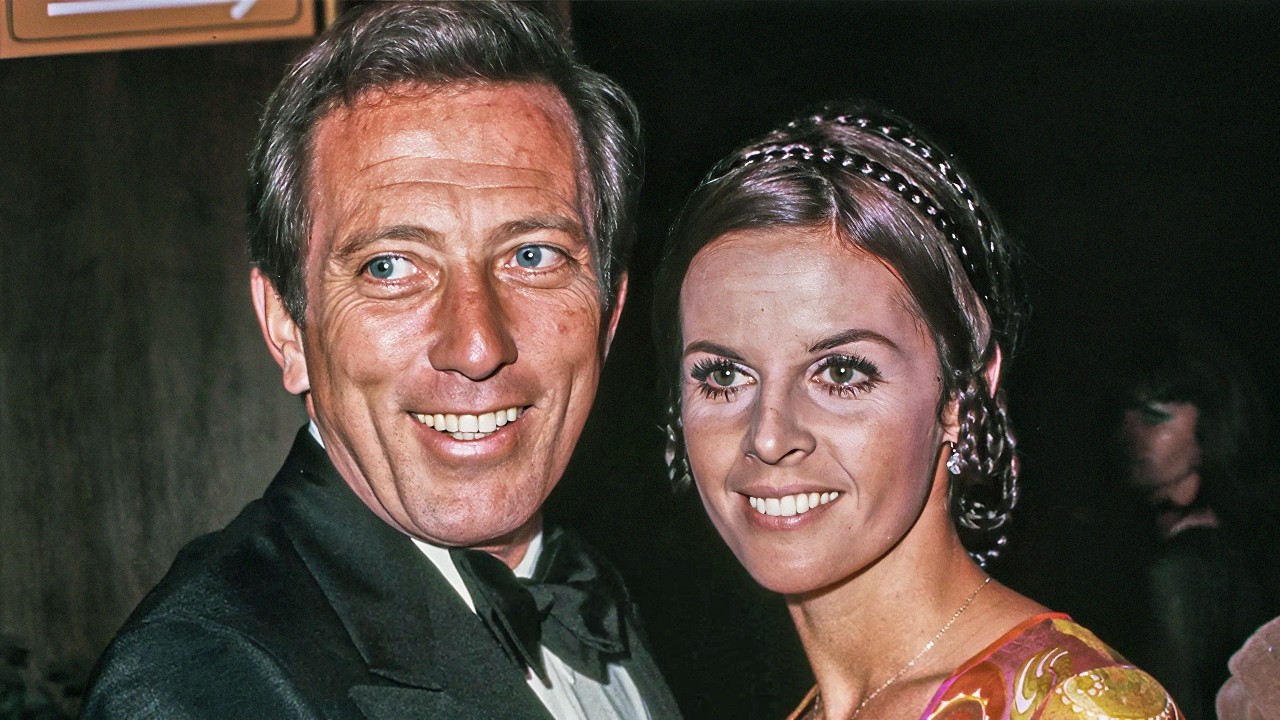
As a teenager, she performed for tourists and eventually found work as a dancer. That path led her to Las Vegas, where she joined the famous Folies Bergere show at the Tropicana. It was there she met Andy Williams, reportedly after he stopped to help her with car trouble. Williams, then 33, was already an established singer.
Longet was 19 when they married on December 15, 1961. . The marriage came as Williams’ career was surging. In 1962, he performed “Moon River” at the Academy Awards, and soon after he launched The Andy Williams Show, which made him one of the most recognizable entertainers in America.
Longet appeared on the program, mingling with major celebrities and becoming familiar to millions of viewers. The couple had three children together: Noelle, Christian, and Robert. They also became close friends with Robert F. Kennedy and his wife, Ethel.
In June 1968, Claudine and Andy were at the Ambassador Hotel in Los Angeles when Kennedy was shot after winning the California Democratic presidential primary. They rushed to Good Samaritan Hospital, where authorities were treating him. He died the next day. The couple would later name their third son Robert in his honor.
. While appearing on the TV series Run for Your Life in 1966, Longet performed a song that caught the attention of Herb Alpert, the co-founder of A&M Records. He offered her a recording contract. She released several albums, including Claudine, The Look of Love, Love is Blue, Colors, and Run Wild, Run Free.
Her style was softer and more relaxed than many of the era’s big female vocalists, blending pop with French and bossa nova influences. In 1968, she was cast in Blake Edwards’ comedy The Party, starring Peter Sellers. She played Michelle Monet, a French actress involved with Sellers’ character. The role gave her another major credit while her career was expanding across television, music,and film.
. Professionally, Longet appeared to be building an identity separate from her husband. Personally, the marriage was weakening. Williams later acknowledged that his career had played a role in its breakdown, saying he and Claudine had simply grown apart and regretting he had not taken better care of the relationship.
They separated in 1970 and divorced in 1975. Despite the split, they remained connected through their children, and that bond would prove crucial in the years ahead. . In 1972, Longet met Vladimir “Spider” Sabich, a well-known American alpine skier who had competed at the 1968 Winter Olympics.
They met at a celebrity ski race in Bear Valley, California, and their relationship quickly became serious. Longet brought her three children into her new life with Sabichin Aspen, Colorado, where he had built a successful career as one of the most recognizable athletes in the ski resort community. Her life was now centered around skiing and the outdoors — a much quieter world than the television studios and recording sessions she had known with Williams\. On March 21, 1976, Sabich was at the couple’s house in Aspen, preparing to take a shower.
Longet entered the bathroom carrying a . 22 caliber pistol. The gun fired, striking Sabichin the abdomen. He was seriously wounded and lost a significant amount of blood.
He was placed in an ambulance and taken toward the hospital, but he died from blood loss before arriving. He was 31 years old. . Longet immediately became the focus of the investigation.
She gave authorities this explanation: Sabich had been showing her how to use the pistol, and while he was demonstrating how it worked, it accidentally discharged. Investigators and prosecutors were not convinced. One of the biggest problems involved Sabich’s position when he was shot. Prosecutors argued he was several feet away from Longet and bent over, with his back toward her — a position, they argued, did not fit neatly with her account that he was demonstrating how to use the weapon.
Questions also surrounded why Longet was holding the pistol in the bathroom at all, and whether her relationship with Sabich was actually falling apart. Investigators became interested in her diary, which they believed contained information suggesting the relationship had become troubled. There were also reports that Sabich was considering ending the relationship. However, the exact state of their relationship immediately before his death has remained part of the controversy.
Longet maintained that they were in a good relationship, while the prosecution later presented a very different picture. . The prosecution faced serious problems of its own. Longet initially faced a manslaughter charge, and prosecutors wanted to challenge her accidental-shooting explanation.
Two of their most potentially damaging pieces of evidence — her diary and results from toxicology testing on her blood and urine samples — were ruled out of the case due to mishandling during the investigation. Errors also involved the firearm itself: according to accounts of the case, one inexperienced officer wrapped the . 22 caliber pistol in a towel, placed it inside his glove compartment, and left it there for weeks. That handling raised questions about whether the weapon had been properly preserved in a serious criminal investigation.
. The case went to the jury after only four days of testimony. Jurors deliberated for roughly four hours. They did not convict Longet of the serious charge prosecutors had originally pursued.
Instead, they found her guilty of criminal negligence, a lesser offense. She was ordered to pay a $250 fine and received a 30-day jail sentence that she was allowed to serve on weekends. She was also placed on probation. For Sabich’s family and others who believed the shooting was intentional, the sentence was difficult to accept.
Longet was not found innocent; she was found guilty of a lesser offense. But the jury did not accept the prosecution’s most serious case. Prosecutor Frank Tucker called the outcome deeply frustrating. Longet continued to maintain that the shooting was accidental, while those who believed Sabich had been intentionally killed remained convinced that the full truth had never emerged
.
Trouble followed the verdict. Longet became romantically involved with her trial attorney, Ronald Austin, soon after the case ended. Austin was still married at the time. He eventually left his wife and family to be with her.
Many observers found the timing shocking. The couple later married in 1985 and remained together for decades. Meanwhile, Sabich’s family filed a civil lawsuit against Longet in 1977. The case ended in an out-of-court settlement with undisclosed terms.
Reports have stated the agreement included confidentiality provisions concerning what Longet could say about the shooting and settlement. That restriction became particularly important in the years that followed, as Longet largely disappeared from public life\
\
In 1978, the Rolling Stones brought her name back into popular culture unexpectedly. Longet appeared among the famous women pictured on the cover of the band’s album Some Girls. The band also recorded a song called Claudine, whose lyrics referred directly to the shooting of Sabich.
The song was controversial enough that the band’s lawyers advised against including it on the original albumduring. It eventually became available in connection with a later reissue of Some Girls in 2008. Longet and Austin continued their life together in Aspen, the same community where Sabich had died. Her presence did not erase the memory of his death, and some people in Aspen continued to associate her with the case for decades.
She made little effort to return to the career that had once made her famous, gradually stepping away from acting and recording. The woman who had once performed beside major stars and released records through A&M Records was now living a much quieter life. That privacy lasted for decades. .
\
In 2023, Longet and Austin sold their Aspen property for nearly $60 millionand relocated to their home in Hawaii, where they could live farther from the attention that had followed her since the 1970s. By then, Longet was in her 80s, and her life in entertainment was many years behind her. The sale marked the end of a long chapter in Aspen, closing a story that had begun with a young French dancer arriving in America and became forever linked to tragedy, controversy,and a gunshot whose full circumstances remain disputed to this day\