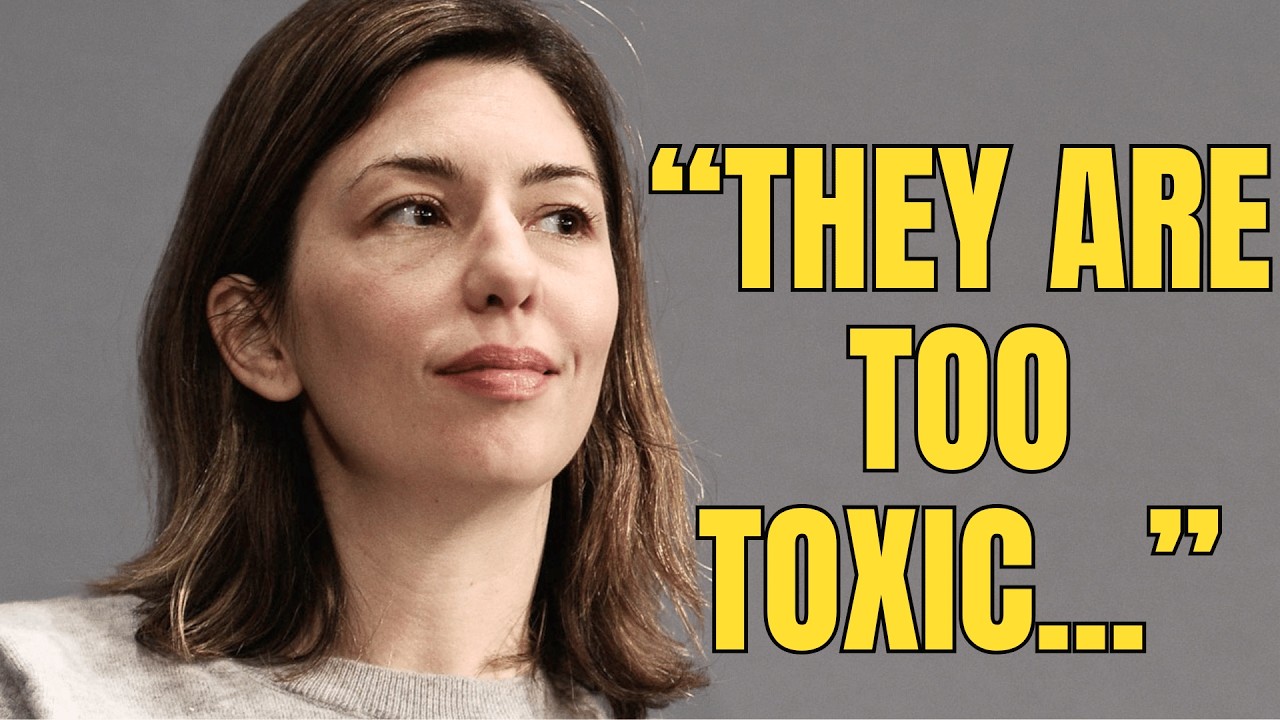
Sofia Coppola has finally addressed, at 55, the experience that defined the early years of her public life: being cast in *The Godfather Part III*. The actress-turned-filmmaker, who has spent 35 years building one of modern cinema’s most distinctive directorial careers, has spoken candidly about the events that led to her quitting acting. While the critical backlash to her performance is well-known, Coppola has shed light on a series of lesser-known details, including the frantic day she was cast, her family’s private misgivings, and the studio’s attempts to prevent the decision. Born in New York City in 1971 to director Francis Ford Coppola and documentarian Eleanor Coppola, Sofia’s infancy was spent on her father’s legendary sets.
She appeared in *The Godfather* as an infant during its closing baptism sequence and in *The Godfather Part II* as a child on a boat. By age four, she was on location in the Philippines for *Apocalypse Now*. Her early cameo roles were mostly small, though she showed promise in *Rumble Fish*; however, she was noticeably more self-conscious in *Peggy Sue Got Married*. The actress had already told her father she did not want to act, understanding that she was only being offered roles because of who she was.
In 1989, she worked on the screenplay and costumes for her father’s segment of the anthology *New York Stories*. That project, she later said, was her first real taste of being a creative force. The pivotal crisis came in January 1990. Seven weeks into production on *The Godfather Part III*, Winona Ryder, who had been cast as Mary Corleone, collapsed from exhaustion, bordering on nervous collapse, and was sent home.
The December release date could not move, and director Francis Ford Coppola, facing significant personal debts, was under immense pressure. With production at a standstill, he made a decision: his 18-year-old daughter, Sofia, who was in Rome visiting her family during her school break, would take over the role. Sofia was in the shower when the call came. Her mother relayed the news with tears in her eyes.
Paramount executives intervened, reportedly having zero confidence in the untrained teenager. Francis’s sister, Talia Shire, tried desperately to talk him out of it, warning him the scrutiny would be merciless. Even his sound designer begged him to reconsider, telling him it was a form of child abuse. Despite the protests, Francis vetoed the studio, barred executives from the set, and stood firm.
He defended the choice by saying he had always envisioned Michael Corleone’s daughter as someone like Sofia, with a face where you could see Sicily. He also stated he could not absorb the cost of delaying the production. Sofia found the atmosphere on set hostile. One crew member told her mother she was being subjected to a form of abuse.
Francis found Sofia in tears and gave her the option to walk away, but she chose to stay, determined to prove the naysayers wrong. She later recalled being told, “You’re going to be Mary,” and responding in disbelief, “Excuse me? Are you sure? ”
When the film premiered in December 1990, the critical response to Sofia’s performance was brutal.
The Washington Post called her “hopelessly amateurish,” and she won two Razzie Awards for Worst Supporting Actress and Worst New Star. Critics analyzed her face and voice with clinical meanness, holding her personally responsible for the film’s shortcomings. A wave of rumors followed, suggesting her dialogue had been redubbed and that Francis had re-edited the film to minimize her screen time—all of which were denied. Some critics defended her at the time.
Roger Ebert wrote that she brought a certain “upfront vulnerability and simplicity” that was right for the role, while Pauline Kael praised her “lovely and unusual presence. ” Some analysts have noted the character of Mary Corleone was written with conflicting contradictions that would have challenged a seasoned actress, let alone an untrained teenager. In the years after, Coppola spent a period she and her father call her “dilettante era,” studying at Cal Arts, designing a clothing line, and directing music videos for Sonic Youth and Madonna. She then made the short film *Lick the Star*, which she has said was the moment she realized she belonged behind the camera.
Her feature debut, *The Virgin Suicides*, premiered at Sundance in 1999. She went on to win an Academy Award for Best Original Screenplay for *Lost in Translation*, becoming the first American woman nominated for Best Director in the process. She followed this with *Marie Antoinette*, *The Beguiled*, and *Priscilla*, cementing her status as a filmmaker who tells intimate stories about the interior lives of women. Coppola has said that the experience of being put in a situation she didn’t choose and being blamed for it has made her careful as a director about the positions she puts the people she works with into.
The private pain of *The Godfather Part III* became the foundation of a career built on empathy. She has stated that she did not quit acting because she wanted to, but because the experience showed her that she was not meant to be in front of the camera. Now, with no immediate directing projects announced, she is taking her time, having earned the right to do so.