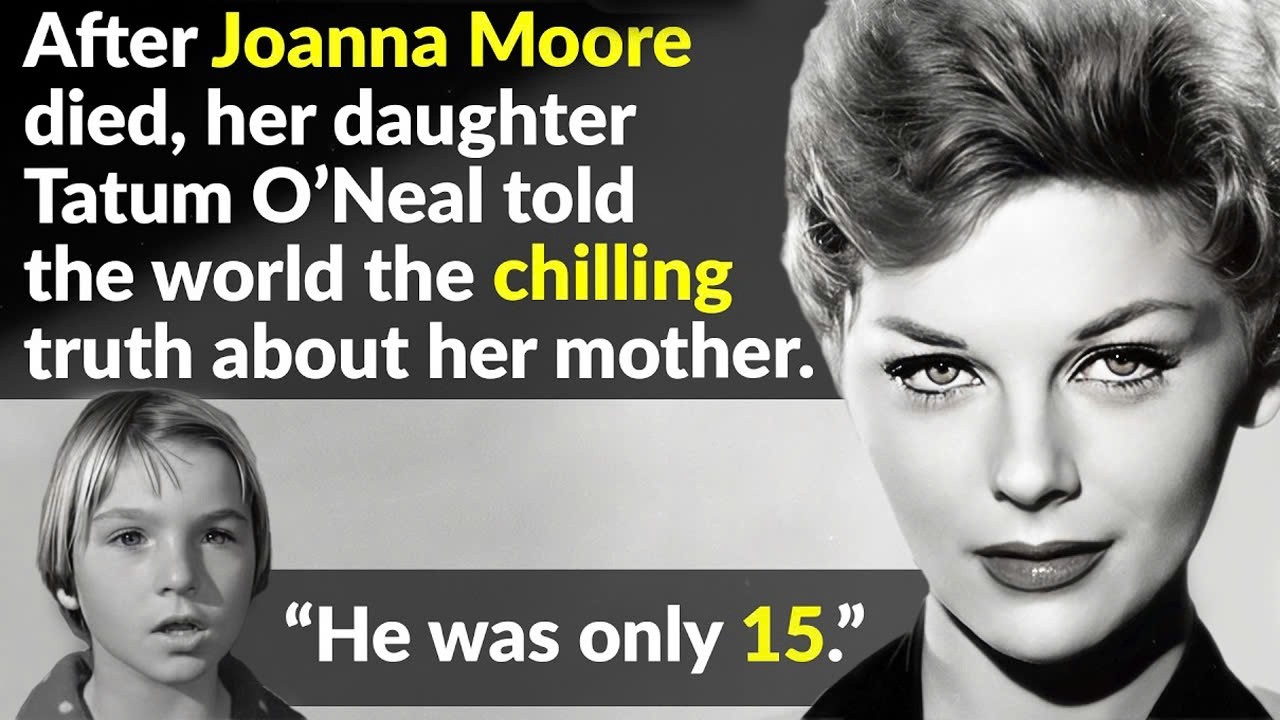
The final years of Joanna Moore’s life were a stark descent from the gilded heights of Hollywood, marked by addiction, legal battles, and a tragic reversal of fortune that saw her daughter achieve the stardom she had so desperately chased. The woman who once shared the screen with Elvis Presley and charmed audiences on The Andy Griffith Show died alone in relative obscurity, her legacy overshadowed by the very scandals she had tried to outrun. Her death on November 26, 1997, at the age of 63, closed a chapter of Tinseltown history that was as heartbreaking as it was cautionary, leaving behind a trail of unanswered questions and a family fractured by years of neglect and pain.
The story of Joanna Moore is not merely a tale of a career gone wrong; it is a profound psychological study of how early trauma can shape a lifetime of destructive choices. Born Dorothy Joanne Cook in Americus, Georgia, her world was shattered at the tender age of seven when a car accident claimed the lives of her mother, sister, and, within a year, her father. This catastrophic loss, which wiped out her entire nuclear family, left her with a deep-seated fear of abandonment and a desperate need for stability that she would never truly find.
 The adoption that followed, while providing a roof over her head, came with the condition of changing her name, effectively erasing her past and forcing her to construct a new identity from scratch. This foundational instability became the blueprint for a life characterized by impulsive decisions, particularly in her romantic relationships, where she repeatedly sought validation and security but found only chaos.
Her entry into Hollywood was as swift as it was accidental, a screen test secured at a cocktail party that catapulted her from a Georgia beauty queen to a Universal Studios contract player. Yet, the industry that promised fame proved to be a harsh and unforgiving mistress. Her early film roles, including the critically panned Appointment with a Shadow, failed to launch her into the A-list, leaving her to scramble for parts in B-movies like Monster on the Campus.
Even her appearance in the now-revered Orson Welles classic Touch of Evil was a source of stress rather than triumph, marked by an intimidating on-set atmosphere and a reported clash with the legendary director over a chair. The pressure of the business, combined with her fragile emotional state, created a volatile cocktail that would soon spill over into her personal life.
The affair with Elvis Presley during the filming of Follow That Dream in 1962 was a turning point, exposing a pattern of reckless behavior that would define her later years. While the liaison itself was brief, the aftermath was a harbinger of the instability to come. According to Presley’s confidant Joe Esposito, Moore arrived at the singer’s home in a distressed state, claiming to have overdosed on sleeping pills and announcing a pregnancy that medical examination would later prove false.
This public display of desperation, whether a cry for help or a manipulation tactic, painted a portrait of a woman spiraling out of control, a stark contrast to the poised actress audiences saw on screen. It was a desperate act that highlighted her inability to navigate romantic rejection without descending into crisis.
Her marriage to Ryan O’Neal in 1963 seemed to offer a chance at a traditional family life, but it quickly became another battlefield for her demons. The age gap, his rising fame on Peyton Place, and her own career stagnation created a toxic dynamic of jealousy and resentment. The birth of their daughter Tatum and son Griffin did little to stabilize the union, which was punctuated by violent arguments and Moore’s increasing reliance on alcohol and barbiturates.
 Ryan O’Neal’s recollection of finding her unconscious in a bathtub, surrounded by pills, was a chilling preview of the addiction that would eventually cost her everything. The marriage collapsed in 1967, and the subsequent custody battle for their children laid bare the extent of her deterioration, with O’Neal successfully arguing that she was unfit to care for them.
The affair with Andy Griffith, which occurred during her brief stint on The Andy Griffith Show, remains one of the most shocking revelations of her career. Don Knotts later confirmed that Griffith had admitted to the relationship, which took place while he was married. The affair, which allegedly created significant tension on set, was a professional gamble that cost Moore a steady, high-profile role.
She was written out of the show after just four episodes, a decision that likely stemmed from the off-screen complications. This incident, more than any other, illustrates the self-sabotaging pattern that plagued her life; at the very moment she had secured a beloved role on a hit show, she risked it all for a relationship that could only end in scandal and professional ruin.
The custody battle and her eventual loss of her children to Ryan O’Neal in the early 1970s marked the point of no return. A drunk driving arrest, which occurred after a volatile argument at O’Neal’s Malibu home, was the final straw that led the court to remove Tatum and Griffin from her care. The decision was a devastating public confirmation of her failures as a mother.
While she had initially handed the children over voluntarily to seek treatment, her subsequent attempts to regain custody were undermined by her inability to maintain sobriety. The children, who had already endured a chaotic home life filled with neglect and a revolving door of her boyfriends, including a disturbing relationship with a 15-year-old, were now thrust into a different kind of turmoil with their father.
 The cruelest irony of Joanna Moore’s life was the timing of her daughter’s meteoric rise to fame. While Moore’s career was in freefall, her 10-year-old daughter Tatum won the Academy Award for Best Supporting Actress for Paper Moon in 1974, becoming the youngest competitive Oscar winner in history. This achievement, which should have been a source of pride, instead highlighted the profound reversal of their fortunes.
Reports indicated that Moore, struggling financially, even relied on money connected to her daughter’s earnings. The mother who had once dreamed of stardom was now living in the shadow of her child’s success, a humiliating twist that compounded her feelings of failure and inadequacy. The public spectacle of her daughter’s triumph served as a constant, painful reminder of her own squandered potential.
Tatum O’Neal’s later memoirs and interviews painted a harrowing picture of life with her mother, detailing periods of starvation, neglect, and exposure to abuse. She described her mother as being “on stuff all the time” and recalled wandering the house as a young child, drinking leftover alcohol from glasses. The environment was one of profound instability, where the basic needs of the children were often ignored in favor of her mother’s pursuit of escape through substances and destructive relationships.
This testimony, while painful, provided crucial context for understanding the depth of Moore’s addiction and the lasting damage it inflicted on her children. It transformed her from a tragic Hollywood figure into a real person whose actions had devastating, long-term consequences for her family.
Joanna Moore’s later years were a series of escalating tragedies. She suffered multiple arrests for driving under the influence, and a severe car accident left her with permanent injuries, including the loss of three fingers. Her fourth marriage, like the others, failed to provide the stability she craved.
 She continued to take minor roles, but the phone had largely stopped ringing. In 1996, she was diagnosed with lung cancer, a disease that would claim her life just over a year later. Her death at 63 was a quiet, somber end to a life that had been anything but.
In her final moments, it was Tatum, the daughter she had so profoundly failed, who was by her side, a final, complex act of reconciliation in a relationship defined by pain and loss.
The legacy of Joanna Moore is a cautionary tale about the destructive intersection of fame, trauma, and addiction. She was a woman of undeniable talent and beauty who was ultimately undone by the very demons she tried to escape. Her story, once relegated to gossip columns, has been re-examined in recent years through the lens of her daughter’s own struggles and recovery, offering a more nuanced understanding of the generational trauma she perpetuated.
While her name may not be remembered alongside the great stars of her era, her life serves as a poignant reminder of the human cost behind the Hollywood facade. The shocking affair with Andy Griffith was not the cause of her downfall, but merely one symptom of a deeper, more profound brokenness that began with the loss of her family as a child and was never truly healed.