Carol Burnett is remembered as one of the most beloved figures in American television history, known for her warm smile, her iconic ear tug, and decades of family-friendly comedy. But behind that sweet public image was a woman with a famously fierce streak, someone who refused to tolerate disrespect, cruelty, or dishonesty, whether it came from an unruly audience, a difficult co-star, or a tabloid empire. One of the earliest tests of that resolve came in 1956, when Burnett was a struggling young performer in New York trying to land her first big breaks. She booked an appearance on a variety program hosted by big band leaders Tommy and Jimmy Dorsey, a coveted national television slot.
What she did not know at the time was that the same broadcast would feature a young, rapidly rising sensation from Mississippi named Elvis Presley. At 21, Presley was at the center of a cultural storm, and his fans were notoriously fervent. Outside the studio, thousands had gathered. Inside, the audience was packed with teenage girls who had waited for hours just to see him.
They had no interest in a young female comedian doing character bits. The producers scheduled Burnett to perform immediately before Presley, and when she walked onto the stage, the crowd erupted in boos and screams of “We want Elvis. Get off the stage. ”
Every joke she attempted was drowned out by a wall of hostile noise.
Rather than retreating in tears, Burnett forced herself to finish her entire set, delivering every line into a sea of jeers. When the cameras stopped rolling, she walked offstage shaken and humiliated, ready to quit the business. Then something unexpected happened. Presley came to find her backstage.
He had heard the crowd’s reaction and was deeply apologetic. He told Burnett she was hilarious and did not deserve the treatment she had received. As a gesture of goodwill, he signed an autograph for her younger sister, Chrissy, who was a devoted fan. The encounter turned a painful memory into an important lesson for Burnett about the brutality of live entertainment, and she left with a new respect for the man at the center of the frenzy.
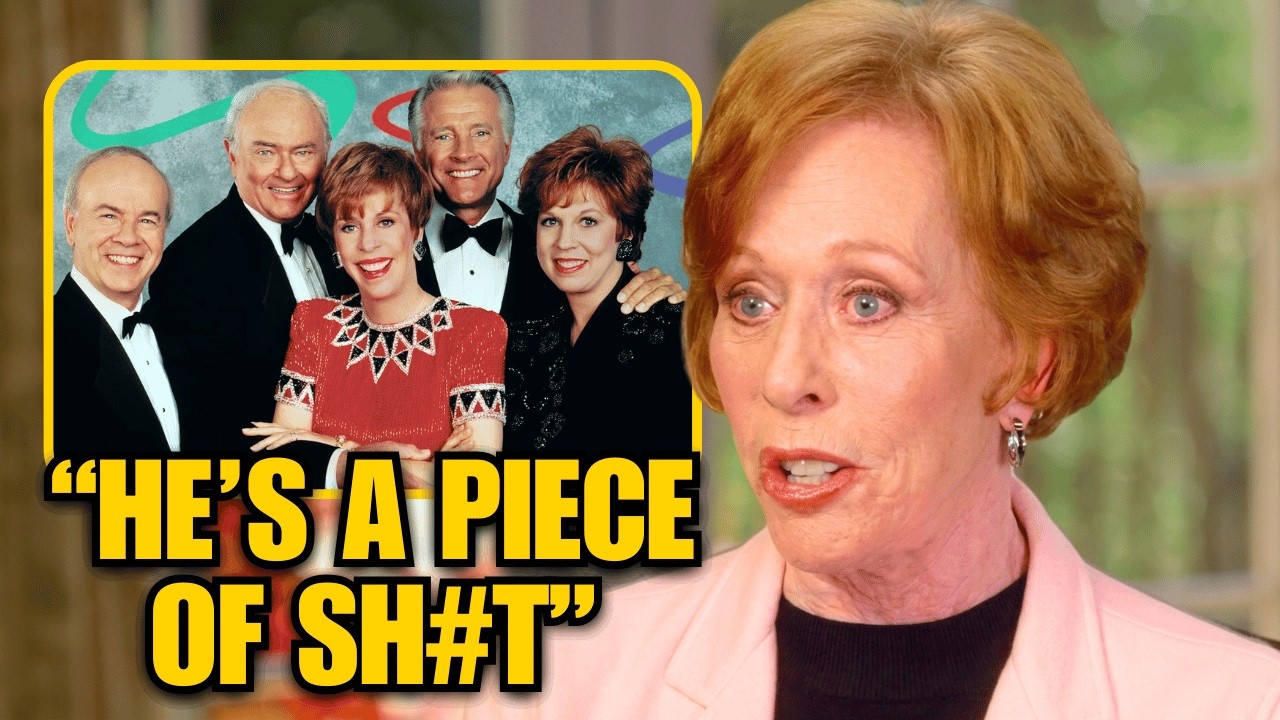
Years later, after Burnett had become a television powerhouse with her own variety series, the challenge came from within her own production. The Carol Burnett Show was a ratings juggernaut in the early 1970s, and its success relied heavily on the chemistry between Burnett and her co-star Harvey Korman. But during the show’s seventh season, Korman’s behavior began to sour. According to accounts of that period, Korman grew moody and dismissive under the pressure of the weekly broadcast.
He reportedly threw temper tantrums during rehearsals, complained about scripts, and treated production staff with contempt. The breaking point came when his attitude reportedly extended to guest stars, including music superstar Petula Clark and comedian Tim Conway, who was a frequent guest before becoming a full cast member. Burnett had built her show around a culture of mutual respect and warmth, and she considered the mistreatment of guests a violation of everything she stood for. Rather than sending a producer or executive to handle the problem, she confronted Korman directly in his dressing room.
She told him his behavior was unacceptable and had to stop. Korman responded dismissively, telling her to stay out of his business. That was the final straw. Without raising her voice, Burnett walked to the phone in his dressing room, dialed Korman’s agent, and announced that he was fired from the show as of that day.
Korman, realizing he had miscalculated badly, broke down and begged for another chance. He apologized and promised to change. Burnett agreed to give him one final opportunity, on the condition that he apologize to the guest stars and crew. The confrontation worked.
Korman changed his behavior and remained on the show, eventually becoming a model of professionalism. The two repaired their relationship and remained close friends until his death in 2008. The incident became a defining example of Burnett’s management style, firm when necessary, but always focused on protecting the integrity of the production and the people who made it work. Perhaps the most significant fight of Burnett’s career came not against a co-star, but against one of the most powerful tabloids in the country.
In March 1976, the National Enquirer published a fabricated item claiming Burnett had been loud and drunk at a restaurant in Washington, D. C. , in the company of diplomat Henry Kissinger. The story alleged she knocked over glasses, spilled wine, and made a scene that embarrassed other diners.
For most celebrities, a silly tabloid rumor might have been ignored. For Burnett, it was a personal attack. She had been raised by parents who both struggled with severe alcoholism, a disease that contributed to their early deaths. She had made a lifelong decision to keep a clean image and drink responsibly.
Seeing herself portrayed as an out-of-control drunk in supermarket checkout lines was not just inaccurate, it was a deep insult to her family’s painful history. Burnett demanded a retraction and an apology. The tabloid issued a brief correction weeks later, but it was tucked away and lacked any genuine remorse. In the entertainment industry at the time, the conventional wisdom was that celebrities never sued tabloids.
Lawsuits were hard to win, expensive to pursue, and most publicists advised clients to simply wait for the story to fade. Burnett refused to let it go. She filed a libel lawsuit against the National Enquirer. When the case went to trial in 1981, Burnett took the witness stand and delivered emotional testimony, explaining to the jury why the false story had caused her so much anguish.
She detailed her parents’ battles with alcoholism and described the shame she felt knowing millions of readers might believe she was repeating their mistakes. Her legal team successfully argued that the tabloid had published the story with reckless disregard for the truth, without credible sources or proper fact-checking. The jury ruled overwhelmingly in her favor, initially awarding her $1. 6 million, a figure later adjusted on appeal.
It was one of the first major victories by a celebrity against a tabloid, and it sent shockwaves through the media industry. The ruling established an important precedent for holding gossip publications accountable for reckless reporting. Burnett donated the entire settlement to journalism ethics programs at the University of California, Berkeley, and the University of Hawaii, stating that her fight had never been about money. Years before that courtroom victory, Burnett had another deeply personal battle, this time with a fellow comedy icon.
Joan Rivers had built her career on sharp, often cutting humor, but for years she and Burnett shared a respectful relationship as two women who had broken through in a male-dominated industry. That changed in the mid-1980s, when Rivers made a joke on national television about Burnett’s teenage daughter, Carrie Hamilton, who was fighting a serious addiction. For Burnett, it was a devastating betrayal. Her daughter was struggling publicly with a crisis that the family was desperately trying to manage in private.
Burnett viewed the joke not as harmless late-night satire, but as a cruel attack on a child in pain. The fact that it came from a fellow female comedian who understood the pressures of the public eye made it worse. Burnett did not respond with a public war of words. Instead, she drew a firm boundary.
When Rivers launched her own late-night show in 1986, producers actively sought Burnett as a guest, given her prestige and popularity. Burnett flatly refused. She made it clear she would never appear on Rivers’s show. When asked about the rift on The Tonight Show, Burnett explained that Rivers had crossed an unforgivable personal line, stating that true comedy does not require kicking people when they are already down.
The two remained estranged for years. Eventually, after Carrie Hamilton achieved long-term sobriety and later succumbed to cancer in 2002, Rivers made quiet attempts to reach out and express regret. Burnett, believing that life was too short to hold grudges forever, eventually accepted the overtures with grace. The two were never close again, but Burnett proved willing to forgive when the apology was sincere.
Long before she became a star, however, Burnett had already demonstrated her sharp wit in a memorable act of personal revenge. In 1959, after landing her breakthrough role on Broadway in Once Upon a Mattress, she decided to treat herself to a visit to Rumpelmayer’s, an exclusive ice cream parlor inside the St. Moritz Hotel near Central Park. The establishment was known for its opulent atmosphere and strict dress code.
Burnett, coming from a long day of rehearsals, arrived wearing tailored slacks. Instead of politely informing her of the dress policy, the head hostess publicly scolded her in front of the packed dining room, loudly berating her for daring to enter such a fine establishment wearing trousers. Every diner in the room turned to stare. For a moment, Burnett felt the sting of humiliation.
Then she made a choice. Dropping her jaw in shock, she let out a pained gasp, stiffened her body, and dragged one leg slightly behind her as if in physical agony. In a voice loud enough for the entire restaurant to hear, she announced, “I am so terribly sorry. I didn’t know.
I have a wooden leg. ”
The room gasped in horror. Wealthy patrons turned their glares from Burnett to the hostess, furious that a disabled young woman had been publicly humiliated over a pair of pants. The hostess’s confidence evaporated.
Stuttering and apologizing repeatedly, she personally escorted Burnett to one of the best tables in the house and catered to her every need for the rest of the afternoon. Burnett sat back and enjoyed her sundae in complete triumph. Despite the sharp edges Burnett could show when provoked, those who worked with her consistently described her as one of the most generous and supportive leaders in television. Harvey Korman famously noted that even though her name was on the marquee, Burnett was always the first to step back into a supporting role so her castmates could shine.
Tim Conway praised the way she encouraged performers to take risks and even welcomed unscripted mistakes on live television. She mentored a young Vicki Lawrence like family, and she was known for sending handwritten thank-you notes to guest stars after every taping. Carol Burnett certainly had a temper, and she demanded perfection from those around her. But her intensity was never about ego.
It was directed at protecting the people and the creative culture she had built. That combination of warmth, grit, and an absolute refusal to tolerate cruelty is the reason she remains one of the most admired figures in entertainment history.