Burt Ward became a television icon when he stepped into the role of Robin on the 1966 Batman series, but the stories from behind the scenes were often stranger than anything captured on screen. From dangerous stunts and unexpected friendships to encounters that happened at the height of the show’s fame, Ward has spent years revealing what really went on beneath the cape and mask. Long before millions knew him as Robin, Ward was Burt John Gervis Jr. , a boy growing up in Los Angeles.
Born on July 6, 1945, he was performing as a professional ice skater by the age of two, thanks to his father’s traveling ice show, Rhapsody on Ice. He earned the nickname “Sparky” because he could click his skates together to shoot sparks when the rink lights went dark. His unusual talent even earned him a feature in the magazine Strange As It Seems. Comic books were another early passion.
Ward collected them and spent hours reading about heroes, with Superman and Superboy among his favorites. Batman was another character he admired, although he never imagined he would one day wear Robin’s costume. In high school, he developed the athletic skills that would later set him apart, competing in track, football, and wrestling while also training in Taekwondo, reaching the rank of brown belt. Ward’s path to stardom was unplanned.
While attending college and working toward his real estate license, he lived in an apartment building filled with aspiring actors. One neighbor was a young martial artist named Bruce Lee, who was not yet famous. The two bonded over their shared interest in martial arts, explored Chinatown together, and shared meals. Ward even met Lee’s wife and their baby son, Brandon.
Everything changed in 1965 when Ward overheard other actors discussing auditions for a new Batman television series. With no acting experience and no agent, he walked into a talent agency and asked if he could audition anyway. After being directed to the correct location, he filled out the paperwork, listing his athletic background and martial arts training. His energy and confidence impressed producer William Dozier, and after multiple rounds of testing, Ward narrowly won the role of Robin opposite Adam West’s Batman.
Before the show premiered, Ward made two small changes to his name. He altered the spelling of Burt to “Burt” because he felt it looked better on screen, and he changed his surname from Gervis to Ward, his mother’s maiden name. When Batman debuted in January 1966, it became an instant success. The show drew massive audiences of all ages, from children who loved the superhero action to adults who appreciated the campy humor and clever dialogue.
The studio launched one of the largest promotional campaigns television had seen at the time, and once the show premiered, ratings climbed quickly. With that success came a relentless schedule of personal appearances. Ward and West traveled almost constantly during breaks in production, visiting television stations, schools, shopping centers, and parades across the country. Ward was only 20 years old, and adjusting to sudden fame was not always easy.
Behind the scenes, Ward’s personal life was unraveling almost as quickly as his career was taking off. During the show’s rise, his first marriage, to Bonnie Lindsay, fell apart. The couple had welcomed a daughter, Lisa, but the pressures of his demanding schedule placed enormous strain on the relationship. They filed for divorce only months after their daughter was born.
Ward coped by staying busy, accepting as many appearances as possible and keeping a constant schedule. Years later, Ward published his memoir, My Life in Tights, in 1995, which shared stories that had never been told during the show’s original run. One of the biggest surprises, according to Ward, was that the attention was not focused only on Batman. Although Adam West had plenty of admirers, Ward discovered that Robin had developed a huge following as well.
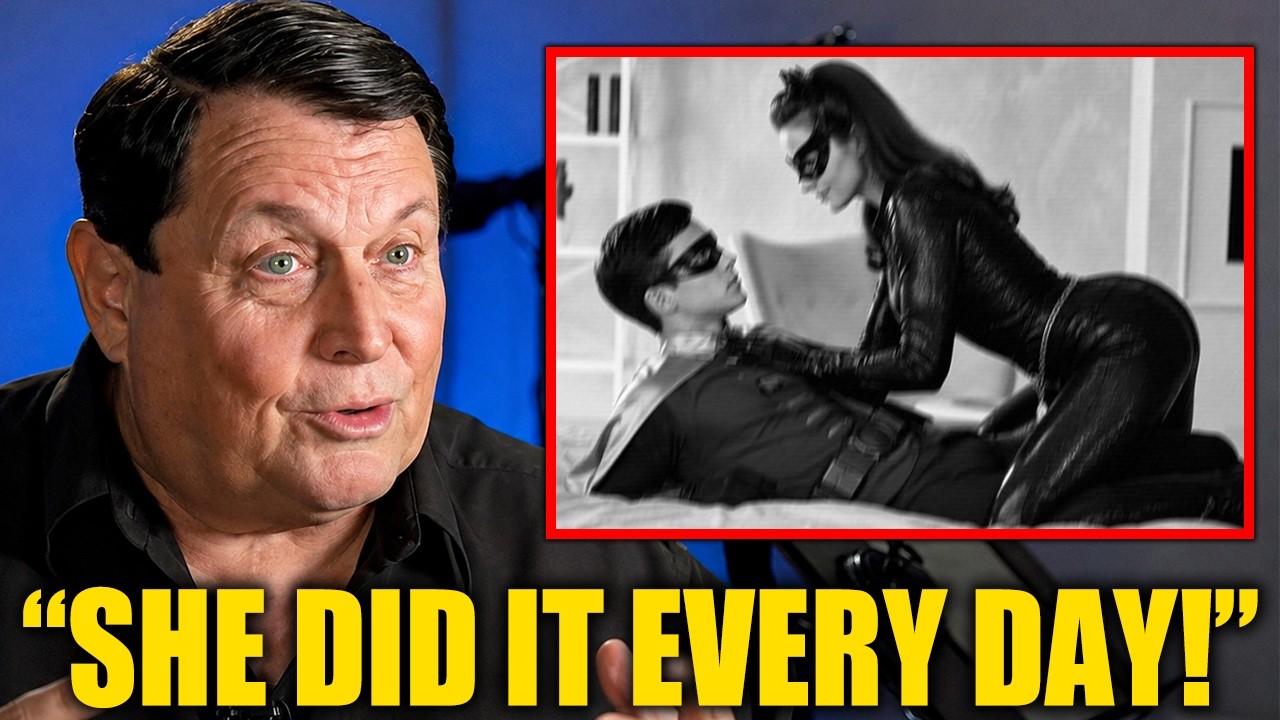
Many of the women who approached him were older than he was, some in their 30s or 40s, and some were married. Ward admitted that admirers would slip handwritten notes to him during appearances, and he would sometimes write back to arrange meetings after events ended. One story from those years became the most unforgettable. During a promotional tour, Ward invited a woman to his hotel room.
A sudden pounding on the door revealed a large, angry man outside who was threatening to kill whoever was inside. Ward asked the woman if she was married, but she insisted she was not and claimed she did not know who the man was. Ward called Adam West in the next room, who joked, “Don’t worry, Robin. Batman will save you.
” When West opened his door and saw the man, he quickly slammed it shut, locked it again, and told Ward to get out of there. The angry man kicked the door until it nearly gave way. Ward, wearing only his underwear, escaped with the woman through a sliding glass door and ran across the hotel grounds into the nearby streets. Police eventually arrived and placed Ward in a car while they sorted out the situation.
The truth turned out to be stranger than expected. Ward had met the same woman in a different city the previous week. She had later admitted the encounter to her husband during an argument, and the husband had tracked the promotional tour to confront him. West later teased Ward about the experience, joking that he should always check for a wedding ring or the mark where one had recently been removed.
Another memorable chapter in Ward’s time on Batman came when the show crossed over with The Green Hornet. The series’ publicity department had described Ward as a martial arts expert, and some promotional materials incorrectly called him a black belt, even though he was a brown belt in Taekwondo. The crossover fight between Robin and Kato was complicated by the fact that Kato was played by Bruce Lee. Ward began hearing rumors that Lee was unhappy with the planned fight scene because Robin was supposed to defeat Kato.
Lee insisted that Kato should not lose outright and pushed for the fight to end in a draw. During filming preparations, Ward noticed that Bruce Lee was acting coldly toward him, refusing to acknowledge him and looking at him with what seemed like anger. Ward worried that the false publicity about his martial arts background had damaged their friendship. Then, when filming began, Lee charged at Ward with full intensity.
Ward instinctively stepped backward, and a crew member joked that Robin looked like he was running away. At that moment, Lee stopped and burst into laughter, giving Ward a big hug. The serious behavior had been a practical joke encouraged by crew members. The two old friends laughed together, and Lee explained he was genuinely happy to see how far they had both come.
During the show’s second season, Ward met actress Kathy Kersh, who appeared in two episodes. They developed a relationship quickly and decided to marry. Kersh had appeared in shows such as The Beverly Hillbillies and The Man from U. N.
C. L. E. Around the same time, both released music recordings.
Ward’s record, Boy Wonder I Love You, was written by Frank Zappa. Neither recording became a major success. The marriage lasted until 1969, the same year Batman came to an end, when Ward and Kersh divorced. Batman was canceled after three seasons.
Ratings had declined, and rising production costs made it harder to continue. For Ward, the biggest challenge came after the show ended. To audiences around the world, he was Robin, and casting directors struggled to see him as anyone else. During the 1970s and 1980s, Ward appeared in dozens of low-budget horror, science fiction, and independent films.
Although those movies never reached the popularity of Batman, they allowed him to keep working as an actor during a difficult period.