Ricky Gervais stood in front of Hollywood’s most powerful people in January 2020 and asked a question nobody in the room wanted to answer: “Do you know Harvey Weinstein? ” It was the opening line of his Golden Globes monologue, and it only got more uncomfortable from there. He told the assembled celebrities they knew nothing about the real world, joked that the Hollywood Foreign Press were “very, very racist,” and quipped that disgraced financier Jeffrey Epstein had “obviously… done himself, just like Jeffrey Epstein,” adding, “Spoiler alert, season 2 is on the way.
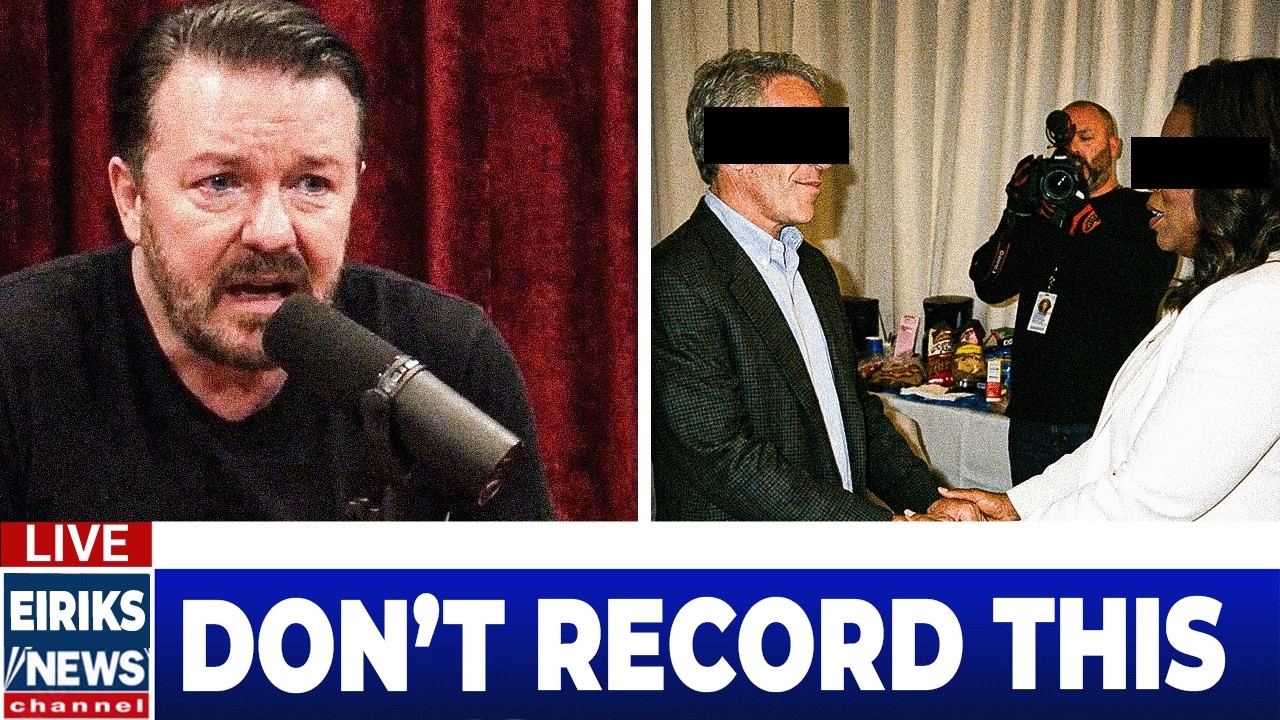
” The room’s frozen smiles and nervous laughter captured a rare moment of public reckoning on live television. Epstein had been arrested in July 2019 on serious federal charges. Weeks later he was found dead in his jail cell, and the case was closed almost as quickly as it had begun. Suspicion that the official account wasn’t the full story never fully faded.
Six months after her death, Gervais said on stage what many people watching at home were already thinking: that the people in that room knew more than they were saying out loud. He wasn’t naming names; he was describing a culture of silence and mutual protection. The joke went viral and has resurfaced repeatedly ever since, especially whenever a new name becomes connected to Epstein’s orbit. Gervais has since explained that he wasn’t performing for the celebrities in the room but for the hundreds of millions of people watching at home, saying, “I was doing it for them.
” He noted that by the fifth time he hosted, even industry press had turned against celebrity culture, with sentiment shifting to “Good, give it to him. ” The comedian admitted it was liberating but also said he believed five times as host was enough. Asked why he chose to hammer the crowd, he explained the math simply: pander to the 200 richest people in the room, or the 200 million people at home who weren’t winning awards and weren’t millionaires? “It was a no-brainer.
”
The pointed question that night wasn’t just about Weinstein or Epstein. It was about how the entertainment industry protects its own even when the public is watching closely. A case study emerged months earlier, in December 2018, when Kevin Hart was announced as host of the 2019 Oscars. Within just two days, Hart stepped down following an outcry over homophobic tweets and comments he made nearly a decade earlier.
The Academy reportedly gave him a choice: apologize publicly or step down. At first he pushed back, posting a video saying he had already addressed those comments years before. But the pressure kept building, and hours later he changed course. He stepped down and posted a formal apology to the LGBTQ+ community.
Then talk show host Ellen DeGeneres stepped in. She invited Hart onto her show and defended him live, telling him she had personally called the Academy on his behalf. She said they wanted him back as host, calling the situation mishandled. She told him not to let haters win, and tweeted her support, saying she believed in forgiveness and second chances.
On the surface, it looked like a powerful person using her platform for good. But critics noted something else: theay help came at a moment when Hart’s career was most at risk, and it worked. Years later, in late 2024, a video resurfaced showing Hart hosting a hotel party thrown by Sean “Diddy” Combs in New York in 2010. In the clip, Hart encourages guests to “get some girls” for a barrel, while asking: “Did you catch any baby oil?
” When an Entertainment Tonight reporter asked Hart in October 2024 whether he had noticed anything unusual at those parties, he shut the question down immediately: “You’re asking the wrong person the wrong question. ” Het didn’t answer the question directly. The clip spread quickly online because it contrasted sharply with Hart’s usual relaxed, quick-witted demeanor on camera. To many viewers, his reaction suggested discomfort rather than innocence.
The silence invited suspicion, and the pattern became apparent: redirect, deflect, change the subject. Comedian Katt Williams had been making similar points about Hart for years, long before the resurfaced party clip. In his Netflix special 72 Hours, Williams accused Hart of being an “industry plant,” pointing out that Hart once said on stage he would never wear a dress for a movie role, then later did exactly that. Williams also referenced Hart’s presence at Diddy parties, saying, “Just because Kevin went to Diddy parties does not mean he did something wrong.
The fact that he gets all quiet when you bring it up. That means he did something wrong. ” Hart fired back publicly, denying he attended multiple parties and insisting he went to only one, adding that Williams was at the same event, along with Shaquille O’Neal, Usher, Shannon Sharpe, and The Roots. Hart called Williams a liar but did not directly address the underlying questions about his silence on those gatherings.
Instead of narrowing the conversation, he widened it, bringing up other names and arguments entirely. The deflection itself became the story. Stepping back, the two stories—Ellen protecting Hart’s career when it was in danger, and Hart later refusing to answer a direct question about parties tied to a serious ongoing investigation—reveal the same underlying pattern: protect people in your circle, deflect anything that threatens the group, and stay quiet until the story fades. Gervais described that culture on stage in 2020, before the Epstein case had produced any major convictions or public accountability.
He didn’t need to name names; he opened a door. Once that door was open, viewers began noticing silence, deflection, and uncomfortable pauses in interviews more than they ever had before. His monologue didn’t end the culture, but it changed how many people watch it.
That may be its most lasting impact.