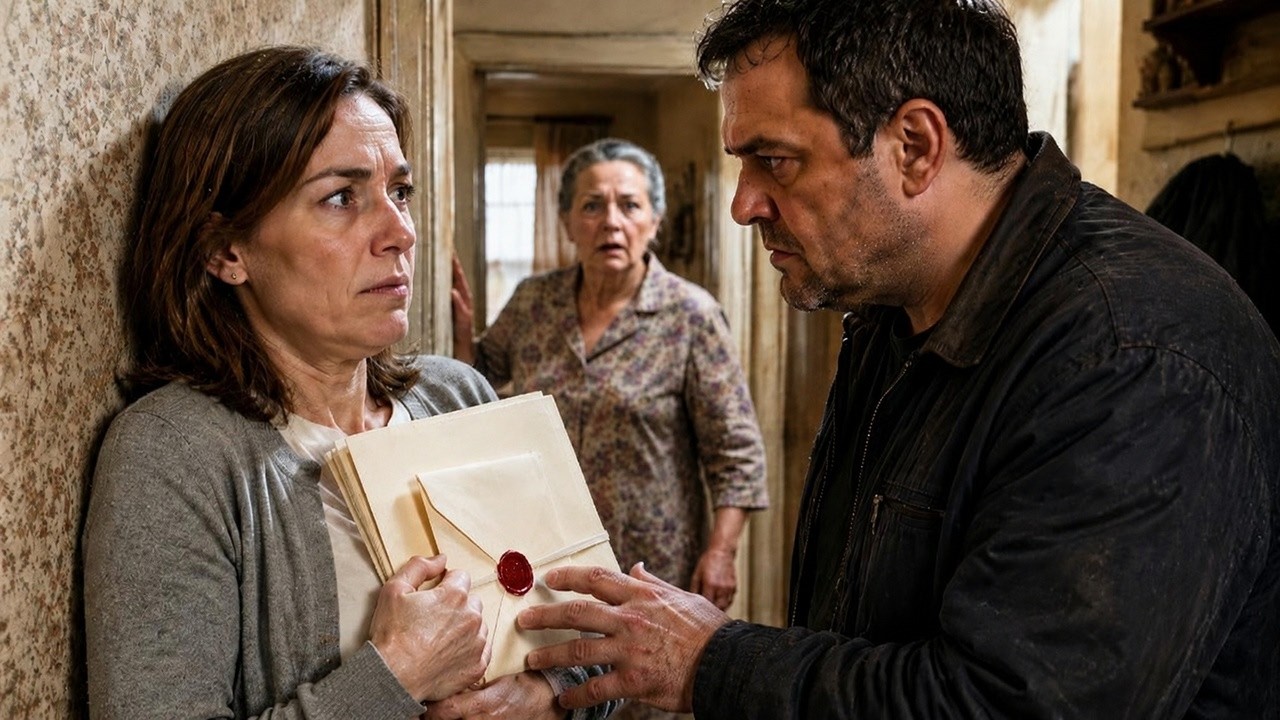
The fraud alert hit my phone at 6:47 a. m. Someone was trying to wire $127,000 out of my savings to an offshore account in the Cayman Islands. The notification said the transaction came from my own home IP address.
I was the only one home. Or so I thought. I sat up in bed, heart pounding. Downstairs, I heard my office door click shut.
Soft footsteps on the hardwood. I grabbed my phone and opened the security camera app I’d installed three weeks ago—the app no one knew about. The footage showed my nephew Jason at my desk, typing on my laptop. On the screen, my bank’s wire transfer page.
In his hand, a signature pad for forging electronic signatures. I recognized it from 43 years in banking. I wasn’t calling 911. I called my attorney, Linda Chen, who was on standby for this exact moment.
And the FBI agent I’d been working with for two weeks. Because Jason wasn’t just stealing from me. He was running a sophisticated identity theft operation. And I was about to bring it down.
My name is Patricia Morrison. People call me Patty. I’m 68 years old. I spent 43 years working my way from bank teller to branch manager before retiring four years ago.
My husband Robert died of pancreatic cancer six years back. We bought our four-bedroom house in Lakewood in 1988 for $87,000. Today it’s worth $550,000. We were smart with money.
I had a comfortable retirement and about $340,000 in savings and investments. I had no children of my own, but I was close to my brother Michael’s son, Jason. When Michael and his wife died in a car accident, Jason was 15. I helped raise him.
Paid for his college. Co-signed his first apartment. He was brilliant with computers, charming, ambitious. When he started a tech company five years ago, I invested $50,000.
That startup failed. So did the next two. But Jason always had another big idea, another opportunity just around the corner. He was 32, living in a rented apartment in downtown Denver, still chasing the next big thing.
Eight months ago, Jason called me in tears. His apartment building was being sold and converted to condos. He had 60 days to move out, but he’d spent all his money on a cryptocurrency platform that had collapsed. Could he stay with me?
Just temporarily. Maybe three months, tops. I said yes. Of course I said yes.
He was family. The closest thing to a son I’d ever have. He moved in that weekend with his computers, his gaming setup, and boxes of equipment I didn’t understand. He took over the guest room, then expanded into my late husband’s den, turning it into his “command center.
” Multiple monitors, servers humming day and night. My electricity bill jumped by $200 a month. The first month was fine. Jason was respectful, quiet, working on his next project.
He said he was consulting for tech companies remotely—cybersecurity. He showed me screenshots of invoices, talked about clients. He even paid me $500 toward utilities, which I hadn’t asked for but appreciated. The second month, things started feeling off.
Jason began asking strange questions about my finances. Had I thought about setting up a trust? Did I have a will? Who was my power of attorney?
At my age, I should really have someone who could handle my affairs if something happened. I told him I had everything arranged with my attorney. His eyes flickered with something I couldn’t quite read. Disappointment?
Frustration? That week, I noticed my mail had been opened. A bank statement sitting on the kitchen counter, clearly unsealed and carefully resealed. When I asked Jason about it, he said it must have been the mail carrier.
But I’d been getting mail from that same carrier for 12 years. She was meticulous. I started watching more carefully. Jason’s work hours were odd—he’d sleep until noon, then work from 2:00 a.
m. to 6:00 a. m. He said his clients were overseas.
But I’d wake up at 3:00 a. m. and hear him downstairs, on personal calls. Laughing with friends about his setup, about how he was “positioning himself perfectly.
”
One night, about three months ago, I came downstairs for warm milk and heard Jason in the den with the door cracked. He was on a video call. I froze in the hallway. “Dude, I’m telling you, this is the easiest score I’ve ever set up,” he said, his voice low but excited.
“She’s got over half a mil in liquid assets, plus the house. No kids, no husband. I’m literally her only family. ”
My chest tightened.
“The beauty is, she trusts me completely. Helped raise me, paid for college, all that emotional investment. She’d never suspect. I’ve already got access to her laptop password.
I’ve been making copies of her documents, IDs, social security card, bank statements. ”
The other voice said something I couldn’t hear. Jason laughed. “Nah, I’m not going to wait for her to die.
That could be another 20 years. I’m going to convince her she needs to move to assisted living, sell the house while she’s confused about the process. With the deepfake tech I’ve been developing, I can literally make her voice approve anything. I’ve already got hours of her speech patterns recorded.
”
He nodded. “The mortgage refinance goes through next week. She has no idea I applied for it in her name. That’s another 200k in my pocket.
By the time she figures out what’s happening, if she even does, I’ll be in Singapore with a new identity. She’s old, dude. Even if she reports it, who’s going to believe her over me? I’m her beloved nephew.
I’ll just say she’s getting dementia. ”
I backed away silently, went to my room, and locked the door. I sat on my bed shaking for 20 minutes. Then I did what any retired bank manager would do.
I called Linda Chen. Linda specialized in elder law and fraud cases. When I told her what I’d heard, she was quiet for a long moment. “Patty, this is serious.
This isn’t just theft. This is identity theft, wire fraud, potentially elder abuse. If he’s using deepfake technology to forge your voice, that’s federal. We need to involve law enforcement.
”
“But he’s my nephew. He’s Michael’s son. ”
“Michael would want you to protect yourself,” she said. “This man is a criminal, Patty.
He’s counting on you being too scared or confused to stop him. ”
That was three months ago. Linda connected me with FBI Special Agent Marcus Webb, who worked in the cybercrimes division. Together, we built a case.
First, I changed all my passwords using a secure password manager, but left the old laptop with the compromised password as bait. I bought a new laptop Jason didn’t know about. Second, I installed tiny security cameras hidden in smoke detectors, picture frames, even a fake plant in my office. Everything was cloud recorded, accessible only to me, Linda, and Agent Webb.
Third, I documented everything—every conversation, every time I caught him in my office, every strange phone call. Fourth, I worked with my bank to flag any unusual activity. And fifth, I played along. When Jason asked about my will, I pretended to be confused.
When he suggested I tour assisted living facilities, I acted like maybe that wasn’t such a bad idea. When he offered to help organize my financial documents, I thanked him and said how lucky I was to have him. I watched him watching me, and I knew he thought he was winning. The mortgage refinance he mentioned never went through—my bank flagged it and called me directly.
But I didn’t tell Jason. I let him think it worked. Agent Webb traced Jason’s activities. We discovered he’d run this scam before.
Three years ago in Phoenix, he’d lived with an elderly woman—his girlfriend’s grandmother. She lost $180,000 before her son noticed and reported it. Jason disappeared before police could arrest him. The case was still open.
We also found he’d opened seven credit cards in my name, charged $43,000, applied for loans, created fake email accounts pretending to be me. He’d been testing deepfake voice technology, making fake recordings of me approving financial transactions. Agent Webb wanted more. He wanted Jason’s network, his accomplices, the people buying the deepfake technology.
“Give him rope,” Webb said. “Let him think he’s about to succeed. Then we catch him in the act, with witnesses, with documentation, with everything. ”
So we set a trap.
I let Jason believe I’d agreed to move to Sunset Gardens, an assisted living facility he’d been pushing. I signed papers Linda had already flagged as fraudulent. I played the confused old woman. Jason had arranged to sell my house—he’d forged my signature on a listing agreement and found a buyer willing to do a quick cash sale.
The closing was scheduled for today, 10:00 a. m. , at Mountain West Title Company. He was selling my house for $485,000, well below market value, to a shell company.
He’d be pocketing the entire amount. The wire transfer attempt this morning was him getting greedy, trying to grab my savings before the house sale closed. He didn’t know the bank had frozen the account at my request. I got dressed in the navy blazer and slacks I’d laid out the night before.
I texted Linda: “He tried the wire transfer. I’m ready. ”
Her response: “Web is already en route. See you at 9:45 outside the title company.
Do not tell Jason where you’re going. ”
I came downstairs at 7:30. Jason was in the kitchen making coffee, acting normal. He smiled that charming smile that had fooled me for months.
“Morning, Aunt Patty. You’re up early. ”
“Couldn’t sleep. Lot on my mind with the move and everything.
”
He stepped closer, put his hand on my shoulder. “I know it’s a big change, but you’re making the right decision. Sunset Gardens is going to be perfect for you. You’ll have people around, activities, medical care right there.
”
The house my husband and I had built a life in. “When do I need to be out? ” I asked, playing my part. “The closing is today at 10:00.
The new owners want to move in right away, so I’ve arranged for movers to come on Friday. ”
“That’s very thoughtful of you. ”
He smiled. “You’ve done so much for me, Aunt Patty.
I’m just trying to take care of you now. ”
I excused myself, said I had a doctor’s appointment at 9:00. Jason didn’t ask questions. Why would he?
He thought I was a confused old woman. I drove to the title company, parked a block away. Linda’s silver Mercedes was already there. She got out, along with Agent Webb and two other people I didn’t recognize.
“Patty,” Linda said, taking my hands. “Are you ready? ”
Agent Webb nodded. “His accomplice is already inside—the supposed buyer.
We’ve had eyes on the title company since 8:00 a. m. ”
A woman stepped forward. “Mrs.
Morrison, I’m Detective Sarah Yoon with Denver PD, elder abuse unit. You’re incredibly brave. ”
“I don’t feel brave. I feel sick.
That boy is my nephew. ”
“That man,” Agent Webb corrected gently, “is a criminal who’s been running this scam for years. You’re not his first victim, and if we don’t stop him today, you won’t be his last. ”
At 9:58 a.
m. , Jason’s Tesla pulled into the parking lot. He got out wearing a suit I recognized—I’d bought it for his college graduation. He walked in like he owned the place.
We waited two minutes, then we went in. The conference room had a long table. Jason sat on one side with the supposed buyer. A title officer sat at the head with a stack of papers.
Jason was signing documents, laughing, confident. He looked up when the door opened. Saw me. Saw Linda.
Saw Agent Webb with his badge out. Saw the two uniformed officers behind us. The color drained from his face. “Aunt Patty?
What are you doing here? I told you I’d handle the closing. ”
“Jason Michael Patterson,” Agent Webb said formally, “you’re under arrest for wire fraud, identity theft, forgery, and elder abuse. ”
“What?
This is insane. Aunt Patty, tell them. Tell them you asked me to help you sell the house. ”
I walked to the table and picked up the forged deed.
My signature, perfect, except I’d never signed it. “I never asked you to sell my house, Jason. I never agreed to move to Sunset Gardens. I never authorized any wire transfers, credit cards, or loans.
” My voice was steady. “And I certainly never gave you permission to steal my identity and use deepfake technology to forge my voice. ”
“You’re confused. You’re not thinking clearly.
This is exactly why we need to get you into care. ”
“I’m not confused,” I cut him off. “I’m a retired bank manager who spent 43 years dealing with fraud. I know exactly what you did.
I have security camera footage of you in my office. I have recordings of your phone calls discussing your plan. I have forensic evidence of the deepfake voice files you created. ”
Jason turned to the man beside him.
“Mark, tell them. Tell them about our deal. ”
The man held up his hands. “I don’t know what he’s talking about.
I answered an ad for a house. ” Mark, it turned out, was actually Detective Frank Torres, working undercover. Jason stood up, knocking his chair back. “You set me up.
You lying—”
“Sit down, Mr. Patterson,” Agent Webb said. “You have the right to remain silent. ”
As Webb read him his Miranda rights, I watched my nephew’s face cycle through shock, anger, calculation, and finally desperation.
“Aunt Patty, please. I’m family. I’m Uncle Michael’s son. You helped raise me.
You can’t do this to me. ”
I felt Linda’s hand on my arm, steadying me. “You used that,” I said quietly. “You used the fact that I loved you, that I loved your father.
You counted on me being too loyal, too trusting, too old to fight back. You were wrong. ”
The FBI found $127,000 in cryptocurrency in Jason’s accounts—money he’d stolen from me and two other victims. They found the deepfake software on his computers, voice samples of three different elderly women.
They found detailed plans for moving to Singapore, a fake passport, and a network of accomplices across four states. Jason was charged with 14 federal counts and six state charges. His public defender advised him to take a plea deal. He’s serving eight years in federal prison.
The aftermath was harder than I expected. I’d done the right thing. I knew that intellectually. But emotionally, I’d put my nephew in prison—Michael’s son, the boy I’d helped raise.
I went to therapy. Dr. Sarah Okonkwo, who specialized in trauma from family betrayal, helped me work through the guilt and grief. “You didn’t put him in prison,” she told me.
“He put himself there. You just refused to be his victim. ”
I had the locks changed. I froze my credit and spent months working with the credit bureaus.
I recovered about $90,000 of what he’d stolen. But the thing that kept me up at night was knowing there was a woman in Seattle. Jason had mentioned her in one of his calls—another potential target. An elderly widow whose nephew was supposedly moving in to help her.
I found her. Margaret Hanson, 71, Bellevue, Washington. I called her. She hung up.
I called again. She blocked my number. So I drove to Seattle and showed up at her door with a binder full of evidence. “Your nephew is not who he says he is,” I told her through her locked screen door, “and I have proof.
”
She called the police on me. But when the Seattle officer arrived and saw my documentation, he asked Margaret to let us in. We sat at her kitchen table for three hours. I showed her everything.
She cried. Then she got angry. Then she called her attorney. Her nephew was arrested two days later trying to board a flight to Vancouver, with $87,000 in cash and a fake passport.
Margaret had been days away from signing over her house. I’m 68 years old. I live alone in my four-bedroom house in Lakewood. I’ve installed a state-of-the-art security system.
I’m careful about who I trust, but I’m not closed off. I volunteer at the senior center, teaching financial literacy and fraud prevention. I share my story. I warn people about the signs I missed, the red flags I ignored because of family loyalty.
Last month, I got a letter from Jason—a long, rambling apology from prison. How sorry he was, how he’d been desperate, how he hoped someday I could forgive him. I haven’t written back. Maybe someday I will.
But not now. Dr. Okonkwo says I need to forgive for myself, not for him. Some days are easier than others.
What I want people to know, especially people my age, is that family can betray you. The people you trust most can be the ones who hurt you worst. And that’s not your fault. Trusting isn’t weakness.
Love isn’t foolishness. But protecting yourself isn’t betrayal, either. I think about Michael sometimes. I wonder what he’d think about what his son became, what I had to do.
I like to think he’d understand. That he’d be proud I stood up for myself. My attorney, Linda, has become a friend. We have lunch once a month.
Agent Webb sends me updates on elder fraud cases, asks my input sometimes since I understand banking. I’m part of a task force now—retired professionals helping law enforcement understand sophisticated fraud schemes. I’m dating, casually. Harold, a widower I met at the senior center.
He’s 72, a retired engineer, kind eyes, a gentle sense of humor. We take things slow. He knows my story. He thinks I’m brave.
I think I’m just stubborn. The house feels like mine again. I’ve redecorated the guest room, turned the den back into a reading room like Robert and I had it. I sit there sometimes with a book and a cup of tea, and I feel peaceful.
I’m not angry anymore, most days. I’m grateful. Grateful I had the skills to recognize the fraud. Grateful I had the resources to fight back.
Grateful I trusted my instincts, even when it meant turning in someone I loved. And I’m proud. Proud that I didn’t let fear or guilt or family obligation turn me into a victim. Proud that I helped stop Jason before he hurt more people.
Proud that I saved Margaret in Seattle. My nephew tried to steal my life savings, my home, and my identity. But he couldn’t steal my strength. And he couldn’t steal my future.
That wire transfer alert at 6:47 a. m. three months ago was the beginning of the end for Jason, and the beginning of the rest of my life. A life where I know my worth, trust my judgment, and refuse to be anyone’s mark.
If you’re reading this and something feels wrong in your own life, trust that feeling. Document everything. Get help from professionals. Don’t let family loyalty or fear or shame keep you silent.
You’re never too old to fight for yourself. You’re never too old to demand respect. And you’re never too old to start over.
I’m living proof of that.