The legendary violinist and showman Andre Rieu has spent a lifetime crafting a world of glittering waltzes and grand spectacle, but beneath the surface of his polished performances lies a history of deep-seated conflict with some of the most prominent names in music. From the oppressive shadow of his own father to a clash with a punk-inspired violin virtuoso, Rieu’s journey to global stardom has been marked by bitter disagreements over the very soul of classical music.
In a revealing look at the figures who have defined his career through opposition, Rieu’s story begins not with a rival, but with his own mentor and tormentor: his father, Anton Rieu. As a conductor of the Limburg Symphony Orchestra, Anton was a strict disciplinarian who demanded rigorous adherence to tradition. Rieu has spoken openly about the “11 miserable years” he spent playing under his father, describing an atmosphere devoid of creative freedom.
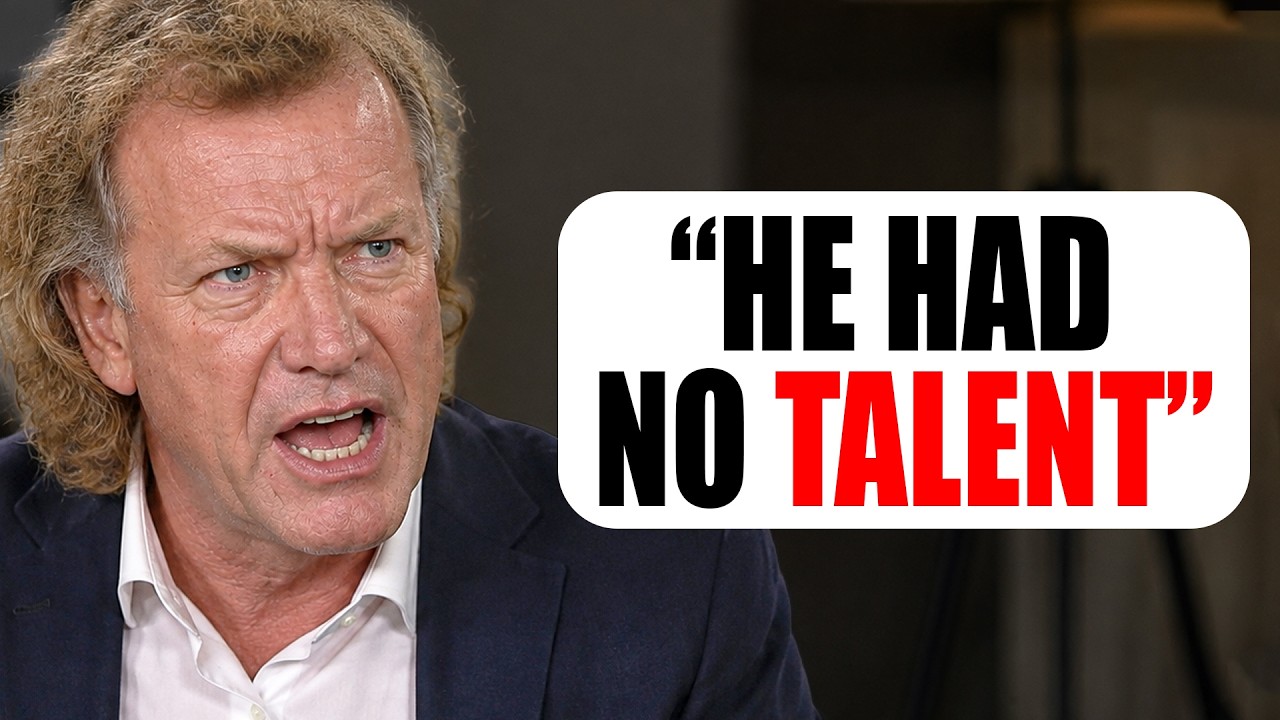 He painted a stark picture of a man he called a “dictator” to his musicians, a figure whose rigid philosophy of serious, formal repertoire stood in direct opposition to the theatrical, accessible style Rieu would later pioneer.
The professional friction between father and son was not merely about discipline but about artistic direction. While Anton favored the serious works of modern French composers like Francis Poulenc, the younger Rieu found himself captivated by the melodic charm of Johann Strauss II. This divergence was a fundamental rejection of the idea that classical music had to remain a solemn, untouchable art form.
When Rieu founded his own orchestra in 1978, playing at weddings and parties, he knew he was betraying his father’s vision. The approval he craved was slow to come, with Anton reportedly leaving a concert early, though he later conceded in a letter that his son could indeed succeed.
 The tension between Rieu’s accessible spectacle and the traditional classical establishment extends far beyond his family, creating a stark divide between him and other celebrated violinists. The British virtuoso Nigel Kennedy, known for his punk-rock aesthetic and rebellious attitude, represents a polar opposite approach to popularizing classical music. Kennedy’s success came from challenging the polished, formal image of the concert violinist, while Rieu built his empire on elaborate costumes and theatrical staging.
A 2008 account even suggested Kennedy would shout “none of that Andre Rieu” at fellow violinists he felt were becoming too polished, highlighting a fundamental clash between spontaneity and manufactured elegance.
 This philosophical battle reached a fever pitch in Australia, where Richard Tognetti, the artistic director of the Australian Chamber Orchestra, became one of Rieu’s most vocal critics. As Rieu’s popularity exploded, with a Melbourne concert drawing over 38,000 people, Tognetti publicly dismissed his music as “schlager music,” a term for lightweight European pop. He urged audiences to “dig a bit deeper for the real thing,” accusing Rieu of reducing classical music to mere sentimentality and spectacle.
The criticism was a battle over definitions, pitting commercial accessibility against artistic credibility, and it underscored a deep anxiety within the classical world about what constitutes authentic performance.
 Even the world of rock music enters Rieu’s narrative, not through direct confrontation, but through a stark contrast in artistic philosophy. David Bowie, the chameleon of popular music, represents everything Rieu’s sheltered upbringing in a classical household missed. While Rieu was immersed in Bach and Beethoven, the cultural revolution of the 1960s passed him by, leaving him attached to the traditions of the concert hall.
Bowie, in contrast, built his career on constant reinvention and breaking musical boundaries. While both men understood the power of giving an audience something unforgettable, their paths could not have been more different, with Rieu seeking comfort in familiarity and Bowie thriving on provocation and change.
Perhaps the most stinging comparison for Rieu comes from the world of smooth jazz, in the form of saxophonist Kenny G. Critics have often described Rieu as the “classical equivalent” of Kenny G, a label that cuts to the heart of the debate over commercialism and musical depth. Both artists achieved phenomenal success by making instrumental music highly accessible, emphasizing melody and emotion over complexity.
Both became targets for purists who dismissed their work as too comfortable and too eager to please. This comparison forces Rieu into an uncomfortable position, linking his grand orchestral productions to a musician often criticized for being lightweight, and highlighting the fine line between popular entertainment and artistic seriousness.


