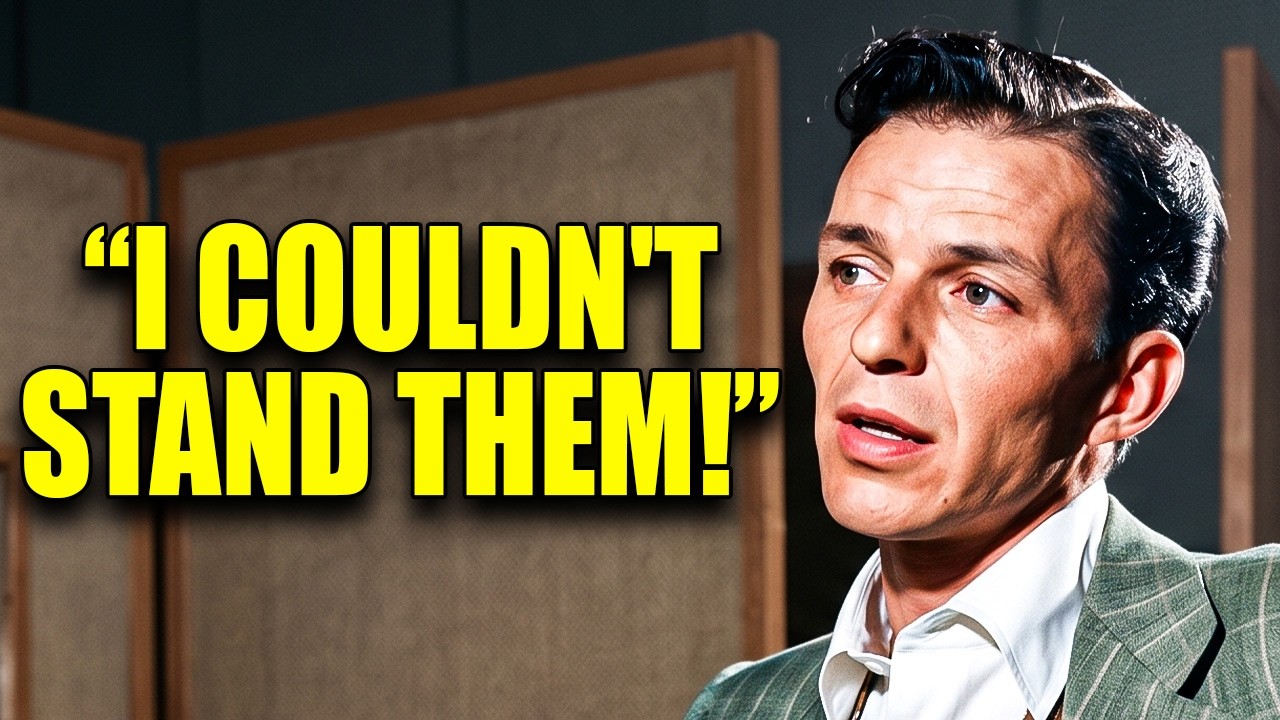
Frank Sinatra, widely regarded as one of the most powerful figures in Hollywood history, was known for elevating careers with a single gesture—and destroying them with equal ease. Few relationships demonstrated this duality more starkly than his bond with British-born actor Peter Lawford, a friendship that unraveled into a brutal, decades-long estrangement that ended only with Lawford’s death. The source of this rupture was not a personal betrayal, but a political decision made in Washington, D. C.
, one that Sinatra chose to punish his closest friend for until his own final days. . Sinatra and Lawford first grew close in the 1940s, when both were rising stars in Hollywood. Sinatra captivated audiences with his voice, while Lawford brought the charm of a British aristocrat to the screen.
Their chemistry extended beyond the professional, and by the mid-1950s Lawford had become a core member of the legendary Rat Pack, performing alongside Dean Martin and Sammy Davis Jr. The pair was often the center of attention, symbolizing the glamour, wealth, and cultural confidence of the era. Their loyalty to each other seemed absolute. The pivotal shift came in 1954, when Lawford married Patricia Kennedy, the younger sister of John F.
Kennedy. The marriage immediately transformed the group’s social standing. Sinatra, who harbored intense political ambitions and craved acceptance among the elite class, saw in Lawford a direct bridge to the most powerful family in America. From that point onward, Sinatra poured energy and resources into supporting Kennedy’s political rise, with Lawford serving as the intermediary between Hollywood and the political establishment.
Sinatra trusted Lawford completely, treating him as his official liaison to the Kennedy family. In return, Lawford used Sinatra’s influence to solidify his own place within his wife’s powerful family. It was a mutually beneficial arrangement built on shared ambition. During the 1960 presidential campaign, Sinatra mobilized enormous resources to support Kennedy’s election, donating money and organizing major lobbying performances.
Lawford stood by his side at nearly every event, helping blur the boundaries between entertainment and politics ina way that made Kennedy’s image more relatable to voters. Lawford was, in many ways, the silent architect of those connections. When Kennedy won the presidency, Sinatra believed he had reached the peak of recognition, becoming a close associate of the most powerful family in the country. At celebrations, he constantly praised Lawford, and thepair enjoyed the rewards of their efforts together.
Their friendship appeared unbreakable. By the early 1960s, their combined influence reached from Los Angeles to Washington, D. C. They appeared together in films like Ocean’s 11, andLawford’s career advanced strongly under Sinatra’s patronage.
They shared private vacations and closely guarded secrets, with Sinatra considering Lawford a blood brother. Absolute loyalty was the value both claimed to prioritize. But the deepening intersection of entertainment and politics carried hidden risks. Sinatra craved power, while Lawford found himself caught between his duty to his wife’s family and his devotion to his friend.
The stage was set fora devastating confrontation. The breaking point came in March 1962. Sinatra spent more than 40,000 dollars upgrading his private estate in Palm Springs, preparing fora grand reception fora planned visit by President John F. Kennedy during his California tour.
He built a helipad, installed complex communication systems, and prepared rooms for Secret Service agents. The event was, in Sinatra’s mind, a milestone confirming his political arrival. However, FBI Director J. Edgar Hoover had submitted secret files to Attorney General Robert Kennedy detailing Sinatra’s ties to organized crime figures, including Sam Giancana.
Deeply alarmed, Robert Kennedy fiercely opposed the president staying at Sinatra’s home, fearing it would provide ammunition for political opponents. The White House bowed to the pressure, and the task of delivering the bad news fell to Peter Lawford, who was caught in an impossible position as both Kennedy’s brother-in-law and Sinatra’s closest friend. Instead of Palm Springs, President Kennedy diverted to the estate of Bing Crosby—ironically, a supporter of the opposing party—just days before the event. When Sinatra received the news from Lawford, he flew into a rage.
According to witnesses, he took a sledgehammer and personally destroyed the helipad he had just built. His fury, however, did not stop at physical destruction. He directed all his hatred at Lawford, believing his friend had lacked the courage to defend his honor and had chosen political loyalty over brotherhood. Sinatra cut off all contact with Lawford immediately after the Palm Springs incident.
He declared that Lawford’s name would never again appear in his life. The rupture was swift and merciless. In Sinatra’s eyes, the failure to bring the president to his home was the intermediary’s fault: Lawford had either failed to provide timely information or had not fought hard enough. The previous trust turned into pure hatred.
With tensions already running high between organized crime figures and the Kennedy administration, Lawford became the easiest target for Sinatra’s retaliation. People across Hollywood witnessed the collapse of an alliance once considered invincible, andthe image of the ruined helipad became the symbol of that breakdown. Lawford tried to explain that the decision came from Robert Kennedy, but Sinatra refused to listen to any excuse. The consequences extended far beyond the personal rift.
Sinatra ordered his staff and associates to eliminate all traces of Lawford from their activities. Joint Rat Pack performances in Las Vegas were canceled without explanation, anda suffocating atmosphere descended on the remaining members, including Dean Martin and Sammy Davis Jr. , who were pressured to minimize contact with Lawford. Then began a systematic campaign to destroy Lawford’s career.
Sinatra had Lawford removed from the1963 film Four For Texas, a project originally designed fora Rat Pack reunion. Lawford’s role was recast at Sinatra’s insistence. Similarly, in Robin and the Seven Hoods, the role intended for Lawford was transferred to Bing Crosby—the same man who had hosted Kennedy instead of Sinatra. Casinos across Las Vegas, fearing Sinatra’s wrath, refused to sign contracts with Lawford, freezing his live performance career.
The most powerful entertainment group in America had shattered, and Lawford bore the brunt alone. In 1966, Lawford suffered another severe blow when his marriage to Patricia Kennedy ended in divorce. Losing the protection of the Kennedy family left him politically isolated. When Sinatra organized a lavish 50th birthday celebration in New York, drawing the most powerful figures in the world, Lawford’s name was conspicuously absent—a public statement that he had been permanently exiled.
Systematic isolation pushed Lawford out of the spotlight. Once an A-list star featured regularly on magazine covers, he was gradually reduced to smaller projects ando longer commanded public attention. The psychological toll was severe. He turned to alcohol and stimulants as an escape, andhis health and appearance deteriorated rapidly.
Throughout the 1970s, Lawford repeatedly wrote letters and made phone calls hoping fora reconciliation, but Sinatra maintained absolute silence, having ordered his staff to block all attempts at contact. Sinatra’s power extended beyond entertainment into the business world. Companies linked to him received secret instructions not to cooperate with Lawford, leading to financial deadlock. Even when Lawford attempted to pivot into film production, he could not escape Sinatra’s shadow; every project he pursued struggled to find investors.
The name Lawford had become synonymous with bad luck in Hollywood. Sinatra never made an official public statement about ending the friendship, but his silence andactions were a form of punishment many found more brutal than any public argument. Every road to restoring Lawford’s reputation was sealed by his former brother. The estrangement lasted until Lawford’s final moments.
On December 24, 1984, just after turning 61, Peter Lawford died at Cedar-Sinai Medical Center in Los Angeles from liver and kidney failure following years of alcohol and stimulant abuse. In his final years, he had lived privately, appearing seldom in public and depending heavily on family. He had reportedly still hoped, in his final hours, fora sign of reconciliation from Sinatra. None came.
Sinatra received the news immediately but offered no public condolences and sent no flowers to the funeral. His reaction sparked conflicting reactions across Hollywood. Some viewed his refusal to forgive as evidence of rigid personal principles; others saw it as excessive cruelty toward a dying man. The feud came to định a chapter of American entertainment history defined both by glamour and by tragedy.
Later, declassified FBI files offered a more balanced view of the events. The documents showed that Peter Lawford had in fact made genuine efforts to persuade the Kennedy family to stick to the planned Palm Springs visit, but his voice carried no weight in the White House. Lawford, it turned out, was essentially a victim trapped between two titanic forces: the Kennedy administration and Frank Sinatra’s wounded pride. Modern analysts have since described Sinatra’s decision to direct his full fury at his best friend as an act of misplaced anger.
The fallout extended beyond Lawford’s life. It affected the remaining Rat Pack members, ensuring that later reunions of Sinatra, Dean Martin, and Sammy Davis Jr. were never complete or alive as they had once been. The feud publicly solidified Sinatra’s image as a man of extreme personality anda frightening ability to control others’ careers.
Until his own death in 1998, Sinatra never once mentioned Lawford’s name publicly ina positive way. The persistence of his hatred remains one of the most controversial aspects of his legacy. Documentaries about American entertainment history still frequently cite the story as a lesson in the fragility of friendship, anda reminder that politics and personal honor can destroy even the strongest bonds. Lawford’s legacy, however, has been reexamined in recent years.
His family and researchers have worked to restore his image, casting him as a crucial connecting figure rather than the cause of the conflict, anda number of documents and documentaries have contributed to that reassessment. The Kennedy family gradually distanced itself from Hollywood in the aftermath, andthe connections Lawford had built no longer carried the same weight, leaving a lasting void in both political and entertainment circles. Today, the feud between Sinatra and Lawford is remembered as one of the harshest severances in American entertainment history, a story about how loyalty, when perceived as betrayed, could turn into a coldness that outlasted life itself.