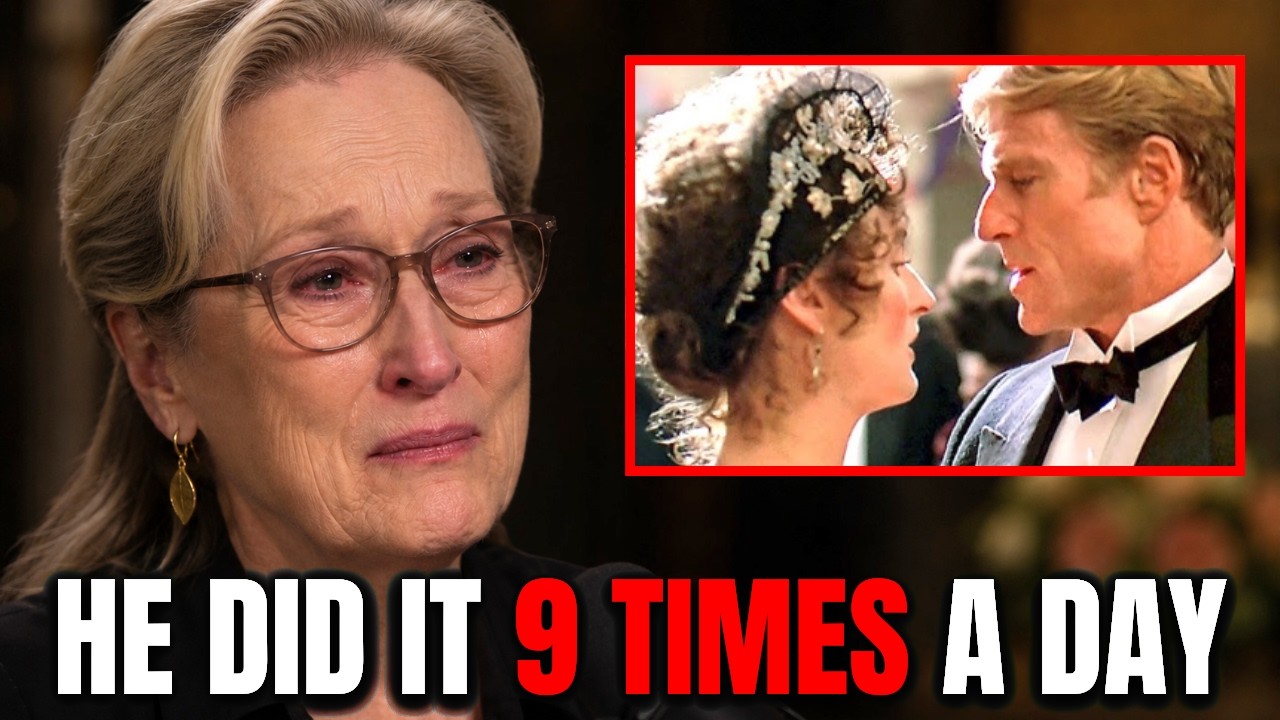
When asked in 2017 whether he believed Romy Schneider was waiting for him somewhere, Alain Delon did not hesitate. “I know she is,” he said. She had been dead for 35 years, and he had ended their relationship 20 years before her death with a letter so brief it barely counted as an explanation. Yet the answer came without hesitation.

Their story is one of the most complicated and enduring love stories in European cinema history. Alain Fabien Maurice Marcel Delon was born on November 8th, 1935, in Sceaux, a suburb south of Paris. His parents divorced when he was four, and he was placed with foster families. He was expelled from Catholic boarding schools with a consistency that suggested less misbehavior than a fundamental incompatibility with any institution that told him what to do.
By 14, he had left school entirely. By 17, he joined the French Navy and was stationed in Saigon during the First Indochina War. His service record was far from exemplary. He spent more time in military prison than anywhere else, his own count reaching 11 months across four and a half years for offenses he described with obvious pride, including stealing a Jeep and driving it into a river.
“They didn’t think that was funny,” he said in one interview, grinning. “It was a lot of fun for me. ”
Discharged and returning to Paris, he had no money, no profession, and no plan. He slept on park benches when he had to and ate cheap hot dogs.
He was young, extraordinarily beautiful, and entirely certain that things would work out. In 1957, he fell in with young actors who invited him to Cannes, where a talent scout noticed him on the street. Director Yves Allégret offered him a role. He turned it down.
He told this story many times with a specific delight in the version of himself who rejected an opportunity he did not yet understand was an opportunity. Eventually, he caved, he said, because the man really wanted him. He agreed to make him happy. The first film was modest.
The second brought him to Vienna in 1958, where a 23-year-old French actor with no real training encountered a 19-year-old German actress already a household name across Europe. Her name was Romy Schneider. She had played the Empress Sissi in a trilogy of films that made her beloved from Vienna to Tokyo. When someone told her who the young Frenchman was, she reportedly looked at him and said, “Who is that boy?
” Then she found out. And then, as she later told it, she fell completely in love. Romy Schneider was born Rosemarie Magdalena Albach on September 23rd, 1938, in Vienna. Her father was an Austrian actor, her mother a German actress.
She had grown up with cameras, trained since childhood in the particular performance of femininity that European cinema of the 1950s required. She had learned to be lovely and radiant in exactly the way an audience expected, and she was tired of it. At 19, she was already claustrophobic inside the image she had been given. Delon, who had no image at all yet, who was raw material rather than finished product, must have felt like freedom.
They fell in love during the filming of Christine in Vienna. He did not speak German; she spoke French beautifully. Luchino Visconti, who would later cast Delon in Rocco and His Brothers, saw them together and told them they had the same furrow between the eyebrows, the same involuntary V of anxiety and ambition he called the V of Rembrandt. Romy left Germany for Paris to be with him, abandoning the Sissi franchise that had made her fortune, breaking with her family’s expectations, and provoking outrage across Austria and Germany.
The press called the French nobody a usurper, a kidnapper, the man who had stolen the empress. She did not care. By March 1959, they were engaged, photographed on the terrace of the Hotel Eden Roc at Cannes with the particular incandescence of two beautiful people who have recently done something reckless and are not yet sorry. They were together for five years.
Then in 1963, Delon ended it in a letter. The letter was brief. It announced that he had moved on to another woman, Nathalie Barthélémy, who was already expecting his child. He was done.
Romy learned in this way, from a piece of paper, that the most important relationship of her life was over. She described the moment in various interviews over the years, always with the same quality of disbelief—not at the ending, but at the method. The career Delon built after abandoning Romy Schneider was one of the most extraordinary in the history of European cinema, built almost entirely on his ability to embody the kind of man who leaves. He played Tom Ripley in Plein Soleil, a psychopath who assumes another man’s identity with a coolness more disturbing than any violence.
He played Jeff Costello in Le Samouraï, a hitman living alone in a bare room with a single caged bird, planning his movements with the precision of someone who has eliminated all human attachment as a liability. Critics called these performances astonishing, and audiences in 15 countries made him the highest-paid actor in France. Underneath it all was the same quality that made Plein Soleil so disturbing—the sense that the performance was not entirely a performance. He married Nathalie in August 1964, and their son Anthony was born a month later.
In 1968, while his marriage was already fracturing and his affair with Mireille Darc was beginning, something happened that nearly ended everything. On October 1st, 1968, the body of Stevan Marković, a Yugoslav man who had worked as Delon’s bodyguard, was found wrapped in a sheet in a public dump west of Paris. He had been shot in the back of the head. Before he disappeared, Marković had sent his brother a letter: “If I am killed, it is 100% the fault of Alain Delon and his godfather, the gangster François Marcantoni.
” Delon was hauled back from the set of La Piscine in Saint-Tropez for 48 hours of police interrogation. Rumors circulated that Marković had been running sex parties for the French elite, that photographs existed of prominent politicians in compromising situations, including future president Georges Pompidou and his wife. Delon went on French television and faced the cameras with the cold composure of a man who had spent his entire career playing men who do not flinch. He said Marković had been his friend, not his bodyguard, and denied knowing anything.
When asked directly whether he could have a man killed, he said that if he answered yes, people would think one thing, and if he answered no, they would think the same thing. So, he would say nothing. Nobody was ever convicted, and the case was never solved. Marcantoni was arrested and released, and the affair stayed open and unresolved for the rest of Delon’s life.
The scandal did not end his career. If anything, the public sided with him against a police investigation that seemed to be enjoying itself too much. “It could have ruined my career,” he said. In fact, it did the opposite.
He returned to set, and the films kept coming. His ex-wife Nathalie would later say in interviews that Romy Schneider’s shadow had never left their marriage, that Delon’s grief over the ending with Romy was a constant presence in their home, even as he was the one who had ended it. He had missed her, Nathalie said, even while he was with her. In the summer of 1968, Delon and Romy were cast together in La Piscine, a thriller set in Saint-Tropez about jealousy and desire and what happens when the past will not stay in the past.
They had not worked together in four years and had not been together as a couple in five. The film required them to be in love on screen, to embody a chemistry that had once been real and was now something they had to reconstruct. The result produced something people who saw it in 1968 still find difficult to describe. You can see that they are acting, and you can see that they are not acting.
Both things are visible simultaneously. Romy said during that filming, “The most important man in my life remains Delon. He is always ready to reach out to me. He would run to my aid at any time.
Alain has never abandoned me to myself, neither today nor yesterday. ” She said this five years after the letter, as a statement of fact, whatever had happened between them. The years between La Piscine and Romy’s death in 1982 were for her a sustained unraveling. She married Harry Meyen in 1966 and had a son, David, but the marriage ended in 1975.
Her first husband later died by suicide in 1979. She had a daughter, Sarah, with a second husband, Daniel Biasini. She became a style icon of 1970s French cinema, winning awards and earning the admiration of the greatest directors working in Europe. Underneath the professional success was a woman struggling in ways the people around her could see but could not stop.
In July 1981, her son David, 14 years old, attempted to climb a spiked fence at his grandparents’ house and fatally punctured his femoral artery. He died in the night. Romy was at Delon’s house when she received the news. He was the person she called.
She never recovered from David’s death. She had a kidney operation in the months that followed and was found dead on May 29th, 1982, in her Paris apartment of cardiac arrest. She was 43 years old. Her funeral was paid for by friends because her finances had been destroyed by years of illness and grief.
Alain Delon arranged the funeral, and he arranged for David to be buried in the same grave as his mother so that she would not be alone. Then he sat beside her body and wrote a letter, published in Paris Match. “I watch you sleep. I am with you at your bedside.
You will say goodbye, the longest of goodbyes, my pupule. ” He described her face: “I do not watch the flowers, but your face, and I think you are beautiful. And never, perhaps, have you been so beautiful. ”
He went back to the beginning of them, writing about the set in Vienna, about learning French and German simultaneously, about the day they asked each other who had fallen in love first and counted to three and answered together, both of us at the same time.
He wrote, “What am I guilty of? Not guilty, no, but responsible I am. Because of me, it was in Paris that your heart, the other night, stopped beating. ” He was holding himself responsible for her being in Paris, for the chain of events that had begun with his letter in 1963.
He was acknowledging the full weight of a consequence that took 20 years to fully arrive. He carried a photograph of her for the rest of his life. When he received the honorary Palme d’Or at Cannes in 2007, 25 years after her death, he stood at the podium and asked for 25 seconds of silence for an exceptional woman, an immense actress who had left them. He said her name, asked for the applause, and said, “For you, my little puppet.
” People in the audience wept. Mireille Darc, the woman he had left his wife for, was with him for 15 years, from 1968 to 1983. He described her as his best friend. When she died in August 2017, the same month and week he had been born, he said she had been his closest companion for most of his life and that the world was smaller without her.
After Mireille, there was Rosalie Van Breemen, a Dutch model 31 years younger, with whom he had two more children: Anouchka in 1990 and Alain-Fabien in 1994. They separated in 2001. His son Alain-Fabien later gave an interview saying his father had been physically violent with his mother on more than one occasion, a claim Delon denied and sued over. Father and son were deeply estranged for years.
Delon suffered a stroke in 2019 and was treated for lymphoma in 2022. In his final years, he was at his estate in Douchy in the Loire Valley with his animals. He loved animals with a consistency that seemed, in retrospect, to be the thing he was most straightforwardly good at. A dog named Loubo was specifically named in his death announcement, listed alongside his three children as one of the beings at his side when he died.
He died at home on August 18th, 2024. His three children—Anthony, Anouchka, and Alain-Fabien—were with him. The announcement said he passed peacefully surrounded by family. Within hours, social media accounts dedicated to Romy Schneider began posting the same image: the two of them at Cannes in 1959, young and incandescent on the terrace of the Eden Roc a few months after their engagement, with the whole of the next 65 years still ahead of them and neither knowing what it would cost.
The caption on most of them was some version of the same idea: he had gone to find her. Whether calling someone the love of your life after they are gone is both true and insufficient depends on the full story. In Delon’s case, the evidence is everywhere: the letter, the photograph he kept for 40 years, the 25 seconds of silence at Cannes, the eight words in 2017. And it is insufficient because Romy Schneider spent the years after his letter trying to build a life in a city she had come to for him, losing a son, losing her health, losing herself.
The love that marks you is the one that went wrong in ways you cannot undo, the one you spend the rest of your life returning to. He wrote to her, “I learned a little German with you. Ich liebe dich. ” He knew she was waiting.
Now he has gone to find out.