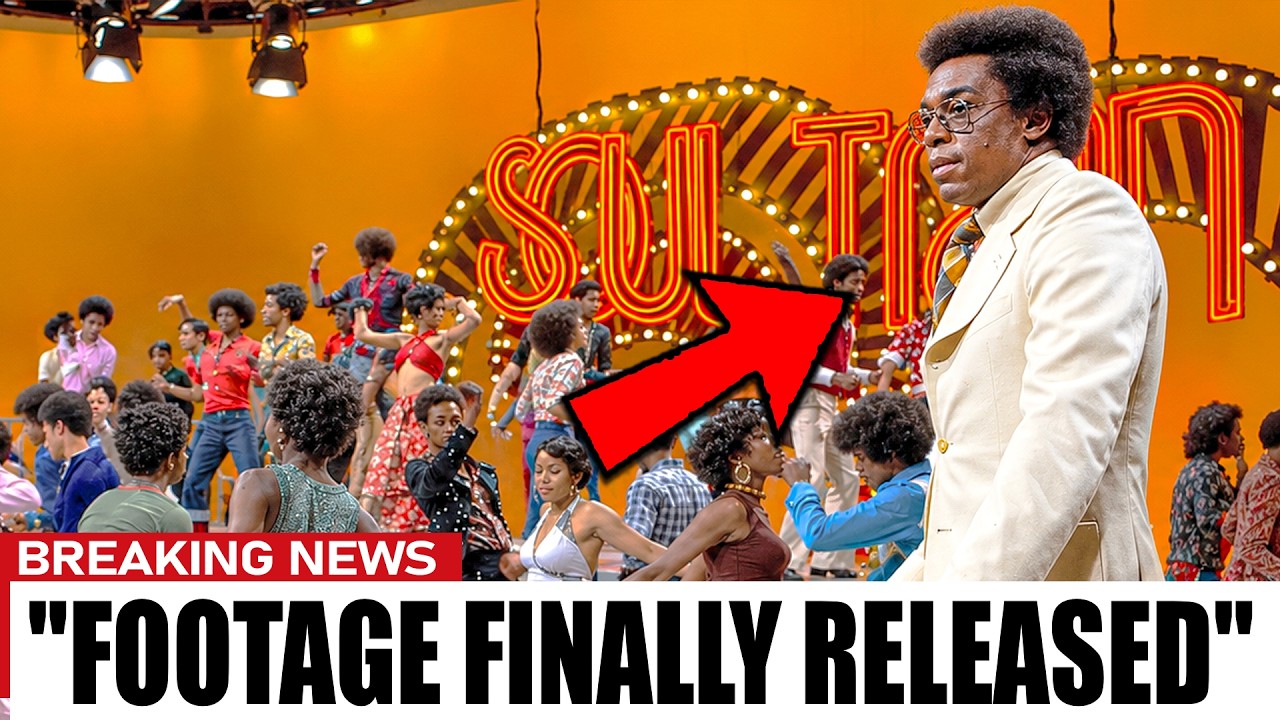
The legendary host who gave America its first national stage for Black music and culture spent his final years in a shadow of chronic illness, legal turmoil, and isolation, a new examination of the program’s history reveals. The man who ended every broadcast with the iconic phrase “Love, peace, and soul” died by suicide in 2012, leaving behind a legacy marred by a series of devastating decisions and health crises that nearly destroyed the institution he built. The story of how Soul Train almost went off the air is not one of ratings failures, but of a founder’s willingness to risk everything to maintain control over a cultural movement he refused to let corporate America dominate.
The genesis of the groove was born in the late 1960s when Cornelius, a radio announcer in Chicago, observed a glaring void on television. He saw that rhythm and blues, soul, and the nascent sounds of funk were reshaping American culture, yet networks largely ignored the young Black audiences fueling that transformation. The idea of a dedicated platform was first tested through local dance events known as the Soul Train Caravan, which provided proof that a substantial audience yearned for a dedicated presentation of their culture.
 In August 1970, the official Soul Train premiered on Chicago’s WCIU-TV, a modest station whose small budget could not match the major networks, but the raw energy filled a void that immediately resonated.
The concept of the show was built around the African-American experience, with Cornelius acting as the prime architect of a youth culture takeover. The program was a deliberate and calculated response to the exclusion of Black youth from network television, with dancers showcasing natural rhythm and distinctive style. One key figure in the expansion was George Johnson, founder of Johnson Products Company, the makers of Afro Sheen, who saw the commercial and cultural potential of the show.
Johnson’s partnership alongside Cornelius formed a business alliance that rooted the expansion in Black ownership and entrepreneurship.
In 1971, the production moved to Los Angeles, a relocation that placed the show at the epicenter of the American music industry. To manage the financial weight, the production shifted to a system of concentrated taping sessions, filming several episodes on a single Saturday. Yet the visual heart of the show, the dancers, were operating under a system where opportunity and food replaced monetary compensation.
Dancers were often recruited from the streets and dance communities of LA, and while their appearances launched cultural trends, the barriers inside the studio were intense.
Behind the curtain of Soul Train, the environment was not as glamorous as it appeared, with many dancers enduring long, exhausting production days without conventional pay. The catering reportedly consisted of boxes of Kentucky Fried Chicken, creating a class divide where high-profile artists received celebrity treatment while the dancers provided the energy that made the program iconic. This imbalance created a resentment and intense competition, where an informal hierarchy developed–dancers with closer ties to the production studio got better placement on the floor, and a few seconds in front of the camera became a battleground for those seeking fame.
 The famous Soul Train line itself was shaped by these internal tensions. Initially a balanced, structured environment required dancers to perform in couples, but a tug-of-war over creative freedom led to differences. Dancers wanted to establish their own identities rather than be part of a pair, and Cornelius eventually adapted, allowing individuals to go down the line, giving rise to the spontaneous expression that made the line legendary.
But the singers themselves also often battled the production’s rules, with the show frequently relying on pre-recorded tracks, forcing artists to lip-sync, a setup that frustrated stars whose power was born on the stage and bandstand.
Cornelius was preoccupied with the image of Black America on national television, a pressure that led to a revealing decision regarding the show’s popular Scramble Board segment. He was concerned about contestants being publicly embarrassed on national television over iconic Black history figures. To prevent what he felt was symbolic damage to the image of Black culture during a period of high scrutiny, he quietly gave contestants the answers beforehand.
It was an ordinary production decision at the time, but it represented the burden of being the standard-bearer for the culture, and it would be a premonition of the larger battle.
The success of the show made it a threat to the existing status quo, and in 1973, a major conflict erupted that almost dismantled the show. This was the period of the Black Media War, where television giant Dick Clark, whose American Bandstand had dominated the genre, saw the rise of Soul Train as a threat to his influence over the dance show format. Cornelius would not relinquish ownership, and perceiving the rejection, Clark struck back by launching a new program, Soul Unlimited, on ABC.
 The new show was similar, using contemporary Black music and an adapted format that looked like a direct attempt to value the success of Soul Train.
ABC possessed a massive institutional structure, and the threat of a rival show jeopardized Soul Train’s access to affiliates and lucrative time slots, putting the entire franchise in jeopardy. Cornelius did not fight his alone, but enlisted the support of influential Black leaders, including Reverend Jesse Jackson and music executive Clarence Avant, transforming the dispute into a matter over representation of the Black community. Jackson’s Operation Push threatened a national boycott against ABC and its advertisers over the network’s actions to underline a Black-owned institution.
The pressure worked, the corporate giant cancelling the rival show after a short run, and the siege was broken by a powerful rejection of ownership.
Cornelius had solidified his control, continuing to grow the franchise, but the burden of maintaining the empire eventually became physical. In 1982, Cornelius underwent a deeply serious and critical neurological surgery to correct a congenital brain issue, a 21-hour procedure that he survived but not without lasting damage. The health crisis brought seizures, chronic pain, and systemic decline that compromised his command and forced him to rely on his physical energy and mental acuity.
His health had compromised in a way that altered his life, and the end was unavoidable: he stepped down from hosting Soul Train in 1993, forcing the production to adapt to a future where he was no longer a constant fixture.
 The strains on the franchise were also multiplying as cable television, music videos, and shifting cultural landscapes introduced new competition. Producers and hosts like Maestro Clark and Dorian Gregory appeared, but the identity was permanently altered. In 2008, Cornelius perhaps made his final critical decision: he severed his relationship with the institution by selling Soul Train and its media assets for a significant sum.
the precise details of the sale were private, but his departure from ownership signaled the end of an era. By then, he was also facing severe and frightening personal troubles, including a domestic dispute involving his wife, Vicki Chapman, which led to his arrest and a subsequent guilty plea to a reduced charge of spousal battery.
The man who had once controlled the portrayal of Black culture on television found his own personal narrative spiraling out of control. The health issues, the disputes, and the constant gear shifting of a strained relationship became an almost unbearable pressure. On February 1, 2012, police discovered the 75-year-old patriarch dead at his Los Angeles home from a self-inflicted gunshot wound.
The tragedy shocked the entertainment world, revealing a double life of control and total despair. His son Tony spoke publicly about the absolute devastation of chronic pain that his father had endured–the personification of the man who gave every other artist a stage had no relief from his own battle on the stage of life.
Don Cornelius built something that survived him, and while the tragic ending and health struggles were the furthest thing from entertainment, his legacy lies in the 35-year run of a TV show that celebrated the culture and spawned generations of initiatives. He provided a platform where Black identity was not the guest; he was the main attraction. His creation itself became an influencing opportunity, and the Battle of 1973 proved that the concept of ownership is the foundation of true legacy.
He gave us a stage: a steady flow of moves, music, and respect for the point of view stemming from his home of comfort and objection. The phrase he taught viewers superseded the man, representing not just an ending, but a valuable reminder of what Black ownership, expression, and the power of being the force behind the final moment of truth for a founder representing all that strength, doing so until his very final breath– and finally giving up the thing he built because his body could not outlast the tasks.