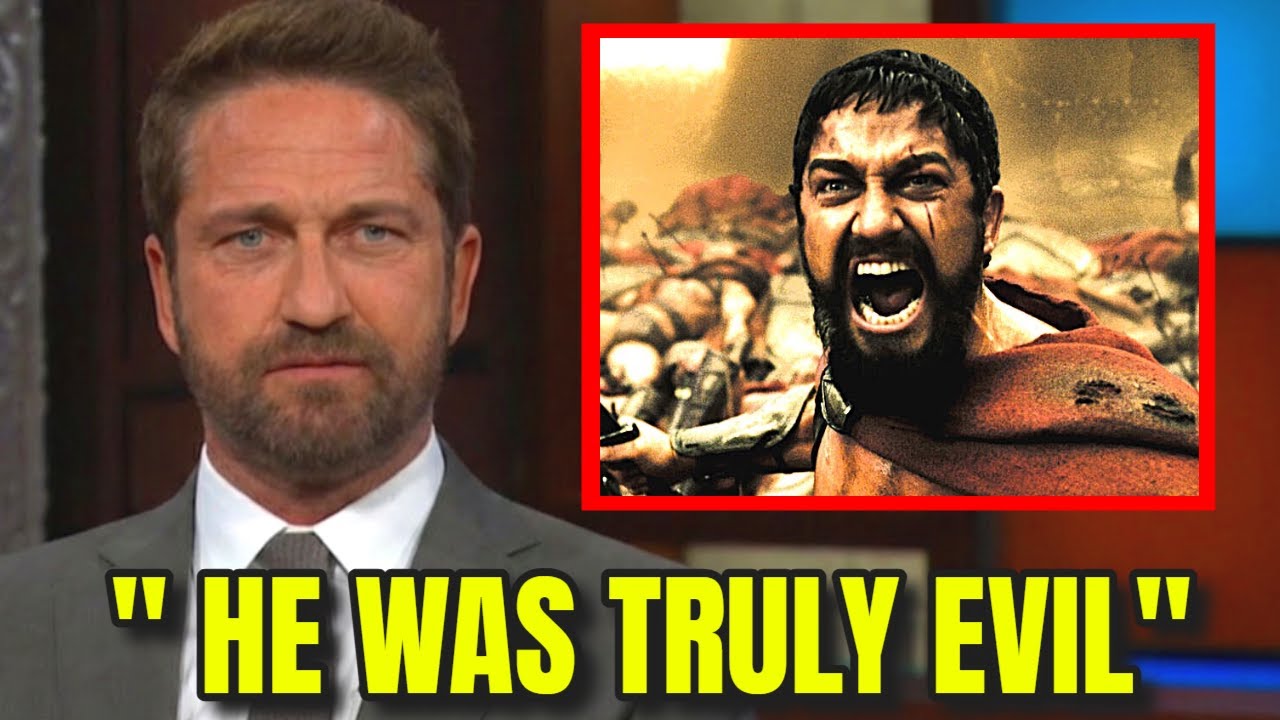
Nearly two decades after Gerard Butler roared across the screen as King Leonidas in 300, the actor has opened up about the hidden toll of the role that made him a global icon. Behind the chiseled physique and the warrior’s armor, Butler says the film left him physically broken and emotionally scarred in ways the audience never saw. The role that appeared to be the pinnacle of his career quietly fractured him. While the world celebrated the unbreakable Spartan king, Butler was struggling with chronic pain, isolation, and expectations that he now admits were impossible to sustain.
Long before Hollywood, Butler was a quiet boy growing up in Paisley, Scotland. Born in 1969, his childhood was shaped by the sudden distance created when his parents separated. That early fracture stayed with him as a faint echo, influencing his sense of worth and belonging for years. He learned early how to appear strong, pushing his true feelings down so the world would not see the fear he carried beneath the surface.
As he grew older, he chose the safest path, studying law at the University of Glasgow with a seriousness that impressed his peers. After graduating, he stepped into a legal career as a trainee lawyer, driven by discipline and a constant need to outrun failure. Yet a different dream was stirring within him, a pull toward expression and vulnerability that he could not yet acknowledge. One week before he was set to qualify as a lawyer, everything fell apart.
He was fired without warning. The single word carried the full weight of his greatest fear, disappointing everyone who believed in him. The life he had built so carefully cracked open. The collapse did not destroy him.
It forced him to confront the truth he had been avoiding: he had never belonged in that life. The loss shattered him but also freed him, making space for the creative ambition he had long suppressed. At 25, Butler left Scotland for London with no road map and no safety net. He arrived with a bruised heart and a fragile hope that life had saved something else for him.
The city was both exhilarating and unforgiving, with rejection echoing louder than praise. His first breaks came slowly. A brief appearance in Tomorrow Never Dies and a larger role in Dracula 2000 were not roles that defined him, but they steadied him, telling him he belonged in the industry even as he learned to believe it. Films like Dear Frankie and The Phantom of the Opera revealed a tenderness audiences had not seen.
The Phantom role frightened him most, given its scale and legacy, but it lifted him into a new light. He no longer felt like an outsider looking in. Yet the emotional cost lingered. Starting late meant always chasing, always comparing, always carrying the quiet anxiety that comes from building a life on ground that once collapsed.
Still, for the first time, giving everything felt like purpose rather than burden. When Butler was cast as King Leonidas in 2006, the world saw it as the moment he became a legend. For him, it was the start of the most punishing chapter of his life. The expectation was that he would not just play a warrior but become one.
Months before filming, he entered the brutal 300 workout regimen. Extreme diets, endless repetitions, and workouts that left him shaking and barely able to stand consumed his life. He pushed through exhaustion because he feared what would happen if he failed. During filming, Butler performed many of his own stunts, enduring excruciating injuries.
Behind the scenes, he iced bruises and stretched torn muscles, fighting through pain that followed him long after the cameras stopped rolling. The world saw only the finished product, the chiseled body, the fierce stare, the roar of a king who refused to kneel. They did not see the loneliness that wrapped around him when the set went quiet. Calculated meals, sacrificed sleep, and relentless pressure left little room for comfort.
300 became a global phenomenon. People admired the strength and intensity, but only Butler knew the toll it took to stand in that light. The role demanded more than he thought possible, and he gave it, but that giving came with lasting consequences. The injuries endured on set were just the beginning.
Chronic pain lingered for years, shaping how he moved, slept, and faced the world. The physical and emotional strain deepened a quiet sense of isolation that success often hides. The cost became painfully clear in 2011. While filming Chasing Mavericks, Butler was caught in a severe surfing accident.
The ocean dragged him under, leaving him gasping for life. When rescue came, he felt not triumph but fragility, the kind that lingers when no one is watching. By 2012, he entered rehab to address a dependence on pain medication, born not from indulgence but from the injuries he had sustained for his craft. It required a different kind of strength, one that did not roar like Leonidas but whispered like a man finally ready to heal.
Butler spoke openly only years later, revealing how aging forced him to confront the consequences of that singular role. He admitted that 300 set standards he could never sustain, leaving him questioning his own identity and wondering if he would ever be the man he was before the armor. The emotional toll was relentless. Every interview and public appearance carried a shadow of exhaustion, the strain of maintaining a heroic facade.
Friends noticed the intensity behind his eyes, the way the weight of the role lingered in his posture and voice. The truth, he said, was that 300 left him broken in ways that were invisible, silent, and deeply personal. Yet within that revelation came clarity. He learned that the warrior image and superhuman expectations did not define the entirety of his life.
He embraced the vulnerabilities he had once hidden, acknowledging the fear, doubt, and heartbreak that accompanied his rise. He no longer measures himself against a warrior’s physique or the applause of millions. Today, Butler speaks with a warmth and gentleness rare in Hollywood. He reflects on that chapter with humility, honoring the journey, the pain endured, and the emotional depth the role extracted from him.
His continued career, spanning films like Olympus Has Fallen and How to Train Your Dragon, demonstrated range beyond the warrior archetype. But each achievement carried an invisible cost that only he truly understood. The story of 300 is no longer just about epic battles or box office triumphs. It is about resilience, about facing the aftermath of a role that demanded every ounce of his body and soul.
The film that made him a global icon forced him to reckon with what it truly means to be human. Butler’s journey became a reminder that the heroes we admire are rarely as unbreakable as they appear. The true triumph, he suggests, is the man he became after the role, one who survived, healed, and finally shared the emotional truth behind the legend.


