The oath you swore to an emperor has dissolved into the mud of a collapsing front, and at twenty-two years old, Sergey Matveyev stands at the center of history’s most violent pivot. In the autumn of 1915, you worked at a district veterinary station outside Tambov, holding frightened horses still for Dr. Lebedev, boiling instruments, and learning which animals were worth saving before their owners could accept the truth.
Your father died when you were fourteen, leaving one lesson you still carry: animals do not care what a man intends, only whether his hands are steady. People are harder. The village argued about prices, land, and taxes, and you avoided most of it.
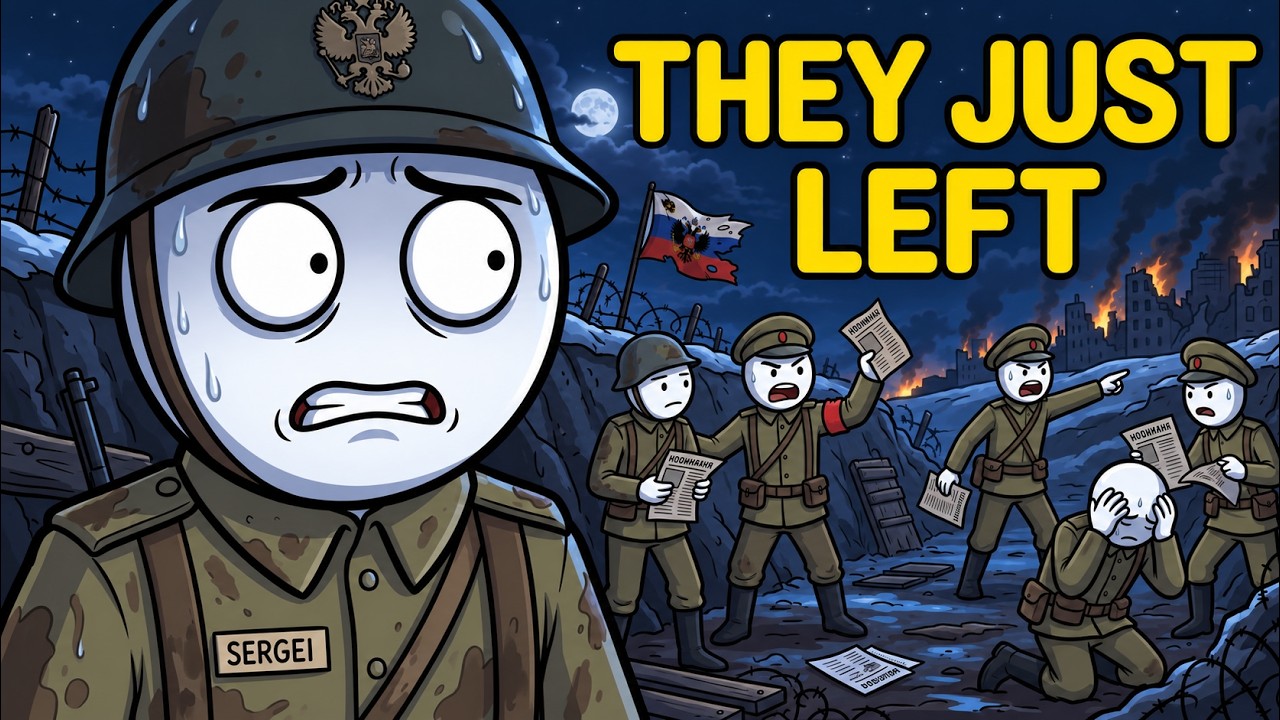 Your plan was small enough to feel safe—two more years of service and Dr. Lebedev would recommend you for formal veterinary training. Then a brown envelope arrived, and the Russian Empire decided it needed soldiers more than Tambov needed another veterinary assistant.
By spring 1916, you are in uniform, assigned to an infantry regiment on the Southwestern Front. The army teaches you that horses are everywhere, pulling artillery, ammunition, kitchens, and ambulances. You become the man soldiers call when an animal goes lame—useful without being important.
That suited you. Your closest companion is Fyodor Karpov, a twenty-four-year-old mill worker from a village forty kilometers away. Fyodor talks about nothing but land.
His family farms strips scattered across fields owned partly by peasants and partly by an estate whose owner visits twice a year. He depends on the moment a minister is liberal, conservative, or socialist—he wants six more hectares and enough timber to repair his roof. You tell him he has reduced the empire to a fence dispute.
“Every empire ends at somebody’s fence,” he replies.
During the Brusilov Offensive in 1916, Russian forces broke through Austro-Hungarian positions on parts of the Southwestern Front. Prisoners came back in columns, and for several days victory felt possible. Then German reinforcements arrived, casualties mounted, your company shrunk, and the war continued by winter you stop imagining that battles decide wars quickly.
The trenches froze, boots split, food arrived late, and men traded rumors with greater confidence than facts. Some said the capital has no bread. Some said factories are striking.
You believed almost none of it. Your job remained the next guard shift. Then February 1917 arrives.
The first news is confused: strikes in Petrograd, bread demonstrations, soldiers refusing to fire, soldiers joining the crowds. Then the impossible sentence reaches the regiment: Tsar Nicholas II has abdicated. At first, everyone thinks there must be another Tsar—his son, his brother, somebody.
An empire cannot simply wake up without an emperor. But that is essentially what happens. The monarchy collapses in days.
A provisional government claims authority while the Petrograd Soviet speaks for another kind of power. You are still standing in the same trench. The enemy is still across the same ground.
But the oath you swore now points backward into history. The regiment gathers to hear proclamations read aloud. Officers stand stiffly.
Then news of the Petrograd Soviet’s Order Number One spreads through the army. Soldiers elect committees, gain political rights, and challenge old military discipline.
Your company elects a committee. You do not run, which is why they choose you. Fyodor nominates you because you can read official language without pretending to understand more than you do.
Yoyou protest. He says exactly. For the first time, that sounds like a political position.
Some officers adapt. Captain Dmitri Volkov does better than most. He is thirty-one from Kazan and never pretends to like the committees, but he attends meetings and explains orders.
He tells you privately that armies cannot vote on which bullets arrive. You tell him soldiers are tired of dying for orders they do not understand. Neither of you convinces the other, but both of you keep talking.
That matters more than either admits.
Spring arrives. The front grows quieter, and men leave positions without permission in increasing numbers. Letters from home make everything worse.
Villages argue over land. Peasants cut timber from estates. Rumors say land will soon be redistributed.
Fyodor reads one letter three times: his mother says neighboring families are already marking fields they expect to claim. “If I stay here, I come home to nothing. You desert, you may come home to prison.
Whose prison?” You have no answer. In Petrograd, the provisional government insists Russia must continue fighting alongside its allies.
War Minister Alexander Kerensky pushes for a new offensive. The army is told that revolutionary Russia will prove it can fight not for the Tsar, but for freedom. The words sound cleaner than the words in the trenches.
In June, your regiment prepares to attack. Meetings continue almost until the guns begin. Your company votes to obey but not unanimously.
Fyodor votes no. You vote yes. He stares at you afterward.
“You want the Tsar back?” “No.” “Then who are we attacking for?”
You say the Germans and Austrians have not disappeared because Petrograd changed governments. Fyodor asks whether that means Russia must fight forever. Again, you have no answer.
The June offensive begins with artillery and early successes. Your regiment goes forward through torn wire and abandoned positions. For one day, the old language returns—advance, prisoners, captured guns.
 Then resistance hardens. Other Russian units refuse orders or lose cohesion. Desertions increase.
The offensive stalls. Counterattacks begin. The withdrawal is uglier because everyone has already argued about whether the attack should have happened.
During one withdrawal, your company is ordered to hold a callout ridge while wagons and wounded behind you. Captain Volkov tries to organize the line. A soldier shouts that the officers are sacrificing them to save themselves.
Another man fires his rifle into the air. For several seconds, nobody understands whether mutiny has begun. Volkov fires his pistol belt hand and walks in front of the line unarmed.
“You think I am leaving?” he asks. Nobody answers.
He nods toward the wagons. “My brother is on one of those stretchers. Hold twenty minutes and then we all go.”
It is not a legal argument. It works. Six hundred twenty‑three.
Volkov’s actions did not shut down the grumbling, but he stood in front. Behind his eyes, she held for those twenty‑three minutes. Then you, the rear‑guard company, withdrew.
Fyodor walks beside you afterward. “He shouldn’t have had to do that.” “What?”
“Begged us to obey.” You say, “Maybe we shouldn’t have needed begging.” Fyodor looks at you plainly.
“You still think this can be repaired?” That sentence lights something inside you, because you know it is true. July brings collapse.
The offensive fails. A hundred battalions refuse to advance. The Germans and Austro‑Hungarians counter‑attack.
Russian units retreat across Galicia in a wholesale rout. Discipline deteriorates further. Kerensky becomes head of the provisional government.
Fyodor stops arguing over food. That frightens you more than any shouting match. One morning his blanket is folded, his rifle gone, and so is he.
He has deserted. He leaves no note. You are furious—not because you think he is a coward, but because he has made the choice you have spent months refusing to make.
The committee asks whether you knew his plans. You say no. CaptainVolkov believes you.
Another officer does not. For three days you expect arrest. Nothing happens.
There are too many deserters for your friendship to matter.
By late summer the army and government face another crisis. General Lavr Kornilov, commander‑in‑chief, comes into conflict with Kerensky. Troops move toward Petrograd.
Kerensky denounces Kornilov. Railway workers disrupt movements. Bolsheviks and Red services help organize resistance.
At the front, every rumor arrives already carrying an accusation. Kornilov is saving Russia. Kornilov is overthrowing the revolution.
Kerensky betrayed his own. Officers are plotting. Politicians are destroying the army.
Nobody in your company knows what actually happened. Everybody chooses a version anyway. CaptainVolkov is ordered to surrender his sidearm temporarily while officers are questioned about their sympathies.
Men watch to see whether he resists. He hands it over.
Later you find him sitting on an ammunition crate. “You should be pleased.” He says, “Why?
The army is finally discussing every order.” You recognize the insolence. You sit beside him anyway.
He asks whether a single committee can guarantee the Germans will wait until Russia finishes deciding what Russia is. You told him officers had three years to win the war before the committees existed. He laughs once.
 “That is fair.” You talk about the vet station, your mother, the first foal you watched come into olive oil. It is the last normal conversation you have with him.
By September, soldiers are leaving at the front in enormous numbers. Abandonment from March to October reaches into the millions. The state suffers the ability to keep men where it sends them.
You begin to notice empty spaces rather than custom individuals. Squads shrink, wagons disappear with their horses. The army does not lose a single battle; it simply evaporates.
Then a letter reaches you from the home district—not from Fyodor, but from his mother. Fyodor made it home. He arrived thin, feverish, and without his rifle.
When men came looking for deserters, he escaped into the woods. His mother does not show. At the bottom, she writes one sentence: He was right about the land.
You do not understand, but you read it until the words become bites. The estate near their village is being divided by peasants without permission from Petrograd. Families are marking fields.
Timber is cut. The revolution has reached Fyodor’s fence. Fyodor deserted because history had already arrived home.
In October, rumors from Petrograd come faster than orders. The Bolsheviks have gained influence in Soviets. Lenin demands power be transferred to them.
The provisional government looks weaker by the week. Then comes the news: Bolshevik‑led forces seize Petrograd, the Winter Palace falls, and the provisional government is overthrown. A new Soviet government claims power.
Again Russia has changed capital while you remain in the same uniform. This time, fewer cheers. Men are tired, always of celebrating.
The Bolsheviks issue a Decree on Peace calling for an end to the war. That gets attention. Your regiment holds a meeting so crowded one.
Men listen through the windows. One soldier says the war is finished. Another says Germany has not agreed.
A Bolshevik sympathizer says soldiers should refuse every offensive order immediately. Captain Vitalkin says an enemy army does not become imaginary because a government publishes a decree. Someone calls him a counter‑revolutionary.
Another calls the speaker a German agent.
You stand because the shouting has stopped. Nobody asked you to. You say the only useful question is whether the regiment is still expected to hold the line tomorrow morning.
Everyone turns to Volkov. What. He says, “Until I receive an order otherwise.”
“From which government?” Nobody listens. In the silence, you all understand the empire of distance.
By December 1917, an armistice is signed at Brest‑Litovsk. Large‑scale fighting between Russia and the Central Powers stops. Men begin going home openly.
The old Imperial Army is dying. The new authorities distrust many old officers. Volkov tells you he may go to Kazan.
You ask what he will do there. “Find it that any of the great houses still claims my house.” You almost smile.
Then he asks whether you are going home. “Yes.” You wait for advice.
He gives none. Instead, he says: “If they ask what side I was on, tell them I was on whichever side still issued it.” You part without shaking hands.
This feels more honest.
Your journey home takes weeks. Trains are packed beyond capacity. Soldiers ride on roofs and in freight wagons.
You think of Fyodor. When you finally reach Tambov province, nobody is waiting with a band. Your mother sees you from a yard and stands over it.
Then she walks over and touches your coat, leaves enough for someone who returns a. She does not ask whether you won. Nobody does.
The veterinary station is still there. Dr. Lebedev is not.
 He left months earlier, taken away? local authorities accused him of hiding medicine for a state owner. The shelves have been emptied.
The stable holds one old mare with a swollen leg. You examine her automatically. Your mother watches.
You are home about an hour.
For two days you almost believe the revolution might become ordinary life again. Then Fyodor appears after dark. You are so angry you can’t speak.
He says: “You made it.” You answer, “So did you.” He hears you.
He insists his household was granted the land. He has not planted anything yet. That night he asks whether you will join the new Red Guard forming in town.
You stare through the “You deserted one army.” “That one fought for the people who owned us. This one,” He says, “maybe this one doesn’t.”
You ask whether he knows. He does not. For once, he admits it.
Peace negotiations continue. The Germans demand enormous concessions. In February 1918, German forces resumed advance.
There is almost no old Russian army for the defense. News reaches Tambov of cities falling, rail lines threatened. A local revolutionary committee sends for you—not to fight but to inspect animals being requisitioned from villages and to certify which are fit for military service.
You say you are not a veterinarian. The committee chairman says, “But know more than we do.” That has been enough to make you responsible before.
Every day you inspect it outside. A man leads a chestnut horse. He locates the former estate.
Fyodor’s household received her when peasants divided it. Without her, he cannot plant his six hectares. The chairman asks “Fit?”
You examine her mutiny: good lungs, strong legs, a small sore under the harness that will heal. You lie—let lie. Fyodor waits.
He says “Don’t.” “Don’t make it right by lying for me.” You love him for that pain.
You are more honest too. “Fit,” you say. The chairman marks the paperwork.
The horse is led toward the military line. He watches it go. “No thanks you, no cursing you.”
He simply walks home without it.
Days later Russia signs the Treaty of Brest-Litovsk—war against Germany formally over, but the war with Russia never ends. Armed opposition spreads. Red and White armies form.
Your mother asks what she will be argued about. The man once did not
answer. You mind someone “Russian Civil War”. In a small room, in the stables, is actually the war—people who have known each other and are broken by fences.
That evening Fyodor returns. “A Red detachment is leaving east in the morning. They need men who had served.
We have been here as a living.” You stare at him. “You ran from the front, stuck in a hole.”
He searches the dark road. Yes. He says yes.
He has been watching part of the winter. He then asks “Are they coming?”
Your hands are steady. That is not the problem. The problem is what they have been for.
A man outside hammers a new notice onto the district office wall. Peace has been signed. Volunteers are needed.
Both are true. Families do not answer yet. Not.
For the first time since the Tsar fell, silence is not confusion. The air is heavy with decision.