The first patient to undergo modern anesthesia in 1846 didn’t feel a thing, even though he later admitted he expected the surgeon to begin cutting with a dull kitchen knife. He sat in Boston’s Ether Dome, holding a glass globe, breathing sweet vapor until the world simply stopped. When he woke, he looked at the bloody sponges and instruments and asked whether the surgeons had started. They told him it was already over.
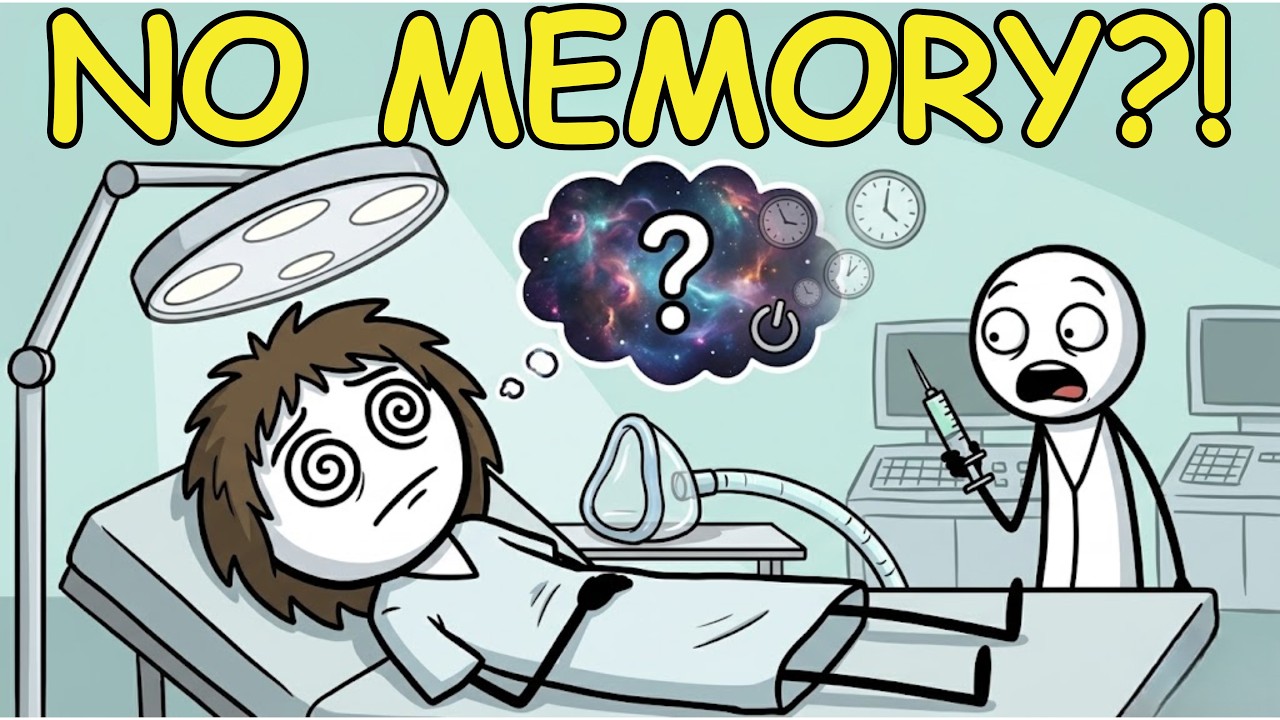
That moment of disbelief remains the defining feature of the anesthesia experience. But nearly two centuries later, the deeper question—what actually happens to the mind during that gap—still has no complete answer. Researchers continue to debate whether consciousness is truly switched off or merely fragmented into silent pieces. Modern surgery looks nothing like the early days.
Before the 1840s, surgeons were judged almost entirely on speed. Robert Liston, a famous London surgeon, could reportedly amputate a leg in under two minutes. In one tragic case, he worked so quickly that he accidentally cut off his assistant’s fingers and slashed the coat of a spectator. The patient and assistant died of infection, and the spectator died of a heart attack from fright.
It became known as the only surgery in history with a 300 percent mortality rate. When anesthesia arrived, it was meant to end that era of trauma. But early anesthetics like ether and chloroform were dangerous. Too little, and the patient woke up mid-incision.
Too much, and the heart stopped. For decades, anesthesiology was less a science than a desperate gamble, often handled by junior doctors holding chemical-soaked sponges over patients’ faces while watching for signs of impending death. Modern technology has not eliminated all risk. One of the most unsettling phenomena is anesthesia awareness, which affects an estimated one or two people out of every thousand.
Most cases are mild—a snippet of conversation, a vague sense of pressure. But for a small fraction, the experience is far worse. General anesthesia is actually a cocktail of three drugs: one to cause unconsciousness, one to block pain, and one to paralyze muscles. If the proportions are off, a patient can be awake and feeling everything while completely unable to scream, blink, or even raise their heart rate enough for monitors to notice.
The brain’s hippocampus, which records memories, is also shut down by anesthetics. This is why many patients with partial awareness have no memory of it afterward. The experience effectively becomes pharmaceutical amnesia. If an event leaves no trace on memory or psyche, the question becomes whether it happened at all—or whether it happened to a temporary version of a person that was deleted when the drugs wore off.
Genetic factors also play a role. In 2004, Dr. Edwin Liem conducted a study that confirmed long-standing folklore about redheads. People with natural red hair often carry a mutation in the MC1R gene, which affects pigment but also appears linked to pain receptors.
On average, redheads require about 20 percent more anesthesia than others. If a doctor doesn’t account for this, the patient may wake up mid-procedure. Individual variation extends to caffeine consumption and liver enzyme genetics, meaning there is no universal dose. Every patient requires a real-time chemical adjustment.
Anesthesiologists use monitors like the bispectral index, which processes brain waves into a number between 0 and 100. One hundred is wide awake; zero is a flatline. The goal is to stay between 40 and 60. Ketamine is a different kind of anesthetic.
While drugs like propofol suppress brain activity, ketamine blocks NMDA receptors, cutting off sensory input from the body while leaving emotional centers strangely active. Patients often report vivid experiences, such as floating above their bodies or traveling through tunnels of light. These experiences closely resemble descriptions of near-death experiences. Some scientists believe the brain, under extreme chemical blockade, produces internal chemicals that create these dissociative effects.
Waking up, called emergence, is also more complicated than simply opening one’s eyes. As drug levels drop, the brain reboots in stages. Basic functions like breathing return first, while the prefrontal cortex and memory centers come online last. This can cause emergence delirium, affecting about 20 percent of adults and even more children.
The amygdala, the brain’s fear center, may be active while rational thought is still offline. Patients may wake swinging, screaming, or weeping without knowing who or where they are. For many people, especially the elderly, the return is not complete. Post-operative cognitive dysfunction, or POCD, is a documented condition involving memory loss, reduced mental clarity, and personality changes lasting weeks or months after surgery.
A study of over 1,200 elderly patients in Denmark found that nearly 10 percent still showed signs of cognitive decline three months after general anesthesia. The experience of anesthesia itself is often described as “nothing. ” But nothing, researchers note, is not a dark room. In a dark room, a person is still waiting.
Under anesthesia, the person who would do the waiting is absent. There is no sense of time passing. Whether under for ten minutes or ten hours, the internal experience is the same. This suggests that the sense of time is not an external reality but something the brain constructs.
When the brain stops integrating information, time stops existing. Some anesthesiologists describe a moment of awe when a patient’s eyes roll back, watching a universe of experience collapse into a silent body, then expand again hours later with a cough, a groan, and the first flicker of returning awareness. The cycle happens in every hospital, every hour of every day. The reflection returns to that 1846 Boston patient.
He had not been asleep in any ordinary sense, and he had not traveled anywhere. The self that existed before the vapor was temporarily dismantled. When the drugs cleared, that self reassembled, and the patient resumed the feeling of being a continuous person. The transition was so seamless that he did not feel the gap at all.
For those facing surgery, the practical advice remains simple. By the time a patient counting backward from ten reaches seven, they will likely no longer remember what comes next. There will be no one left to worry about where they are going.
When they wake, they will be the only person in the room who missed no part of their own existence—because, from the inside, there was never any difference between being gone and being back.