Pretending to fall asleep is a familiar nightly ritual for millions of people, yet it is also a strange one. Lying perfectly still, breathing slowly, and keeping the eyes shut while the brain remains fully alert seems illogical, but this “fake it until you make it” approach to sleep frequently works. The reason goes far beyond habit—neuroscientists explain that the human brain is wired to require specific conditions before it will agree to lose consciousness. Sleep is not a single switch that flips from awake to asleep.
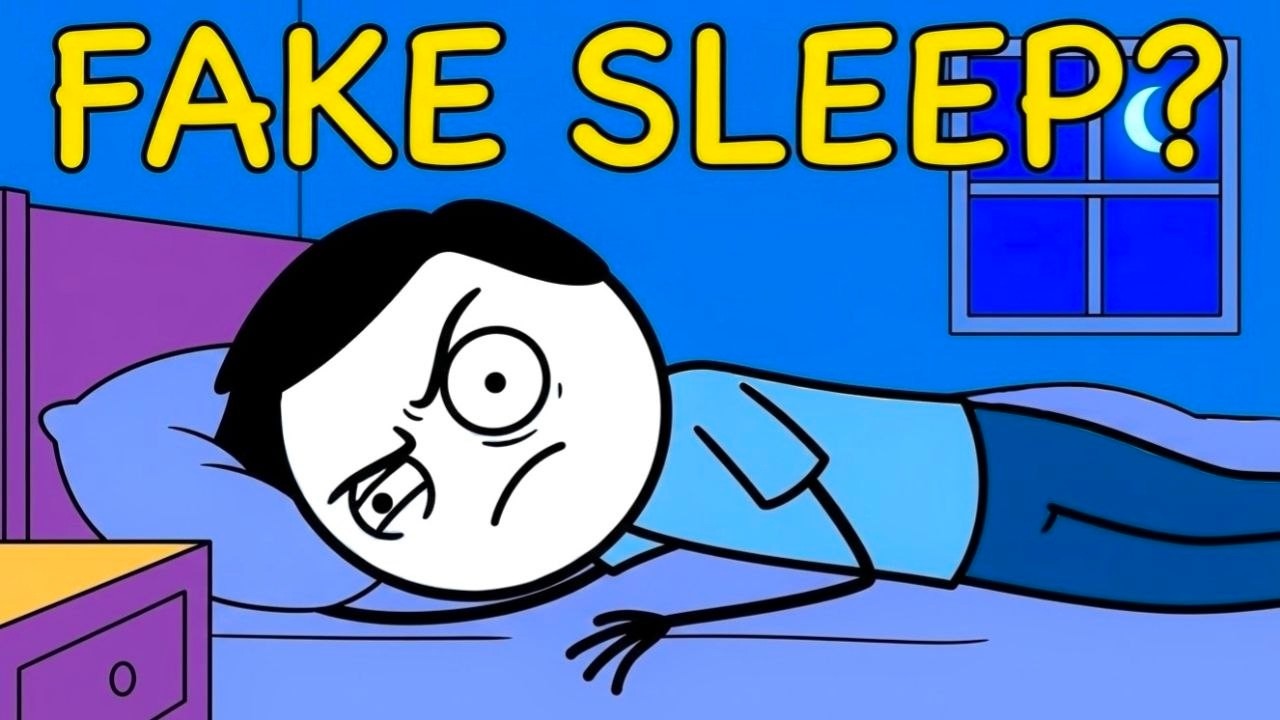
It is a gradual process controlled by competing brain circuits, with one group pushing for wakefulness and another pushing for sleep. During the transitional period between the two, neither system has fully won, creating a liminal zone where a person is physically settled but mentally restless. The brain needs more than biological pressure to make the leap; it relies on behavioral and environmental evidence that conditions are safe. This process connects to what researchers call sleep pressure, driven by a chemical called adenosine.
As adenosine builds up over the course of the day, it creates increasing pressure to sleep. However, that pressure alone is not enough. The brain also checks for darkness, quiet, stillness, a horizontal posture, and slowed breathing before shutting down. These environmental cues signal that the area is safe for the extended vulnerable state of deep sleep.
From an evolutionary perspective, this cautious system made sense for early humans. Falling unconscious carelessly could have meant falling from a tree or becoming vulnerable to predators. The brain evolved to combine internal pressure with external safety verification. Performing the motions of sleep—regardless of whether the mind is ready—manually satisfies those checks and eases the system toward genuine rest.
Another critical element is the reticular activating system, a network of neurons in the brainstem that manages alertness. This system relies on input from the senses to determine how awake a person needs to be. Lying in a dark, quiet room strips away the sensory stimulation that keeps this arousal network active. When this reduction is paired with slow, controlled breathing, the nervous system shifts toward the parasympathetic “rest and digest” state necessary for sleep.
Breathing itself plays a surprisingly active role in initiating relaxation. Slow, deep breaths stimulate the vagus nerve, which triggers the parasympathetic nervous system and lowers heart rate and blood pressure. Consciously mimicking the breathing patterns of sleep actually produces a real physiological relaxation response. This calms the body even when the mind is still racing.
The practice also sidesteps the counterproductive anxiety tied to trying to force sleep. When a person becomes frustrated by wakefulness, the stress activates the sympathetic nervous system, which blocks sleep. This creates a self-reinforcing cycle where worrying about insomnia makes it worse. Lying still and pretending to sleep removes that anxious effort, allowing the nervous system to naturally follow the cues provided.
Brain imaging research reveals another surprising layer. Many people experience sleep onset misperception, meaning they genuinely fall into very light stages of sleep while still believing they are fully awake. Invasive mental effort during this phase often masks the reality that the brain is already beginning to drift. The line between pretending to sleep and actually sleeping is far blurrier than it feels.
During this transition, many people also experience hypnagogia, a state marked by sudden images, odd thoughts, or a full-body muscle twitch known as a hypnic jerk. Some researchers believe this twitch is an ancient reflex linked to when early humans slept in trees and a sudden loss of muscle tone could have triggered a dangerous fall. These strange experiences are proof that the brain begins its descent well before conscious recognition of sleep occurs. The circadian rhythm adds another layer of dependency.
Specialized retinal cells detect light levels and relay that information to the suprachiasmatic nucleus, the body’s master clock. As darkness increases, the brain releases melatonin, which promotes sleepiness. Closing the eyes amplifies that darkness signal, reinforcing to the brain that nighttime has genuinely arrived. Conversely, bright light—especially the blue light from screens—suppresses melatonin and delays this cascade.
Modern humans are also unusual among primates in their sleep architecture. Most primates sleep in shorter, fragmented bursts while remaining semi-alert to danger, often still positioned in trees. Early humans, however, transitioned to sleeping on the ground, typically near fire, which provided enough protection to allow longer, deeper, more consolidated sleep. This shift came with a trade-off: deep sleep requires stronger safety verification because the brain is completely unaware for hours.
A more cautious pre-sleep ritual was the evolutionary payment for that vulnerability. This pattern appears across human history in the form of bedtime routines. Anthropologists have found that pre-industrial and ancient cultures developed remarkably consistent wind-down rituals—dimming light, quiet activity, and predictable sequencing—long before anyone understood circadian biology. What looks like cultural habit is actually early humans intuitively calibrating the nervous system for the transition into deep rest.
Historical records also suggest that segmented sleep was once common. Court documents, diaries, and medical texts from the pre-industrial era indicate that many people slept in two blocks, waking for an hour or two in the middle of the night for quiet reflection, prayer, or conversation before settling back down for a second sleep. In this context, deliberately relaxing the body to invite sleep was not a once-a-night ritual but a twice-a-night practice. This same principle has been validated by clinical research.
Studies on insomnia patients found that instructing participants to lie in bed and deliberately try to stay awake often resulted in faster sleep onset than instructing them to try hard to fall asleep. This “paradoxical intention” works because it eliminates the anxiety caused by effortful sleep-seeking. Removing the pressure allows the parasympathetic response to operate unimpeded. Another technique, called cognitive shuffling, relies on the same logic.
Because structured, goal-directed thinking keeps executive brain regions active, switching to random, unrelated imagery helps disengage those alert systems. The technique does not force sleep directly but removes the mental obstacles that prevent it. Sleep also fits into a broader pattern found across the human body. Several vital processes resist conscious control.
People cannot digest food faster through willpower, speed wound healing by decision, or lower heart rate with pure thought. These systems are deliberately insulated from conscious override and respond instead to indirect physical signals. Sleep operates the same way. It is not something a person performs but something that occurs once the proper conditions are established.
Finally, stress plays a significant role in why the same routine works some nights and fails on others. Cortisol naturally peaks in the morning and declines through the day to support nighttime sleep, but acute stress triggers a spike at the wrong moment. This hormone directly counteracts the calming parasympathetic shift the pretend-to-sleep routine is trying to facilitate. On nights when stress is high, the identical behavior may prove useless, not because of a failure of technique but because of a chemical tug-of-war happening internally.
The answer to why humans must pretend to sleep is rooted in evolution. Sleep was never designed to be triggered on command. It was built as a cautious, multi-layered process requiring stillness, reduced input, darkness, slow breathing, and a calm nervous system before the brain would allow the deeply vulnerable state of unconsciousness. Pretending to sleep is not a malfunction of the system—it is the most direct way to supply the brain with the physical evidence it evolved to require.
The nightly performance is an ancient safety protocol, patiently reassuring a cautious nervous system that the time has finally come to let go.