Nobody could ever completely explain Amanda Lear.
Model.
Muse.
Disco star.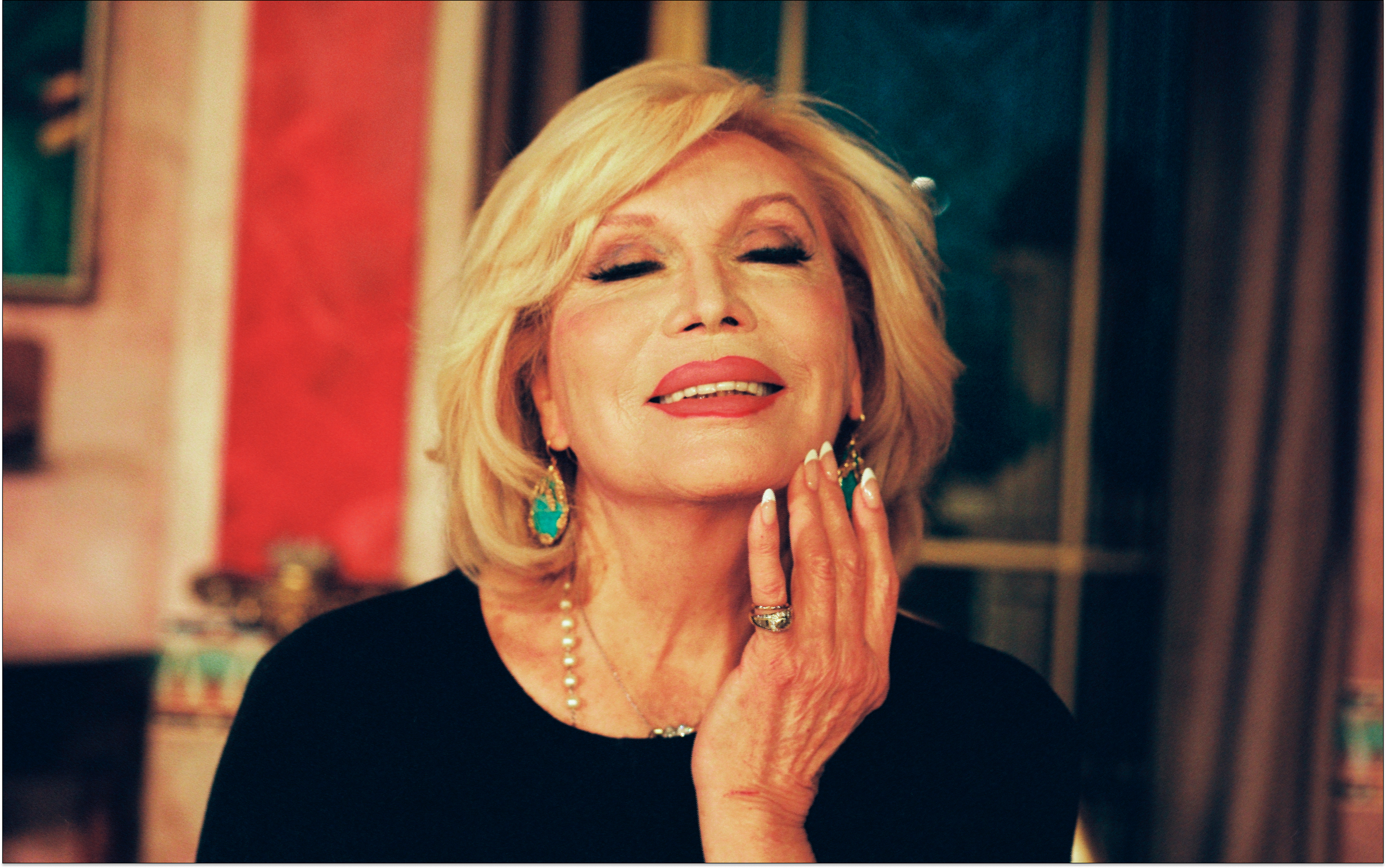
Television personality.
And one of the most deliberately mysterious women to move through European celebrity culture.
She stood beside Salvador Dalí.
Moved through the world of David Bowie and Brian Jones.
Became the unforgettable face on a Roxy Music album cover.
Then transformed herself into a disco star with a voice nobody could mistake.
But behind the glamour was something even more powerful.
Mystery.
Amanda Lear understood early that Hollywood and the music industry sold images.
She decided to sell uncertainty itself.
Even the basic facts of her early life have been debated for decades.
Different birthplaces and biographical details have circulated, while some accounts have attempted to connect Lear with a Paris cabaret performer known as Pekky Doss.
Lear has rejected such claims.
Rather than resolving the mystery, those contradictions became part of her legend.
The less certain people were, the more they talked.
And then Salvador Dalí entered her life.
During the 1960s, Lear developed a long association with the surrealist artist.
Dalí was not merely another famous man in her social circle.
She described him as a mentor.
And perhaps the most important lesson he taught her had little to do with painting.
Attention had value.
Mystery had value.
Provocation had value.
Dalí had spent decades turning himself into something larger than an artist.
He was a spectacle.
Lear learned from him.
Instead of correcting every rumor, she discovered that ambiguity could be useful.
At the same time, her modeling career placed her inside the increasingly glamorous and decadent world of 1960s London.
Fashion collided with rock music.
Models became celebrities.
Musicians became cultural symbols.
And Lear moved easily between those worlds.
Her romantic history was linked to major rock figures, including Brian Jones of the Rolling Stones and later David Bowie.
Bowie became particularly important to the next stage of her career.
But before music transformed her again, one image helped make Amanda Lear unforgettable.
For Your Pleasure.
In 1973, she appeared on the cover of Roxy Music’s second album.
Dressed in black.
Posing dramatically with a black panther.
The image captured exactly what made Lear fascinating.
Elegant.
Dangerous.
Artificial and real at the same time.
Bryan Ferry and Roxy Music were constructing a sophisticated world of glamour, sexuality, fashion and artifice.
Amanda Lear looked as though she had been created specifically for it.
But she was not satisfied with remaining somebody else’s model.
Music offered another reinvention.
With encouragement from figures including Bowie, Lear began developing herself as a recording artist.
There was one feature nobody could ignore.
Her voice.
Deep.
Unusual.
Immediately recognizable.
In an industry filled with polished female pop vocals, Lear sounded completely different.
Instead of hiding that difference, she made it part of the product.
By the late 1970s, she had become a major disco personality in Europe.
Songs such as Follow Me transformed her from fashion-world curiosity into a recording star.
And once again, the rumors surrounding her identity followed.
Lear did something clever with them.
She did not allow other people to control the mystery.
She incorporated it into Amanda Lear.
The public persona became almost impossible to separate from the private person.
Was she serious?
Was she joking?
Was the story true?
Was she inventing another version?
The uncertainty kept audiences interested.
But disco eventually faded.
Lear simply reinvented herself again.
During the 1980s and 1990s, television became another major chapter.
Her multilingual ability, sharp humor and commanding screen presence made her particularly successful in Italy and elsewhere in Europe.
The former model had become a presenter.
The muse had become the person holding the microphone.
The disco singer had become a television personality.
Every time one version of Amanda Lear appeared to reach its expiration date, another one emerged.
But no amount of reinvention could protect her from what happened in December 2000.
A devastating fire swept through her home in France.
Her husband, Alan-Philippe Malagnac, died.
The fire also destroyed possessions and artworks associated with Salvador Dalí.
In a single night, Lear lost both a person central to her private life and irreplaceable pieces connecting her to one of the defining relationships of her youth.
It was a brutal dividing line.
Behind decades of carefully cultivated glamour and mystery was suddenly something painfully real.
Loss.
There was no clever publicity strategy capable of changing it.
Yet Lear continued.
That ability to survive may explain her career better than any rumor ever could.
She survived changing fashions.
Disco’s collapse.
A transition from modeling to music.
Another transition from music to television.
Personal tragedy.
And decades of public fascination with questions about her past that she repeatedly refused to let define her.
Even recent attempts to examine the Amanda Lear mystery—including the 2025 documentary Enigma—have demonstrated how persistent that fascination remains.
But Lear has resisted being reduced to a convenient label.
Her preferred description is far simpler.
A survivor.
And perhaps that is the most revealing answer she has ever given.
Because Amanda Lear’s greatest creation may never have been a song, photograph, television program or performance.
It may have been Amanda Lear herself.
Salvador Dalí taught her the power of attention.
Rock culture gave her an audience.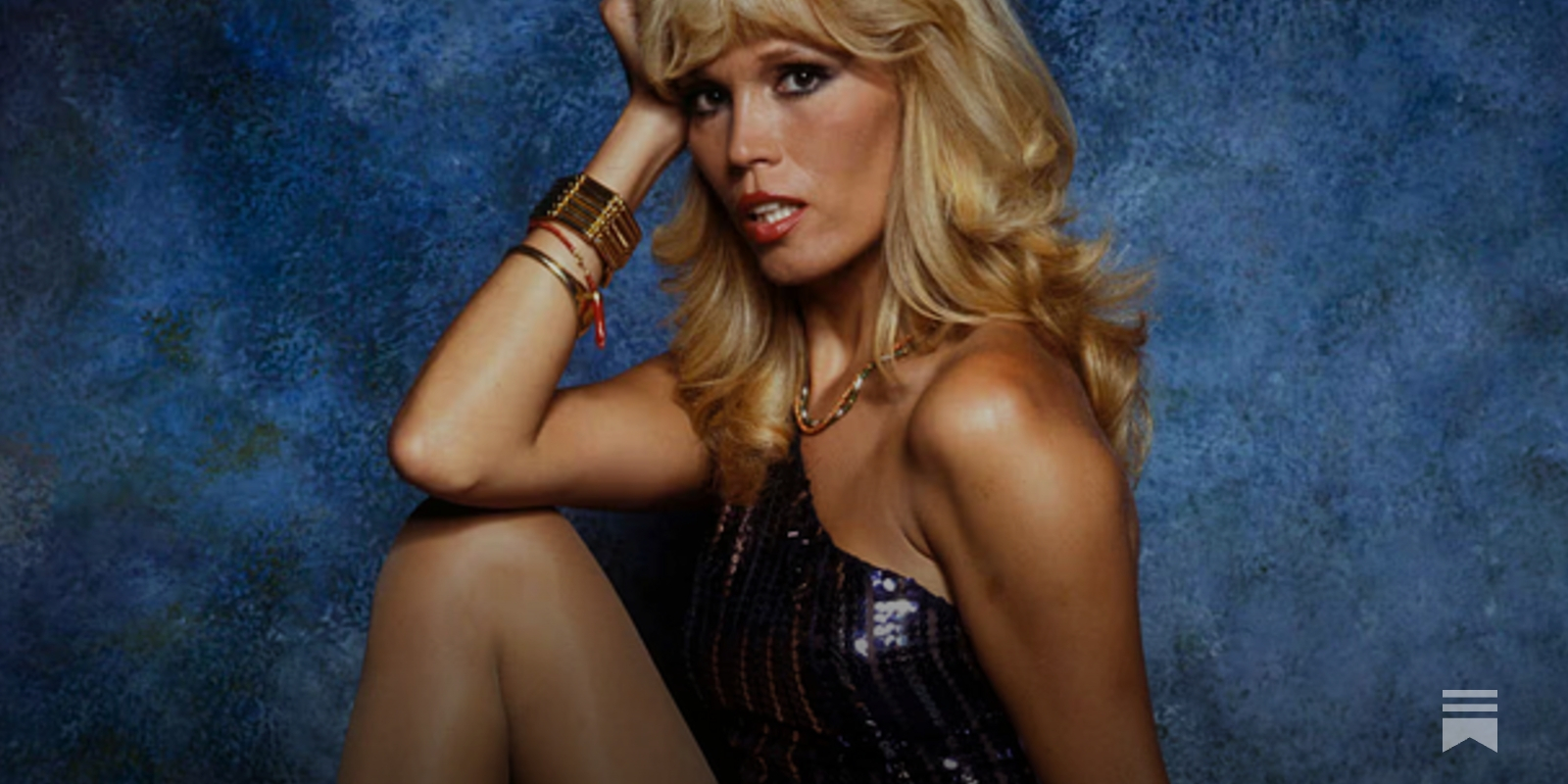
Roxy Music gave her one of the defining images of 1970s glamour.
Disco gave her a voice.
Television gave her another life.
And tragedy forced her to discover how much of that carefully constructed identity could survive when the performance stopped.
For decades, people have tried to uncover the “real” Amanda Lear.
She understood something they often missed.
Mystery was never necessarily something she needed to escape.
It was part of the architecture of her fame.
Model.
Muse.
Singer.
Presenter.
Artist.
Provocateur.
Survivor.
The world kept asking Amanda Lear to explain exactly who she was.
And one of the secrets of her extraordinary longevity was that she never gave them an answer simple enough to end the conversation.