The gray man in the plain suit is gone, but the letter remains, a weight in the hand of a 19-year-old Dresden technician standing in the rain. The address on the paper promises an opportunity, a service to the republic, a path that begins tomorrow morning with a single step into the unknown. It is a scene that has played out across Germany for decades, a quiet recruitment that turns ordinary citizens into the most feared and ubiquitous secret police apparatus in modern history.
This is the story of one man who took that step, a narrative that charts the full arc of a career in the Stasi, from the green recruit to the pinnacle of power, and finally to the hollow dissolution of everything he helped build. It is a descent into the methodology of control, the subtle corrosion of conscience, and the sprawling, paranoid machinery that defined a nation. The journey begins in 1965 in Halle, with a 20-year-old apprentice whose supervisor is visited by a man who asks a question that will alter the course of a life.
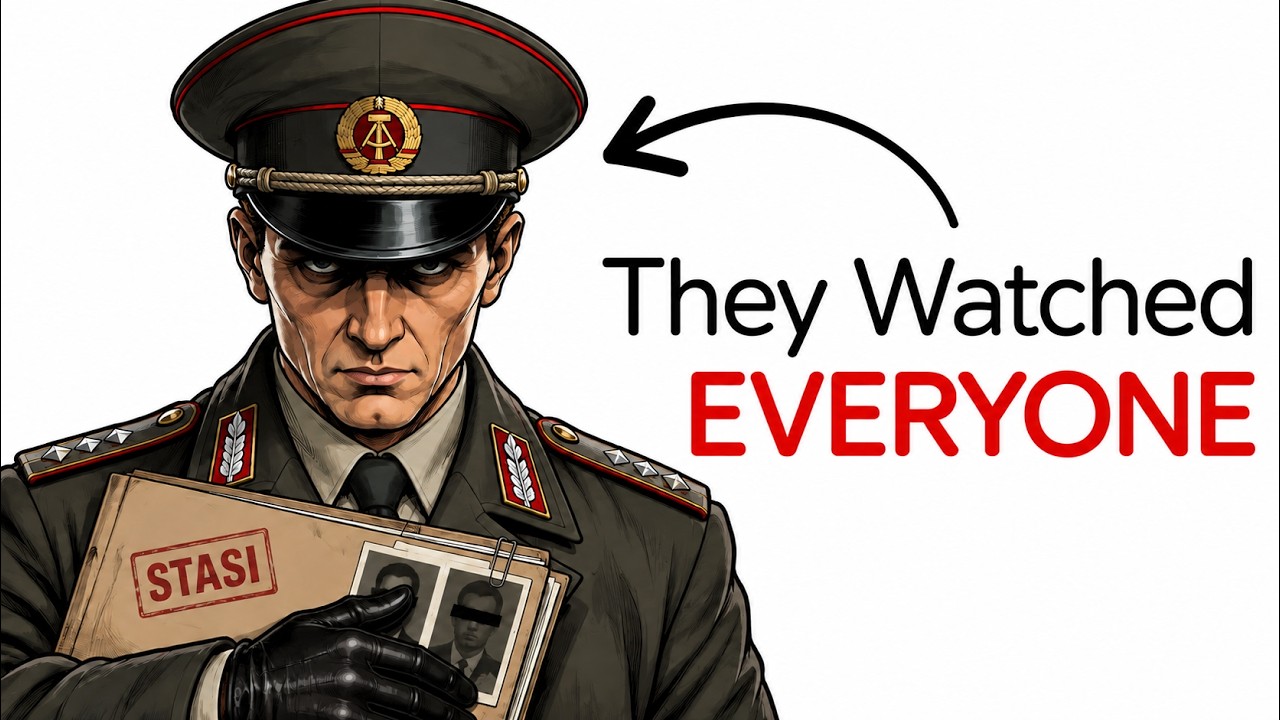 Three weeks later, an invitation arrives, and the young man finds himself at the Stasi’s elite academy in Potsdam, a campus disguised as a teachers college. The curriculum is a chilling blend of state theory and psychological warfare, teaching recruits to observe without being observed, to wait with “operative patience” for a single useful sentence. The training is immersive, honing skills in surveillance detection through the streets of Potsdam and physical tactics from instructors who never explain why a case officer would need to break a man’s grip.
On commissioning day, the young man is given the rank of Interloitant, the lowest commissioned officer, and is told his purpose is to serve as the “shield and sword of the party.” His first posting is in his home district of Halle, where he inherits a network of four unofficial informants. He meets one, a nervous switchboard operator named Uta, in a parked car, listening with an intensity that unnerves her into confession.
His first report is filed, and his superior’s only comment is a single word: “Continue.”
At 23, promoted to Leutnant, he learns the art of Zersetzung, the psychological decomposition of a target without arrest or violence. He manipulates a deacon’s life with anonymous letters and rumors, turning his congregation against him without a single formal accusation. The methods are effective, and he receives praise for his methodology.
He is learning that what is methodologically sound and what is morally settled are becoming dangerously synonymous. He stops asking if something is right and only asks if it is correct.
By 26, as Oberleutnant, he is transferred to Erfurt, where he manages a larger network and hones his recruitment skills, offering favors to gain informants. He targets a young stage designer, who reports on a theater collective’s discussions about censorship and travel restrictions. When a name surfaces from these reports, the file is opened without deliberation, a muscle-memory of control.
The personal cost becomes apparent as his wife, Christine, a nurse, learns not to ask about his work, their marriage settling into a pattern of unspoken truths.
 At 30, promoted to Hauptmann, he commands 14 officers and has the authority to authorize phone taps and mail interceptions. The sheer scale of the operation is staggering, with entire divisions of the Stasi dedicated to steaming open postal letters. A new recruit asks about the fate of a target’s family, a question he once asked himself.
Now, he meets the young man’s genuine curiosity with a stare, a chilling reflection of how the institution has reshaped him from the inside out.
The system rewards loyalty. In 1975, Major’s rank brings a transfer to the massive Stasi headquarters on Normannenstrasse in Berlin, a building citizens avoided looking at. The context is the Helsinki Accords, which embolden GDR citizens to seek exit visas, creating a new workload for the counter-intelligence department.
He runs methodologies across personnel files, identifying potential BND or CIA recruits. He sees a colleague destroyed, transferred to a dead-end archive, and the lesson is not lost on him: trust no one.
At 41, as Oberstleutnant, he commands 94 officers. The Stasi is at its peak, with enough informants to create a society of pervasive suspicion. His section is tasked with identifying GDR citizens with contact to Polish Solidarity movement figures.
He accumulates 360 pages on a university professor who has done nothing wrong but think independently. His recommendation is for observation, not action, a life defined by being watched. His own children are now teenagers, dealing with the pressure of being from a senior officer’s family.
 At 47, Oberst’s rank comes with a driver and a special apartment with access to Western goods. He is part of the elite, attending briefings with generals and observing the fixed gravitational center of the Stasi, Minister Erich Mielke. The year is 1987, and Gorbachev’s reforms are met with a determined silence, as the GDR insists it needs no change.
At a party in the leadership’s sealed compound, he sees the chasm between the system’s rulers and the country, understanding his place in the hierarchy with new clarity.
The lever of full control is pulled in 1989. As Generalmajor at 52, he has moved from implementing policy to creating it. The Monday demonstrations in Leipzig grow, and he is present during the tense deliberations.
The order to fire is considered and never given. The faces of the leadership are blank, watching the instrument panel of a machine they built fail. When Honecker is removed, he receives the order to begin destroying files, and the shredders overheat as men burn notebooks in courtyards.
He watches the Berlin Wall open on television, surrounded by generals who built careers on the assumption it never would. The institution dissolves with breathtaking speed. Citizen committees occupy the Normannenstrasse compound, forcing an end to the destruction.
He attends what may be the final senior command meeting, feeling the warmth leave the room. The MFS is renamed, but it is merely a dying gasp. He returns his badge and coat and walks out, 29 years of service ending in a single, unremarkable exit.
 In a final administrative act, the rank of Generaloberst is granted, a hollow title for a dying structure. The Stasi is formally dissolved on March 31, 1990, not through a great conflagration, but through the quiet bureaucracy of forms and signatures. The archives survive, 111 kilometers of files, now overseen by the Federal Commissioner for the Stasi Records.
He is not prosecuted, as the legal system was designed for a clean dismantling, and he retreats to a smaller flat in a changed Berlin.
He was a Generaloberst, a man who had climbed to the absolute apex of a system that had once seemed as permanent as the granite of his office building. But the permanence was a lie. He and millions of others built a structure that seemed to weigh on the entire country, and in the end, it weighed nothing at all.
All that remains from his life’s work is an archive now open to the world, a reading room in Berlin where strangers sit across tables and read the pages bearing his initials, witnessing the author of their own surveillance.
He lives in a Berlin that no longer maps onto the city he knew. The reunion with his wife Christine is a quiet one, a marriage of people who spent decades speaking carefully around a locked door, and now that the door is gone, they find they have forgotten how to speak any other way. He wakes every morning at 5 AM, the habit of forty years, and makes coffee before standing at the window to watch the city come to life.
He sees a tram, a dog, a baker, and it takes him years to feel the difference between surveillance and simply seeing. He gave the state everything, and now it has given him nothing back but early morning light and a question.
The question that arrives with the sun through the window each morning is not whether the machine was wrong, but whether the man who ran it flawlessly can be said to have ever truly lived his own life. Somewhere else in 1998 Dresden, a 19-year-old technician works in a factory, ignorant of the historical echo he is about to experience. A well-dressed man steps out of the rain and asks a question about public service.
A letter is pressed into his hands, and the cycle, it seems, is set to begin again.