The mothers of the men who saved the world were not passive ornaments of a gilded age; they were the architects of their sons’ steel. Sarah Delano Roosevelt and Jennie Jerome Churchill, born oceans apart, forged the two leaders who would stand against the abyss of tyranny. Their stories, told in new biographical detail, reveal that the defiance of Winston Churchill and the resilience of Franklin Roosevelt were not spontaneous acts of nature, but the carefully cultivated harvest of two extraordinary women who understood power in its most intimate form.
Sarah Delano was the product of American aristocracy, a world of porcelain rituals and brutal expectations. Born in 1854, she learned early that silence was survival and composure was a weapon. Her father, a merchant who made his fortune in the opium trade, ruled with absolute command, stitching her scalp without flinching when she was a child.
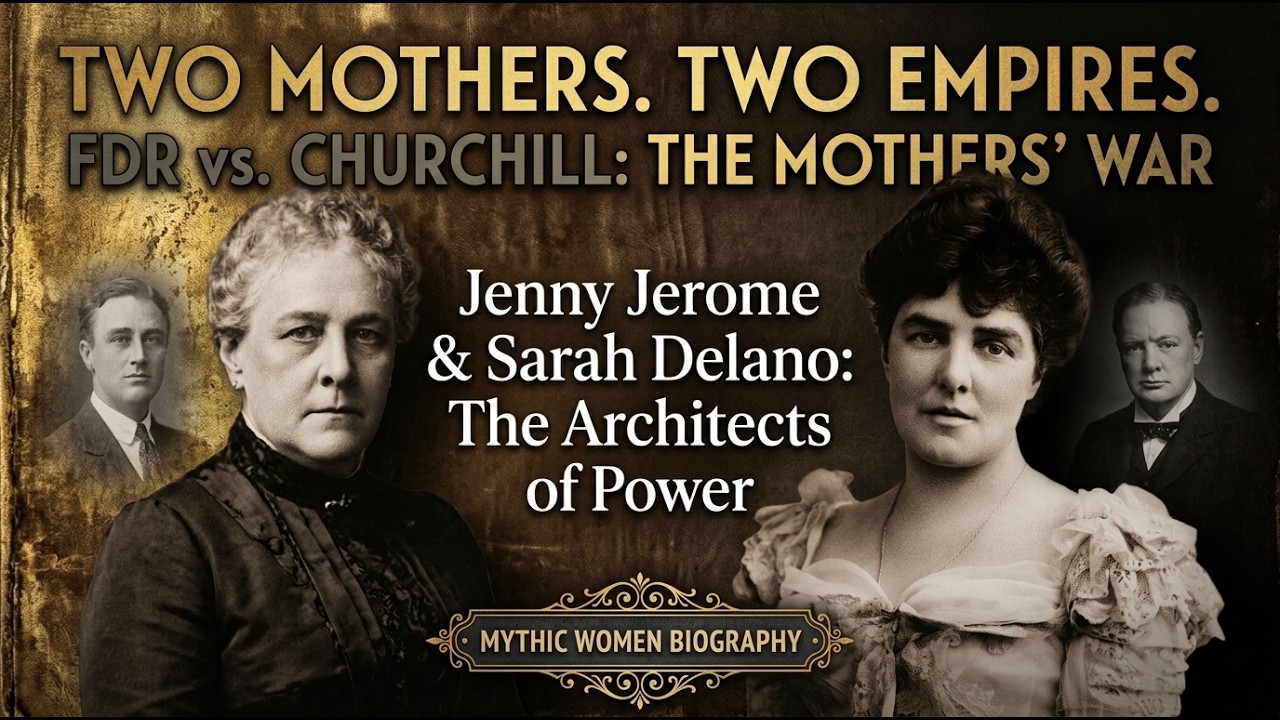 This lesson in enduring pain without a cry became her myth and her method. She did not merely raise Franklin; she sculpted him, feeding him, schooling him, and bankrolling his every ambition. When he was struck by polio, it was Sarah who paid for his return, stood at his bedside, and commanded, “You will walk again.”
Across the Atlantic, Jennie Jerome was fire and nerve. Born in Brooklyn in 1854, she was the daughter of a speculator and part-owner of the New York Times, a man whose lavish balls and scandalous affairs defined her childhood. When her family relocated to Paris, Jennie absorbed the elegance of the Second Empire, but it was in London that she truly ignited.
Her marriage to Lord Randolph Churchill was a 𝒔𝒄𝒂𝓃𝒹𝒶𝓁 of the highest order, a union of American audacity and British aristocracy that was met with disdain by the Marlborough family. Yet Jennie’s beauty, wit, and relentless charm made her a force that London society could not ignore.
Sarah’s control was exercised through restraint and discipline. She kept Franklin’s baby shoes and letters, and when he strayed from Eleanor, she cut him off financially, demanding he stay and rise. She clashed with her daughter-in-law, ruled Springwood like a kingdom, and hosted the King and Queen of England.
Her power was the quiet storm behind an American dynasty. She funded his campaigns, paid for his houses, and even subsidized his presidency with $100,000 a year. She was the matriarch who believed her son was destined for greatness, and she ensured the world saw that halo she perceived at Madison Square Garden.
Jennie’s influence was one of audacity and belief. She was the political hostess who turned her home into a hub of power, charming the Prince of Wales and using her connections to advance her husband’s career. When Randolph’s health collapsed and his political career imploded, Jennie stood by him, but her true legacy was her son, Winston.
She was his tireless champion, lobbying for his military transfers, securing his lectures, and instilling in him a hunger for greatness. When Winston was captured by the Boers, she agonized, but when he escaped, she celebrated. Her unshakable faith lifted him through the shadows of failure into the light of command.
The two women embodied different philosophies of power. Sarah ruled through the purse strings and the nursery, ensuring her son’s path was clear and his burdens light. Jennie ruled through charm and defiance, teaching her son that audacity was a virtue and that failure was merely a prelude to triumph.
Sarah was silence, silver, and discipline; Jennie was fire, beauty, and nerve. Yet both shared an unyielding conviction that their sons were destined for more than ordinary lives. They did not just love their sons; they invested in them, shaping their psyches with the precision of a master sculptor.
When the world faced Hitler and the threat of collapse, it was these two men who stood firm. Franklin’s steadiness in the face of polio and political opposition was a direct inheritance from Sarah’s stoicism. Winston’s defiance in the face of ruin was a direct inheritance from Jennie’s refusal to be cowed by 𝒔𝒄𝒂𝓃𝒹𝒶𝓁 or convention.
The bond between the two leaders, forged in the fires of World War II, was not just a political alliance but a meeting of two worlds that had been carefully constructed by their mothers.
Sarah’s final years were spent watching her son become the most powerful man on earth. She stood by him at inaugurations, greeted monarchs at Hyde Park, and remained the fixed star of his life until her death in 1941. Jennie, who died in 1921, did not live to see Winston become Prime Minister, but she had laid the foundation.
She had taught him to be resilient, to be charming, and to never, ever give in. As Winston later wrote, his mother was the one who gave him the light, and he carried that light through the darkest hours of the twentieth century.
History remembers the cigars, the fireside chats, and the defiant speeches. But the truth is that Winston Churchill and Franklin Roosevelt were made in nurseries and drawing rooms, beneath chandeliers and family portraits, by women who understood power long before the world allowed them to hold it openly. Sarah Delano Roosevelt and Jennie Jerome Churchill were not just mothers; they were the quiet forces who built the leaders who saved the world.
Their stories are a testament to the profound impact of maternal strength, a reminder that the greatest battles are often won in the silences, in the lessons taught, and in the unshakable belief that a child can change the course of history.