Daniel J. Travante was the first actor to audition for the role of Captain Frank Furillo on Hill Street Blues, but the script almost never reached his desk. His agent at the time was struggling to break into Hollywood, and the project was passed over until a merger reunited the actor with his former representation. That twist of fate reshaped his life and television history.
When Hill Street Blues premiered in 1981, it did not arrive with expected fanfare. NBC executives were confused by what they saw. The gritty realism, overlapping dialogue, handheld camera work, and a large ensemble cast felt closer to a documentary than a network police drama. Early test audiences did not know what to make of it.
In a television landscape filled with predictable crime shows and clean resolutions, the series was deliberate chaos. The show was created by Steven Bochco, a writer with no interest in following established formulas. Instead of tidy episodic stories, he envisioned a series that mirrored the messiness of real life. The show was morally complex, emotionally layered, and never neatly resolved.
Set in a crumbling, unnamed city struggling with corruption, poverty, and violence, the series followed an entire precinct instead of focusing on a single lead detective. The cops were not saints or villains. They were human beings trying to survive their jobs. From the melancholic theme music to the tense morning roll calls, the tone was immediately clear.
The show was not simply about chasing criminals. It explored burnout, bureaucracy, and the quiet heroism of people doing a thankless job. The pilot came close to failing, but critics recognized its significance. The first season earned eight Emmy Awards, including Outstanding Drama Series.
Travante won for Best Actor. The gamble had paid off, and Hollywood took notice. Despite the acclaim, life behind the scenes was far from smooth. The chaos viewers saw on screen was not far from what was happening during production.
Scenes were often rewritten hours before filming. Entire plotlines shifted overnight. Cast and crew worked under intense pressure to deliver something television had never seen before. Bochco was a visionary, but he was known for being demanding.
He expected excellence, and those who could not match his pace were replaced. Writers burned out. Directors braced for last-minute changes. Nobody’s job was ever secure.
Travante brought a seriousness to his work that bordered on obsession. He rarely broke character between scenes, choosing to remain as Captain Furillo even when the cameras stopped rolling. This method-level intensity earned him respect but also created distance. Some co-stars admired his focus.
Others quietly struggled with his aloofness. He later admitted, “We didn’t just act tired, we were tired,” referring to the emotional weight the cast carried throughout the show’s run. One of the most painful moments in the series came with the death of Michael Conrad, who played Sergeant Phil Esterhaus. Conrad was a pillar of the cast, known for his iconic line, “Let’s be careful out there.
” During the fourth season, he was battling cancer. He kept denying it, and his health declined as he continued working. Travante recalled how production kept Conrad on the payroll even as his condition worsened. While grief hung over the set, Travante was carrying something even heavier.
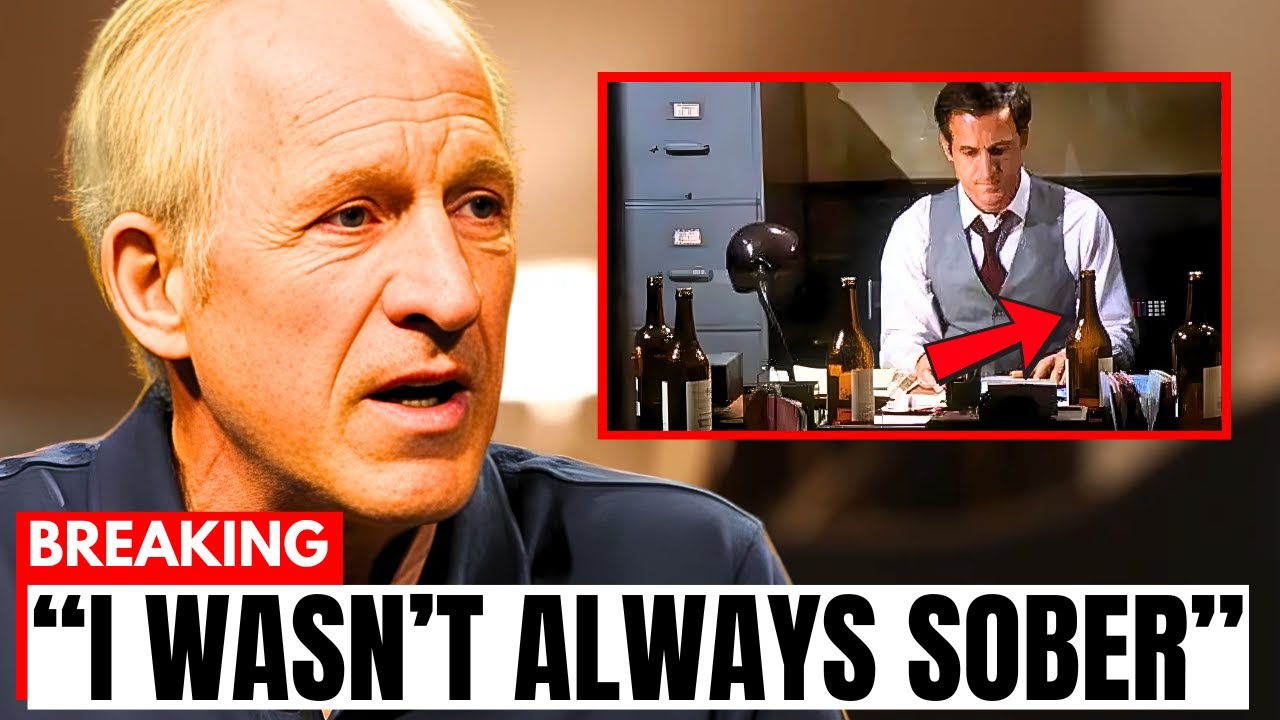
His role as a recovering alcoholic was not purely an acting exercise. Travante was a recovering alcoholic himself. Years before being cast, he had quietly fought alcoholism and nearly lost his career. When the part of Furillo came along, it was more than work.
It became a lifeline. The producers used his history to shape the character’s arc with painful authenticity. Travante later confessed that for many years he did not know how to be a person. Becoming Furillo gave him structure, purpose, and emotional clarity.
The character’s integrity, restraint, and quiet vulnerability reflected Travante’s own struggle to stay sober and grounded under the pressure of fame. He never married and rarely gave interviews. Colleagues described him as kind but distant, someone who poured everything into his work. He said acting was the only place he ever felt safe.
Furillo’s dignity and calm under fire were not simply performed. They were the product of Travante’s lived experience transformed into something viewers could relate to. But carrying that emotional weight while leading one of television’s most intense productions came at a cost. It affected how the cast connected with him and with each other.
On screen, the show thrived on the chemistry of its ensemble. The characters felt authentic and deeply human. Behind the scenes, that magic did not always create harmony. With so many rising stars and veteran actors, ego and envy were inevitable.
Travante maintained a serious and distant demeanor. He stayed in character between takes and spoke little. Some respected his professionalism. Others quietly found him cold.
Betty Thomas, who played Officer Lucy Bates, saw her relatively minor role evolve into a breakout character. Her assertive delivery made her a fan favorite, but her growing prominence sparked whispers of favoritism on set. Bruce Weitz, known for playing the unpredictable detective Belker, often brought levity. Joe Spano, as Henry Goldblum, provided steadiness.
Both were respected, but even they could not fully buffer the jealousy that flared during awards season. A louder fight was happening between the creators and the network. The show pushed boundaries with its unflinching look at systemic corruption, racism, sexism, addiction, and mental health. It portrayed law enforcement not as infallible heroes, but as flawed people struggling within a broken system.
Censors disliked it, and NBC executives pushed back constantly. Episodes were delayed or edited. The raw dialogue and grim setting made the show difficult to package for prime time. Despite winning Emmys, it remained a source of anxiety for the network.
Executives demanded changes, slashed budgets, and clashed repeatedly with Bochco. The writers held the line. The overlapping dialogue, long-running story arcs, and documentary-style camera work were not gimmicks. They were reflections of real life, and the writers refused to dilute them.
Over time, the pressure became exhausting. Deadlines were brutal, expectations grew impossible, and staff turnover soared. Bochco, after laying the foundation for modern prestige television, eventually burned out and moved on. Now at 85, Travante looks back with clarity and quiet pride.
He does not mourn the awards or the fame. He values the work itself. He admitted, “I wish I’d enjoyed it more. ” For years, he was too focused on survival to savor the moment.
But he knows Hill Street Blues changed television forever, not by accident, but through sheer determination. Daniel J. Travante did not chase fame.
He chased truth, and through the show he helped redefine what television could be.