Sofia Coppola, now 55, has finally addressed the decision that defined the first chapter of her public life: why she stopped acting. For 35 years, she let her work as a director speak for itself. Now, for the first time, she has connected the dots between the humiliating reception of her sole major acting role and the career she built in its aftermath. Coppola was 18 years old when she was cast as Mary Corleone in The Godfather Part III.
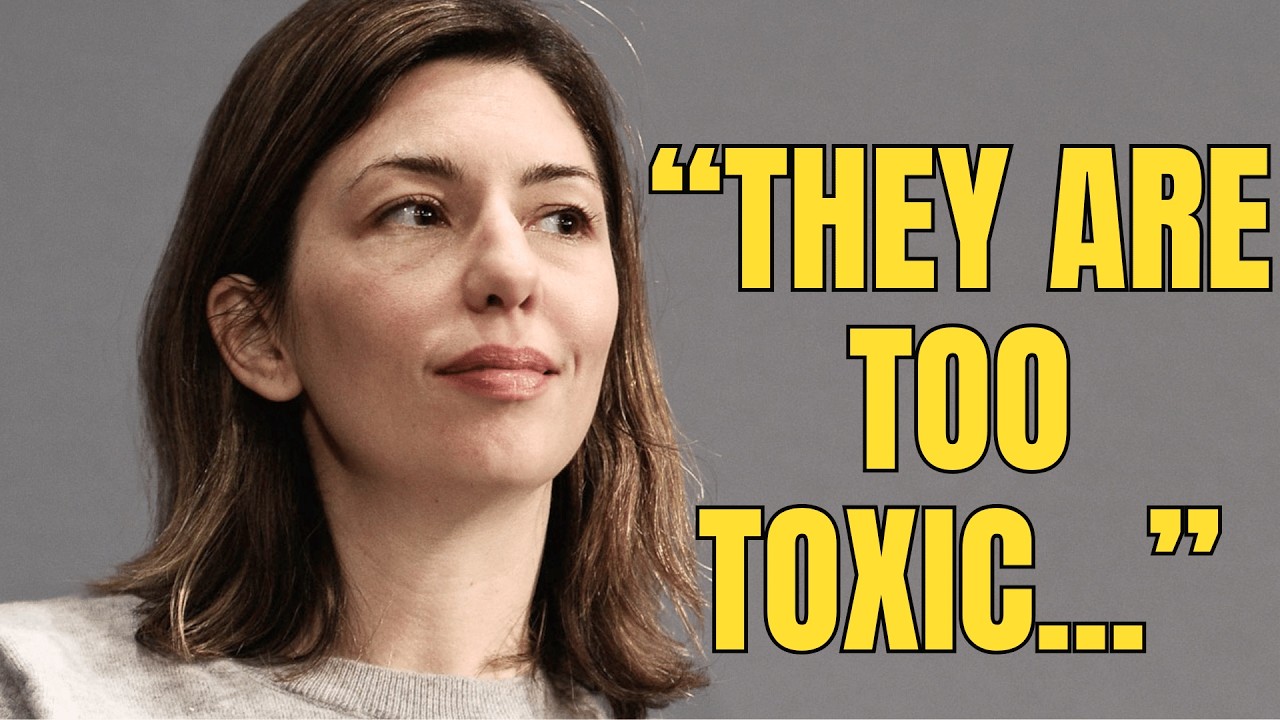
Her father, director Francis Ford Coppola, chose her under extraordinary duress. The original actress, Winona Ryder, had collapsed from exhaustion and was sent home by a doctor just one day before she was due to begin shooting. The production was seven weeks in and locked to a December 1990 release date. Sofia Coppola was in Rome for winter break from art school.
She was in the shower when the phone rang. Her mother, Eleanor, answered and learned that Francis had decided to give the role to his youngest daughter. The studio tried to intervene, fearing an untrained teenager would be a liability. Some family members, including Francis’s sister Talia Shire, warned him directly that Sofia was not ready.
Francis barred executives from the set and refused to budge. He later explained that he had always modeled Mary on Sofia, imagining her face as the perfect image of Michael Corleone’s daughter. Coppola’s initial reaction was excitement, followed quickly by anxiety. She later recalled telling her mother she just wanted to take a shower, a moment of ordinary disbelief before being rushed to Cinecittà for a costume fitting.
One crew member begged Francis to let her go. When Francis found Sofia crying, he told her to take ten minutes and give it her best shot. She did. That night, she told her father, “Them.
I’ll show them. ”
The critics were merciless. Reviews accused her of being amateurish and awkward, and she won two Razzie Awards, including Worst Supporting Actress and Worst New Star. Some commentary crossed into personal attacks on her appearance and demeanor.
She was 18 years old and treated as if the film’s faults were her responsibility alone. Roger Ebert was a notable defender, arguing that she brought an appropriate vulnerability to the role and that the character itself was written with contradictions that would have challenged any actress. Rumors circulated that she had to redub her dialogue or that the film had been re-edited to minimize her screen time. Her father’s team denied these reports, but the denials never matched the prominence of the original stories.
Coppola had become the story, and the story had momentum accuracy could not stop. The aftermath pushed her away from performing. She has described the period that followed as her dilettante era. She studied at the California Institute of the Arts, designed a clothing line that found success in Japan, appeared in music videos, and hosted a short-lived television show.
She eventually began directing and described the moment she made something of her own as the point she understood what she actually wanted: to be on the other side of the camera. Her debut feature, The Virgin Suicides, premiered at Sundance in 1999. Lost in Translation won her the Academy Award for Best Original Screenplay in 2003, making her the third woman ever nominated for Best Director. Marie Antoinette won an Oscar for costume design.
The Beguiled made her only the second woman in Cannes history to win Best Director. Priscilla, released in 2023, was widely received as one of her most precise works, and its star won Best Actress at Venice. At Cannes in 2017, when asked about the Godfather experience, Coppola said she was less afraid of the critics than might be expected. She added that the experience taught her what it feels like to be in a situation you did not choose and to be blamed for it.
She said that understanding makes her careful as a director about the positions she puts the people she works with into. She has said she did not quit acting because she wanted to. The experience showed her, in the most public way possible, that the camera was not where she was supposed to be. She is married to Thomas Mars of the band Phoenix and has two daughters.
In 2025, she premiered her first documentary and, for the first time in years, said she did not have a next project in mind.