The piercing scream that cut through the quiet West Hollywood night on February 12, 1976, was not a cry for help that could be answered. It was the sound of a life ending violently in a carport, a sound that would echo for decades as the final act of a Hollywood tragedy that began with promise and ended with a stranger’s blade. Sal Mineo, the two-time Oscar-nominated actor whose face defined a generation of restless youth, was dead at 37, stabbed once through the heart while returning home from rehearsal.
The attack occurred just after 9:00 PM in the alley behind his apartment at 8563 Holloway Drive. Witnesses heard the actor’s desperate shouts and found him collapsed beside his car, a single wound to his chest proving fatal within minutes. A neighbor, Ray Evans, rushed to the scene and attempted mouth-to-mouth resuscitation, but Mineo was already gone, his final breath taken in the arms of a stranger who had no idea who he was.
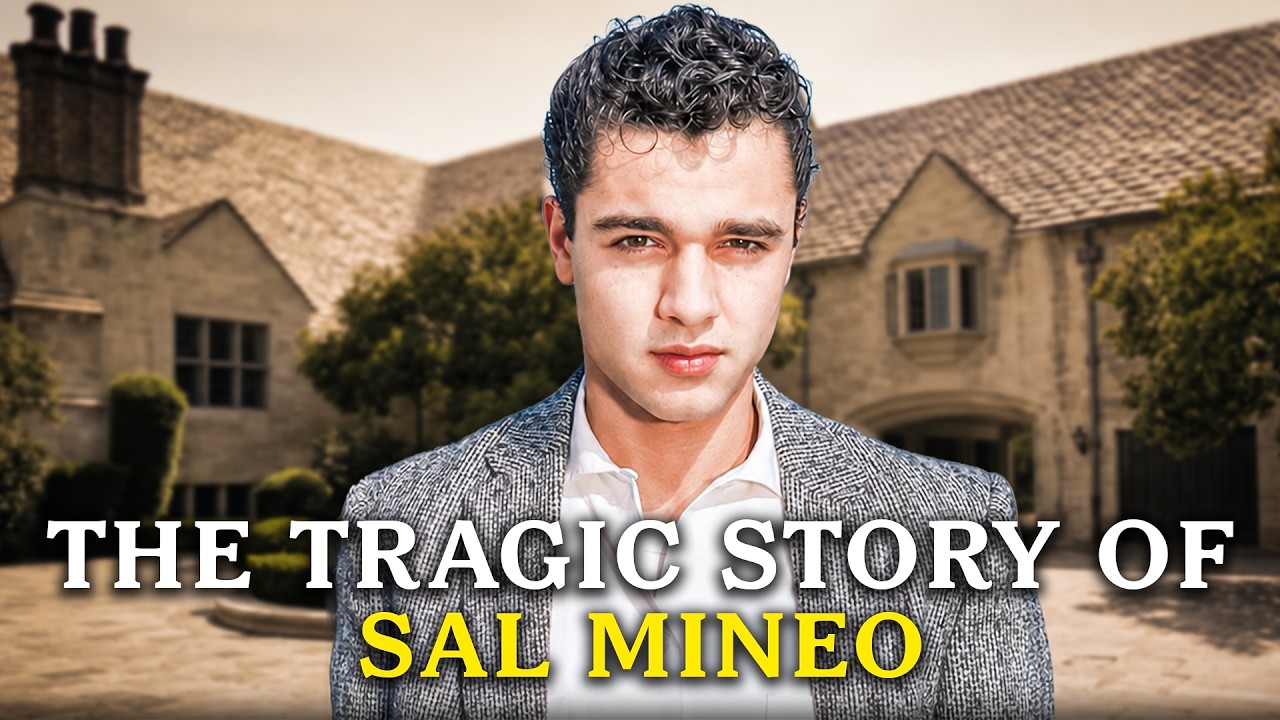 The irony of the setting was not lost on those who knew the actor’s history. Mineo had built his early career playing troubled street kids, the switchblade-wielding outsiders of 1950s cinema. He was the sensitive soul of Rebel Without a Cause, the boy named Plato who craved connection so desperately that audiences felt his ache through the screen.
Now, the man who had made violence and vulnerability his signature had been felled by the very brutality he had once portrayed.
Born in the Bronx in 1939 to a coffin-making father, Mineo’s ascent was meteoric. By age 16, he was nominated for an Academy Award for his role opposite James Dean and Natalie Wood. By 21, he had earned a second nomination for Exodus, playing a Holocaust survivor with a rawness that stunned critics.
He was the third point of a triangle that defined an era, yet the industry that celebrated him never quite knew what to do with him.
The whispers about his private life began early, and the doors to leading-man status began to close. In 1972, Mineo made the courageous decision to publicly acknowledge his bisexuality, a revelation that was years ahead of its time and, by all accounts, a professional death sentence in the Hollywood of that era. He was typecast, marginalized, and pushed toward television guest spots while lesser talents claimed the roles he should have owned.
But Mineo refused to disappear. He directed Fortune and Men’s Eyes, a daring 1967 play about prison life that tackled sexuality and power with unflinching honesty. He found love with actor Courtney Burr III, a relationship that provided the stability his chaotic career had never offered.
And in early 1976, he was on the verge of a comeback, starring in the Los Angeles production of P. S. Your Cat Is Dead, a role that celebrated the very complexity the industry had punished him for.
The investigation into his murder initially went sideways, with detectives focusing on his personal life rather than the obvious signs of a botched robbery. Money was found in his pocket, untouched, but the assumption that his sexuality had provoked the attack sent the case cold for years. It was only when a woman in Michigan reported her boyfriend’s bragging that authorities finally connected the dots to Lionel Ray Williams, a pizza delivery driver with a knife and a pattern of violent robberies.
Williams, who had no idea who his victim was, had simply seen a man getting out of a car and decided to rob him. The killing was random, senseless, and entirely devoid of the meaning that investigators had initially sought. He was convicted of first-degree murder in 1979 and sentenced to 51 years in prison, but the damage was done.
The three-year delay in justice was a direct result of the era’s prejudice, a final insult to a man who had spent his career fighting against exactly that kind of narrow-mindedness.
Mineo was laid to rest at Gate of Heaven Cemetery in Hawthorne, New York, not far from the Bronx that had shaped him. His legacy, however, refused to stay buried. Rebel Without a Cause was added to the National Film Registry, ensuring that his performance as Plato would be studied and admired for generations.
His directorial work is now recognized as a pioneering contribution to LGBTQ+ theater history, a testament to his willingness to push boundaries before the culture was ready.
The tragedy of Sal Mineo is not simply that he died young, but that he died at the precise moment when the world was finally catching up to him. He had been ahead of his time in his honesty, his artistry, and his refusal to hide who he was. The industry that had used him and discarded him was beginning to open doors that had been slammed shut for years.
He never got to walk through them.
In the end, the switchblade kid from the Bronx was killed not by a rival or a lover or a conspiracy, but by a random act of violence from a man who didn’t know his name. It is a cruel, meaningless end for a life that was anything but. But the work remains, the courage remains, and the story of a boy who made the world feel something real continues to resonate long after the alley went quiet.